A Nation on Edge: Power, Prosecution, and the Politics of Justice
- TranThuy
- February 25, 2026
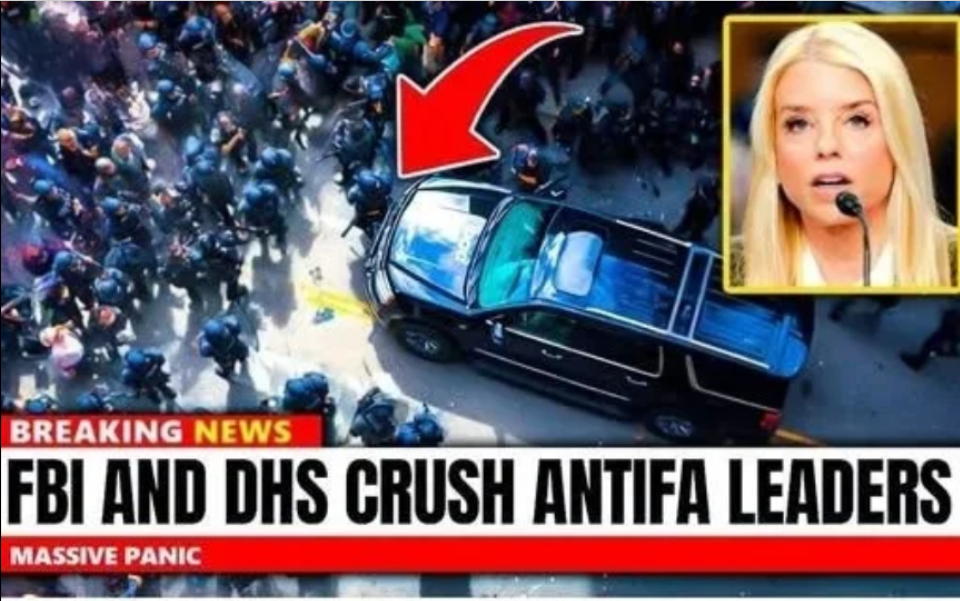
In a dramatic turn that seemed drawn from a political thriller, agents from the Federal Bureau of Investigation and the Department of Homeland Security launched a sweeping series of coordinated raids across multiple states. Authorities announced the arrest of individuals described as alleged leaders within decentralized activist networks often associated in media narratives with “Antifa.” Prosecutors filed charges under the Racketeer Influenced and Corrupt Organizations Act, alongside terrorism-related statutes, signaling the seriousness of the case. Sirens pierced the night as federal teams executed warrants, leaving communities, advocacy groups, and political leaders reacting in real time.
Officials stated that the operation targeted what they described as organized criminal coordination hidden beneath ideological activism. According to court filings, investigators had spent months tracking financial transfers, encrypted communications, and interstate travel patterns. The use of RICO statutes suggests prosecutors intend to argue that the accused operated not merely as individuals, but as part of an interconnected enterprise. Supporters of the crackdown call it a decisive move to address violence and unlawful activity. Critics, however, caution against conflating protest movements with criminal conspiracies, warning of potential civil liberties implications.
As headlines spread, investigators revealed an even broader dimension to the case. Authorities claim to have uncovered evidence of a staggering $7.3 billion cartel-linked financial network allegedly connected to a Somali diplomat. While details remain limited pending court proceedings, prosecutors allege the network involved layered shell companies, international wire transfers, and laundering operations designed to mask illicit revenue streams. Thousands of suspected gang affiliates were reportedly detained during coordinated actions, widening the scope far beyond domestic activism alone.
The allegations of diplomatic ties and transnational finance have intensified scrutiny. Legal analysts note that cases involving international actors require delicate handling, particularly when diplomatic status or foreign policy considerations intersect with criminal law. Courtrooms that once handled routine proceedings are now hosting complex hearings involving classified intelligence, financial forensics, and constitutional arguments. Each filing adds new layers to a narrative that grows more intricate by the day.
Public reaction has been sharply divided. Some view the crackdown as a long-overdue stand against organized crime and violent networks operating under political cover. Others question whether the scale and visibility of the arrests reflect genuine necessity or a carefully staged show of force. The line between justice and performance, critics argue, can blur when high-profile prosecutions unfold under intense media spotlight. Transparency and due process will likely shape how history judges this moment.
What is clear is that the unfolding investigation carries consequences that extend far beyond the individuals charged. It touches on the balance between national security and civil rights, the influence of money in global networks, and the fragility of public trust. As deeper secrets threaten to surface, the nation watches closely. Whether this marks a transformative stand against corruption or a contentious chapter in political theater, the outcome may redefine how power, activism, and accountability intersect in the years ahead.