12-Year-Old Innovator Creates Solar-Powered Blanket to Support People in Need
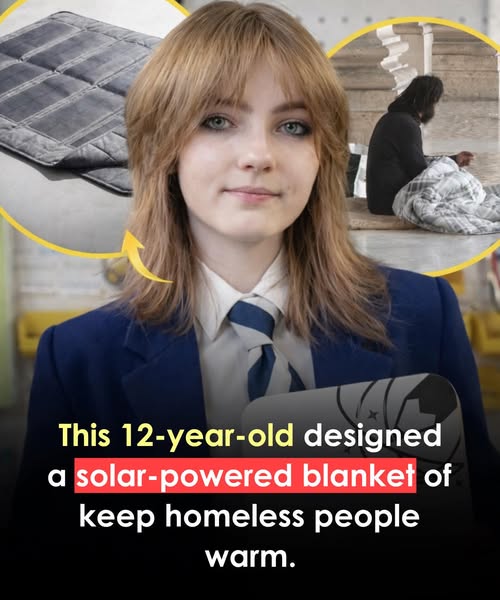
A 12-year-old inventor is gaining attention for designing a solar-powered blanket intended to help individuals experiencing homelessness stay warm during freezing nights.
The concept is simple yet impactful. The blanket features lightweight, flexible solar panels that collect energy during daylight hours. That stored energy is then converted into heat after sunset, providing warmth without relying on traditional electricity sources. The goal is to offer a portable, reusable solution that can function in areas where access to power is limited.
By combining renewable energy technology with humanitarian purpose, the young creator’s project highlights how innovation does not always require complex systems—just thoughtful design and a clear understanding of a real-world challenge. The blanket is designed to be durable, weather-resistant, and safe for extended outdoor use.
Advocates for clean energy say ideas like this demonstrate how renewable technology can be applied beyond large-scale infrastructure projects. Small, adaptable tools can make a meaningful difference in everyday life, particularly for vulnerable communities.
Educators and community leaders have praised the initiative as an example of youth-driven problem solving. While the blanket may still require further development and testing before widespread distribution, the idea itself has sparked conversations about practical, sustainable ways to address urgent social needs.
Sometimes, meaningful innovation begins with empathy—and a willingness to act.