SHOCKING TRUTH EXPOSED: Filipino “SUPERvolcanoes” Stir at the SAME TIME — Coincidence… or a Pattern?
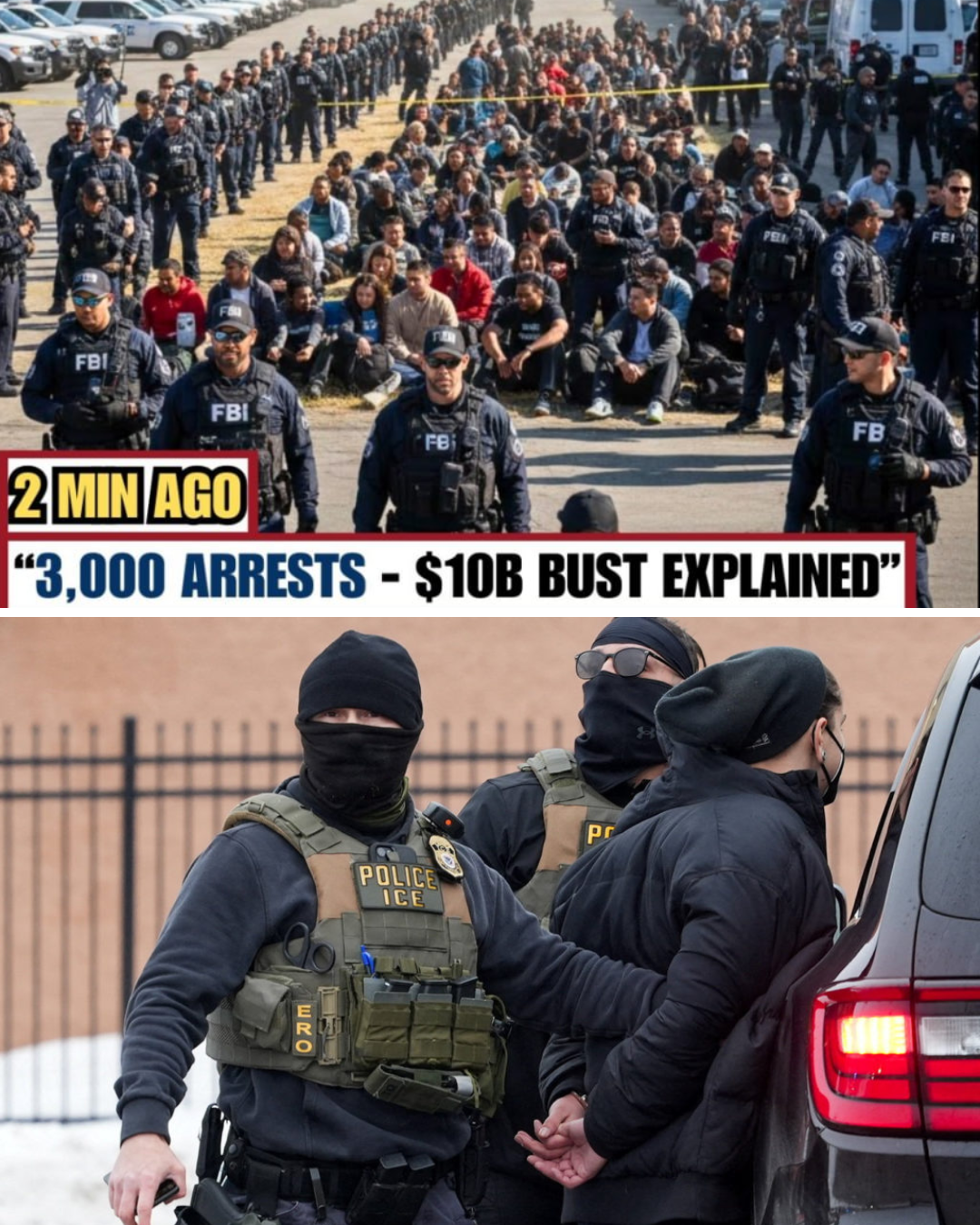
LOS ANGELES — A viral online account is drawing fresh attention to what it describes as a sweeping federal crackdown in Southern California—an operation labeled “Iron Dale” that allegedly resulted in more than 3,000 arrests and the disruption of a $10 billion criminal finance pipeline spanning ports, cryptocurrency channels, and shell companies.
The report, published by Family Stories, portrays the investigation as a modern, data-driven case that began not with street-level surveillance but with anomalies in transaction records, port logs, and crypto movements—patterns that, viewed in isolation, appeared routine but allegedly formed a recognizable criminal signature when layered together. It claims agents ultimately targeted infrastructure rather than individual crews, focusing on the financial and logistical “backbone” that prosecutors believe allowed cartel- and mafia-linked networks to blend illicit flows into the legitimate economy of the Los Angeles region.
According to the article, authorities executed coordinated search warrants across warehouses, storage facilities, offices, and residences, seizing weapons, freezing cryptocurrency accounts, and dismantling shell corporations with overlapping ownership and addresses. Investigators allegedly recovered detailed ledgers and communications tying transactions to routes across state lines and international borders.
The most consequential legal claim in the account is that prosecutors filed RICO charges—an approach typically used when the government seeks to prove not just isolated offenses but an ongoing criminal enterprise with hierarchy and continuity. The article presents the move as a signal that officials view the alleged network as organizationally sophisticated, with shifting routes and laundering methods designed to adapt to enforcement pressure: when banks tightened, the story says, money moved into digital assets; when street-level scrutiny rose, proceeds allegedly reappeared through real estate and offshore holdings.
A familiar template, with extraordinary numbers
The narrative’s scale is what makes it resonate—and what makes it difficult to evaluate.
Large multi-agency takedowns in Los Angeles are not new. Federal prosecutors have previously used RICO statutes against violent gangs and organized groups in Southern California; for example, a 2014 RICO indictment in the Central District of California targeted an East L.A. street gang with dozens of defendants and hundreds of participating officers.
But 3,000 arrests tied to a single coordinated federal operation would be far larger than what is typically documented in public indictments and press releases for RICO cases—where defendants are commonly counted in the dozens, not the thousands. That does not prove the account is false, but it highlights the gap between the story’s dramatic headline figures and the type of publicly traceable record that usually accompanies an operation described as “one of the largest” in recent U.S. history.
Online, the “Iron Dale” framing appears to circulate heavily through reposts and commentary-driven videos rather than through clearly linked court filings or official agency announcements. Web search results show the storyline echoed in social posts using the same language and numbers, but those posts largely point back to the original narrative rather than independent documentation.
Why the “3,000” figure travels so easily
Part of the number’s stickiness is that it fits a broader political moment in which enforcement metrics—especially immigration-related arrests—have become headline targets. Reuters reported in 2025 that ICE increased daily arrest goals, with sources describing a new target of 3,000 arrests per day in that context. That is a different domain than a cartel/RICO takedown, but it illustrates how “3,000” has emerged as a culturally legible benchmark in enforcement narratives.
In the Family Stories account, the focus is not immigration enforcement but organized crime logistics: ports, airports, bank compliance blind spots, and digital finance—an argument that Los Angeles’ scale is both strength and vulnerability. Ports and airports process enormous volumes; financial institutions handle billions in transactions daily. The article asserts that within that density, illicit flows can hide in plain sight unless investigators can fuse shipping data, corporate registries, and blockchain analytics into a single map.
What the story says happens next
The article frames the alleged crackdown as a “turning point,” claiming a permanent task force has been established because authorities expect follow-on activity and possible retaliation or reorganization among rival groups. It also emphasizes the uncertainty that often follows large enforcement actions: criminal markets can fragment, pipelines can re-route, and leadership layers can remain insulated even when street-level networks are disrupted.
It ends with the questions that typically define such cases—whether the operation reached the highest-level financial architects, how much of the alleged money trail remains out of reach, and whether the arrests represent the end of a network or merely the exposure of one layer.
Bottom line
Read strictly as written, the Family Stories piece presents “Operation Iron Dale” as a landmark strike against a hybrid underworld—one that merges physical trafficking with digital finance and shell-company laundering.
But because the account does not include verifiable identifiers commonly seen in major federal cases—such as case numbers, charging documents, named defendants, or linked agency press releases—its most explosive claims should be treated as allegations rather than established fact, pending corroboration through official records or independent reporting.