SHOCKING TRUTH EXPOSED: MS-13’s “$900 MILLION” Miami Money Machine Was Hidden in Plain Sight
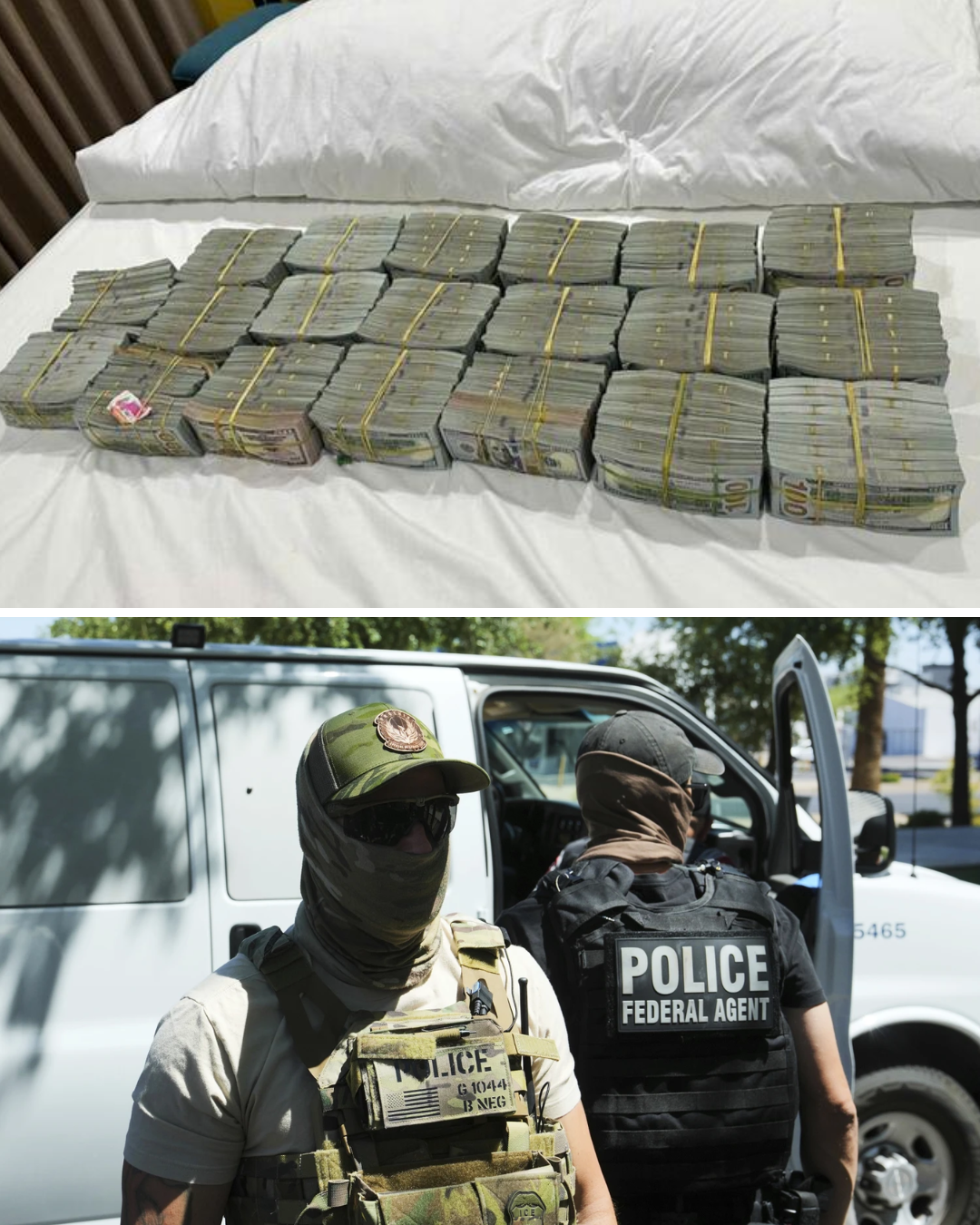
MIAMI — An online article circulating under the headline “$900 Million Shadow Empire” claims federal agents dismantled an MS-13–linked money laundering architecture in Miami so sophisticated, investigators described it as operating more like a corporate finance network than a street gang pipeline. The story, published by the Family Stories website, portrays a pre-dawn, multi-site raid dubbed “Operation Silent Venom” that allegedly struck 12 locations and uncovered 83 shell companies used to “wash, layer, and redistribute” more than $900 million in proceeds.
According to the account, the alleged operation centered on a Miami businessman named Vincent Navarro, depicted as the public-facing manager of the corporate web. Prosecutors in the narrative argue the shell entities—spread across five states—moved money through falsified invoices, layered accounts, and structured transfers designed to transform bulk cash into assets that appeared legitimate on paper.
The article pairs that financial storyline with blockbuster seizure figures: agents “reportedly” recovered 472 kilograms of cocaine, 93 kilograms of methamphetamine, and 1.6 million fentanyl pills, amounts that the piece argues are consistent with a regional supply chain rather than a localized trafficking cell. It also describes a construction office where $1.2 million in vacuum-sealed cash was allegedly concealed inside drywall—packaged to resist moisture and hidden in a way meant to blend seamlessly into the building structure.
In its telling, the case did not materialize overnight. The piece says it was built over months—possibly years—by financial analysts, undercover work, and digital forensics that flagged patterns of companies rapidly forming and dissolving, contracts appearing without operational footprints, and funds moving in circular, cross-state pathways. The narrative claims real-estate purchases and rapid transfers played a role, not as conventional “investment,” but as a mechanism to cycle money through transactions that could be explained as development activity.
The account’s most politically sensitive allegation is corruption: it asserts investigators are pursuing a parallel inquiry into an unnamed deputy police chief who was allegedly bribed to provide protection and early warning. The article frames that claim as a “force multiplier” that would have helped the network stay ahead of surveillance and raids—if proven.
What can be confirmed—and what cannot
The difficulty for readers is that the article provides no verifiable case identifiers typically associated with a large federal takedown: no named defendants beyond “Navarro,” no federal court docket numbers, no U.S. Attorney’s Office announcement, and no FBI/DEA/ICE press release. In web search results, the “Operation Silent Venom / Vincent Navarro / $900M / 1.6M fentanyl pills” language appears largely in social media reposts repeating the same phrasing, rather than independent reporting anchored to court documents.
That absence does not prove the story is false, but it means the sweeping claims should be treated as unverified unless corroborated by primary sources (charging documents, official statements, court filings).
The broader context the story taps into
Even if this specific “operation” is not substantiated publicly, the themes it uses are grounded in real enforcement concerns.
MS-13 is a transnational criminal organization frequently targeted by U.S. law enforcement through racketeering and terrorism-related authorities; the Justice Department has publicly announced prosecutions of high-ranking MS-13 figures on terrorism and racketeering charges.
The U.S. Treasury has sanctioned MS-13–linked leadership figures and facilitators in the past, citing drug trafficking, violence, and the group’s role as contract killers for other organizations.
Financial-intelligence bodies have repeatedly warned that shell and front companies are standard tools for laundering proceeds from synthetic opioids like fentanyl, often used not only to wash profits but also to procure logistics and materials.
The DEA’s national threat assessments describe sophisticated money-laundering ecosystems—often involving professional facilitators and cross-border networks—supporting the modern drug trade.
Bottom line
As written, the Family Stories article is constructed like a newsroom exposé: synchronized raids, a central “businessman” figure, a corporate lattice of shell companies, and headline-level fentanyl and cocaine totals—capped by hints of official corruption.
But because the story’s core claims are not accompanied by public case documentation, the most responsible way to frame it is as a dramatic allegation—one that borrows heavily from real patterns in transnational crime and money laundering, yet remains unconfirmed without independent reporting or official records tying “Operation Silent Venom” and “Vincent Navarro” to an actual federal prosecution.