A Resurrection Reimagined: Debate Over the Ethiopian Bible’s Easter Narrative
- TranThuy
- February 26, 2026
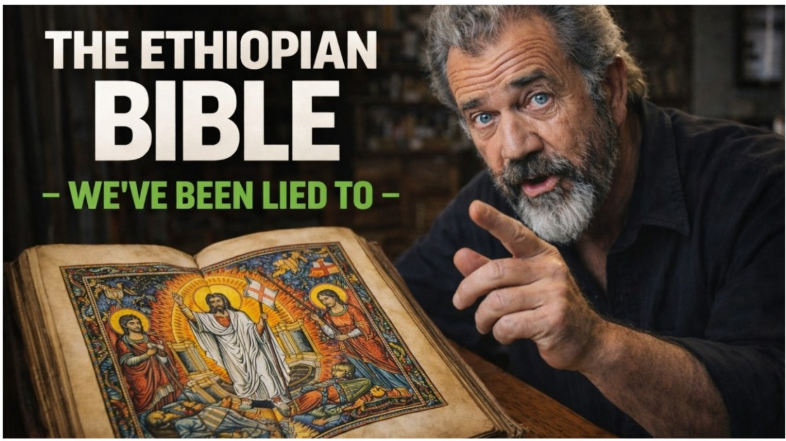
A wave of debate is rising after Mel Gibson made a bold public claim: that ancient passages within the Ethiopian Bible contain a resurrection account so vivid and emotionally charged that it could reshape how many believers imagine Easter morning. His statement quickly drew attention from both religious communities and scholars, sparking renewed curiosity about one of Christianity’s oldest biblical traditions.
According to Gibson, certain texts within the broader Ethiopian canon describe the resurrection of Jesus Christ in striking detail. He suggests they expand the atmosphere surrounding the empty tomb — portraying trembling witnesses, a charged silence before dawn, and an overwhelming burst of divine power. Supporters of his claim say the narrative feels almost cinematic, rich with imagery and supernatural intensity. For them, such descriptions do not replace the familiar Gospel accounts, but rather deepen the emotional and spiritual texture of the event.
The Ethiopian biblical canon, preserved for centuries by the Ethiopian Orthodox Tewahedo Church, includes writings not found in most Western Bibles. Among its distinctive texts is the Book of Enoch, along with other ancient works valued within Ethiopian Christianity. Scholars caution that variations among early Christian writings are not unusual. Christianity spread across diverse regions — from North Africa to the Middle East — and different communities preserved different collections of sacred texts. Diversity in manuscripts reflects history’s complexity rather than immediate contradiction.

At the same time, some researchers are intrigued by Gibson’s remarks. They have begun revisiting manuscripts, comparing translations, and reexamining assumptions long considered settled. Critics question why such writings have remained largely outside mainstream Western discussion. Was it theological disagreement, historical circumstance, or simply the result of different canonical paths developing over centuries? Supporters argue that these texts represent not a challenge to faith, but an added dimension — a hidden layer of sacred storytelling now drawing overdue attention.
Seminaries, online forums, and interfaith dialogues have become spaces of lively conversation. Some believers express excitement at the possibility of encountering the resurrection story with renewed wonder. Others urge caution, reminding audiences that claims about ancient texts require careful scholarly verification. Carbon dating, linguistic study, and contextual analysis remain essential tools before drawing sweeping conclusions about theological impact.
As the discussion continues, one question lingers gently yet persistently: how much of history have we yet to fully explore? Whether these passages ultimately transform theological understanding or simply enrich it, they remind us that faith has always carried mystery. The resurrection has inspired awe for two millennia, and perhaps the renewed attention to ancient voices serves as a reminder that sacred stories can still surprise the modern world — not by rewriting belief, but by inviting deeper reflection on its enduring power.