Operation North Ledger: From a Highway Stop to a Billion-Dollar Empire
It began on a quiet stretch of highway with what seemed like an ordinary traffic stop. A single car was pulled over, its driver visibly nervous, and inside the vehicle officers discovered $418,000 in cash sitting in plain sight. At first glance, it appeared to be another suspicious seizure — unusual, but not unprecedented. Yet that roadside discovery would unravel a thread leading investigators into something far more complex: an alleged $1.7 billion money laundering empire stretching across multiple states. From that moment forward, federal authorities launched what became known as Operation North Ledger.
As financial investigators traced the origin of the cash, digital footprints began to surface. Bank transfers, shell companies, and layered transactions formed a web of activity that suggested careful coordination. The name that repeatedly emerged at the center of the inquiry was Mohamed Abdi Hassan, a respected county supervisor whose public image stood in sharp contrast to the hidden world prosecutors allege he operated. Behind false walls, authorities later reported finding encrypted servers. Offshore transfers flickered across borders, and cryptocurrency wallets quietly processed transactions in the background.
According to investigators, Hassan did not act alone. Around him allegedly moved a structured network of logistics managers, nonprofit administrators, freight contractors, and cryptocurrency brokers. Each participant appeared to play a specialized role in maintaining the system’s efficiency and secrecy. Funds were reportedly disguised as charitable allocations, infrastructure contracts, and consulting agreements. On paper, everything seemed legitimate; beneath the surface, authorities claim, deception was carefully engineered into the framework.

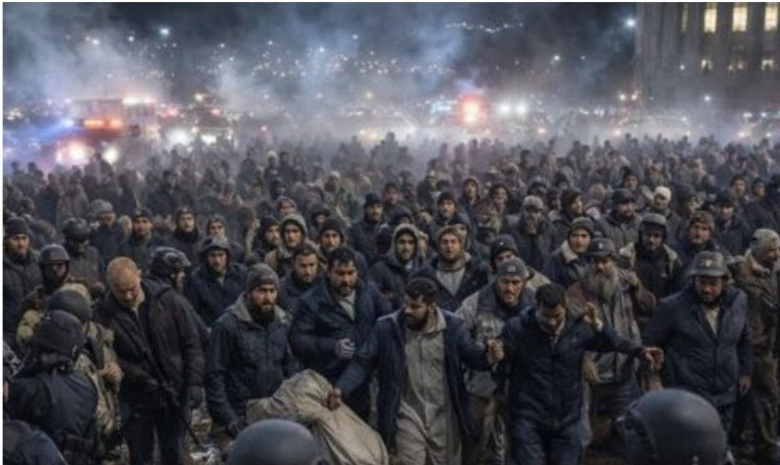
The reckoning came swiftly. Coordinated federal raids struck 29 locations simultaneously before dawn. Agents executed warrants, breached doors, and secured digital evidence. Assets were frozen, properties seized, and thousands detained for questioning as part of the broader operation. Prosecutors filed charges that included money laundering, wire fraud, and violations under the Racketeer Influenced and Corrupt Organizations (RICO) Act. The scale of the alleged conspiracy painted a picture of staggering ambition and reach.
Yet even as headlines declared a major victory for law enforcement, officials cautioned against assuming the case was fully resolved. Complex financial networks rarely collapse all at once. Investigators acknowledged that offshore connections and encrypted digital channels may still conceal additional collaborators or undiscovered assets. Financial crimes of this magnitude often extend beyond visible boundaries, requiring years of forensic accounting and international cooperation to untangle completely.
Operation North Ledger ultimately became a powerful reminder of how fragile appearances can be. What began as a simple traffic stop exposed vulnerabilities within trusted institutions and systems. Like an iceberg drifting through dark waters, much of the structure may still lie hidden beneath the surface. Sometimes the smallest crack — a single vehicle on a quiet highway — is all it takes to reveal secrets of extraordinary depth. And in cases like this, the story may be far from over.