The Tesla Model Pi: Rumor, Revolution, or the Next Great Disruption?
- TranThuy
- February 26, 2026
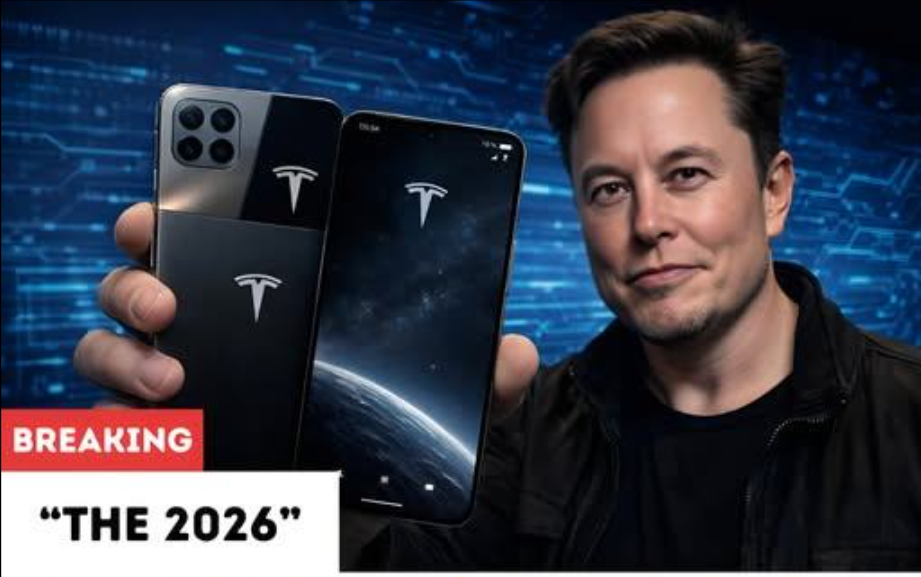
BREAKING: The rumor of the “Tesla Model Pi” is sending shockwaves through the smartphone world. Though no official unveiling has confirmed its existence, whispers alone have been enough to ignite speculation across tech forums, investor calls, and social media feeds. The possibility of a Tesla-branded phone—designed with the same bold philosophy that reshaped electric vehicles—has stirred both excitement and skepticism. In an industry long dominated by familiar giants, even a rumor tied to Elon Musk carries disruptive weight.
For years, Tesla, Inc. has challenged the limits of transportation and energy, transforming electric cars from niche experiments into mainstream status symbols. Beyond the roads, SpaceX has redefined space travel with reusable rockets once thought impossible. Meanwhile, Starlink continues to expand global internet connectivity through a growing constellation of satellites. At the center of these ambitious ventures stands Elon Musk, whose career has been built on confronting industries that once seemed untouchable.
Now, the mere suggestion of a Tesla phone—rumored to be sleek, solar-charged, and seamlessly connected to satellite networks—has ignited imaginations worldwide. Enthusiasts envision a device that integrates directly with Tesla vehicles, syncs effortlessly with Starlink’s global coverage, and introduces features far beyond conventional smartphones. Some speculate about built-in satellite communication, advanced AI integration, or even off-grid charging capabilities. Whether realistic or exaggerated, these ideas reflect the public’s readiness to believe that disruption could once again be imminent.
The smartphone industry, however, is a fiercely competitive arena. Market leaders have spent over a decade refining ecosystems, building app marketplaces, and cultivating brand loyalty. Entering such a space would require not only technological innovation but also mastery of supply chains, software ecosystems, and global distribution networks. A Tesla phone would not merely compete on hardware; it would need to redefine user experience in a way compelling enough to pull consumers away from established platforms.
Yet history suggests that bold entrants can reshape entire markets. Electric vehicles once faced doubts about range, infrastructure, and affordability—concerns Tesla systematically addressed. Reusable rockets were dismissed as impractical until SpaceX proved otherwise. Because of this track record, even unconfirmed rumors carry unusual credibility. Investors watch closely. Competitors take notice. Consumers wonder whether the device in their hands might soon face an unexpected challenger.
Whether the Tesla Model Pi remains a rumor or evolves into a revolutionary product, one truth stands out: when Musk’s name enters an industry, the world leans in a little closer. His ventures have consistently blurred the boundary between imagination and implementation. In that space—where ambition meets engineering—the impossible often feels suddenly possible. And for now, the smartphone world waits, caught between skepticism and anticipation, listening for the next announcement that could turn whispers into reality.