The $15,990 Revolution: Tesla Model 2 and the Future of Affordable Electric Mobility
- TranThuy
- February 26, 2026
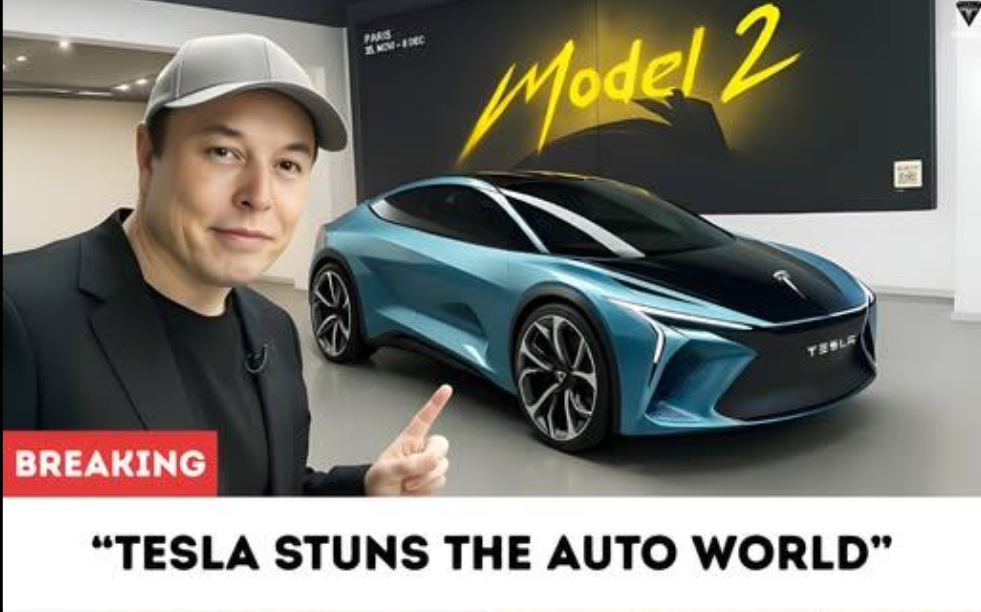
A new chapter begins with a price tag that feels almost unbelievable. Tesla, Inc. has announced pre-orders for the 2026 Tesla Model 2 at just $15,990—a move so bold it is sending shockwaves through the global auto industry. For years, electric vehicles were viewed as premium products, admired for innovation but often out of reach for average consumers. Now, that perception may be on the verge of transformation. With one strategic decision, Tesla appears ready to challenge not only competitors, but the very economics of modern transportation.
Behind this ambitious push stands Elon Musk, whose long-stated mission has been to accelerate the world’s transition to sustainable energy. By dramatically lowering the entry price for an electric vehicle, Musk signals a shift from exclusivity to accessibility. The Model 2 is positioned not as a luxury statement, but as a practical solution for everyday drivers—students, families, commuters—who seek affordability without sacrificing innovation. If delivered as promised, it could become the company’s most socially transformative vehicle yet.
The Model 2 is expected to introduce five game-changing features designed to redefine value in its segment. First, advanced battery efficiency could extend driving range while keeping production costs low. Second, streamlined manufacturing techniques may reduce expenses without compromising safety. Third, integrated smart technology would offer intuitive connectivity and over-the-air updates. Fourth, enhanced driver-assistance systems aim to provide a safer driving experience. Finally, its compact yet sleek design reflects a balance between urban practicality and modern aesthetics. Together, these elements promise a vehicle that feels both intelligent and attainable. 
Beyond features and specifications, the emotional impact of such pricing cannot be ignored. For many consumers, the transition to electric driving has been delayed by financial limitations. A $15,990 Tesla would represent more than a bargain—it would symbolize inclusion in the clean-energy movement. The dream of driving an electric car powered by innovation rather than gasoline would no longer belong only to early adopters or affluent buyers. It would open doors to millions who previously watched the EV revolution from the sidelines.
However, bold promises naturally invite scrutiny. Industry analysts will question whether such pricing is sustainable amid material costs, global supply chain pressures, and competitive responses. Delivering high quality at a low price requires extraordinary operational precision. Tesla must balance ambition with execution, ensuring that affordability does not compromise reliability or brand trust. If successful, the Model 2 could pressure other automakers to accelerate their own affordable EV programs, intensifying competition across the market.
If this vision becomes reality, the launch of the 2026 Tesla Model 2 will be remembered as more than a product release. It could mark the moment when the electric revolution truly opens its doors to the world. Affordable, intelligent, and sustainable mobility would shift from aspiration to mainstream reality. And in doing so, Tesla would not only expand its market—it would redefine what the future of driving looks like for generations to come. 🚗✨