Dojo 3: The Supercomputer Powering Tesla’s AI Future
- TranThuy
- February 26, 2026
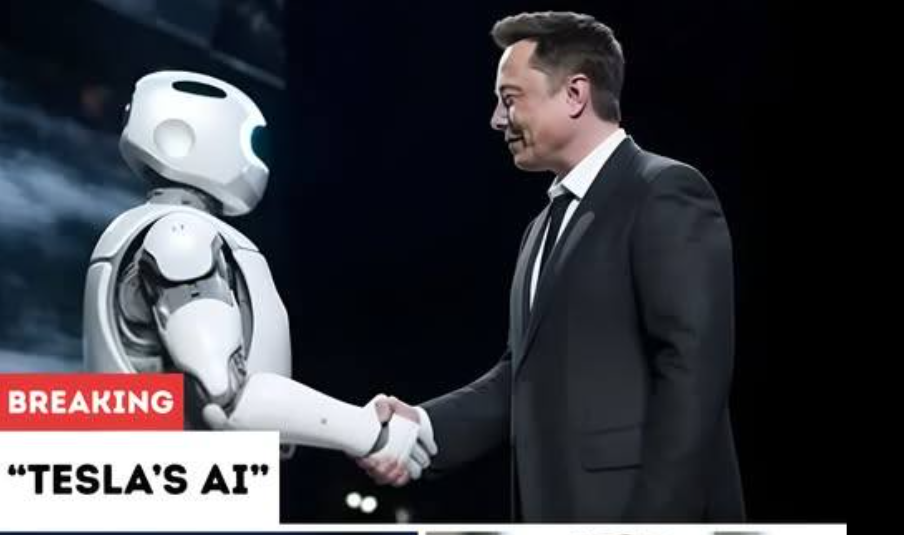
A quiet engine of the future has roared back to life. Tesla, Inc. has resumed development of its next-generation AI supercomputer, Dojo 3—a decisive step forward in its ambition to become far more than an automaker. For Elon Musk, artificial intelligence is not a side project; it is the foundation upon which Tesla’s long-term vision stands. From autonomous vehicles to humanoid robotics, the company’s future depends on machines that can interpret, learn from, and respond to the real world with increasing sophistication.
At the heart of this renewed momentum lies the stabilization of Tesla’s AI5 chip design. Often described as the brain behind the machine, this advanced silicon processor is engineered to handle enormous volumes of data with extraordinary efficiency. With its architecture refined and optimized, Dojo 3 gains a stronger pulse—capable of training complex neural networks at unprecedented scale. The chip’s development signals that Tesla is not merely relying on third-party technology but is building its own vertically integrated AI ecosystem from the ground up.
Dojo itself is more than just a faster computer. It is a training powerhouse designed to process millions of video clips collected from Tesla vehicles worldwide. These clips teach neural networks how to recognize objects, predict motion, and navigate complex traffic scenarios. Each frame analyzed strengthens the system’s understanding of reality. Over time, the machine becomes more adept at perceiving the subtle details of the road—lane markings in fading light, unpredictable pedestrian movements, sudden obstacles. In essence, Dojo trains Tesla’s artificial intelligence to see.
Yet the ambition extends beyond vision. Tesla’s AI efforts aim to create systems capable of learning continuously and adapting dynamically. Autonomous driving is one application, but the underlying technology could influence robotics, manufacturing automation, and broader AI services. By investing in its own supercomputing infrastructure, Tesla reduces dependency on external cloud providers and gains tighter control over performance optimization. This strategic independence may prove critical as AI competition intensifies globally.
Inside data centers illuminated by the glow of server racks, rows of processors hum with concentrated energy. The atmosphere feels almost futuristic—an orchestra of silicon circuits and flowing electricity. Engineers monitor performance metrics while algorithms refine themselves through countless iterations. Every improvement brings Tesla’s Full Self-Driving system closer to reliability at scale. Every breakthrough strengthens Musk’s assertion that Tesla is as much an AI company as it is an automotive one.
As Dojo 3 accelerates, so too does the company’s larger dream. In the surge of code and computation lies the possibility of machines that not only assist humanity but collaborate with it. The road ahead remains challenging, filled with technical hurdles and regulatory scrutiny. Yet with its supercomputer back in motion, Tesla signals that its AI ambitions are far from slowing down. Somewhere within the vast streams of data racing through Dojo’s circuits, a future is forming—one advancing toward us at full speed. 🚀✨