“REST IN PEACE, BIG”: The Twisted Ritual Diddy Allegedly Performed After Assaulting His Victim Will Haunt You
In the expanding web of lawsuits surrounding music mogul Sean “Diddy” Combs, one allegation has emerged that observers describe as particularly chilling—not for its physical details, but for its symbolic weight.
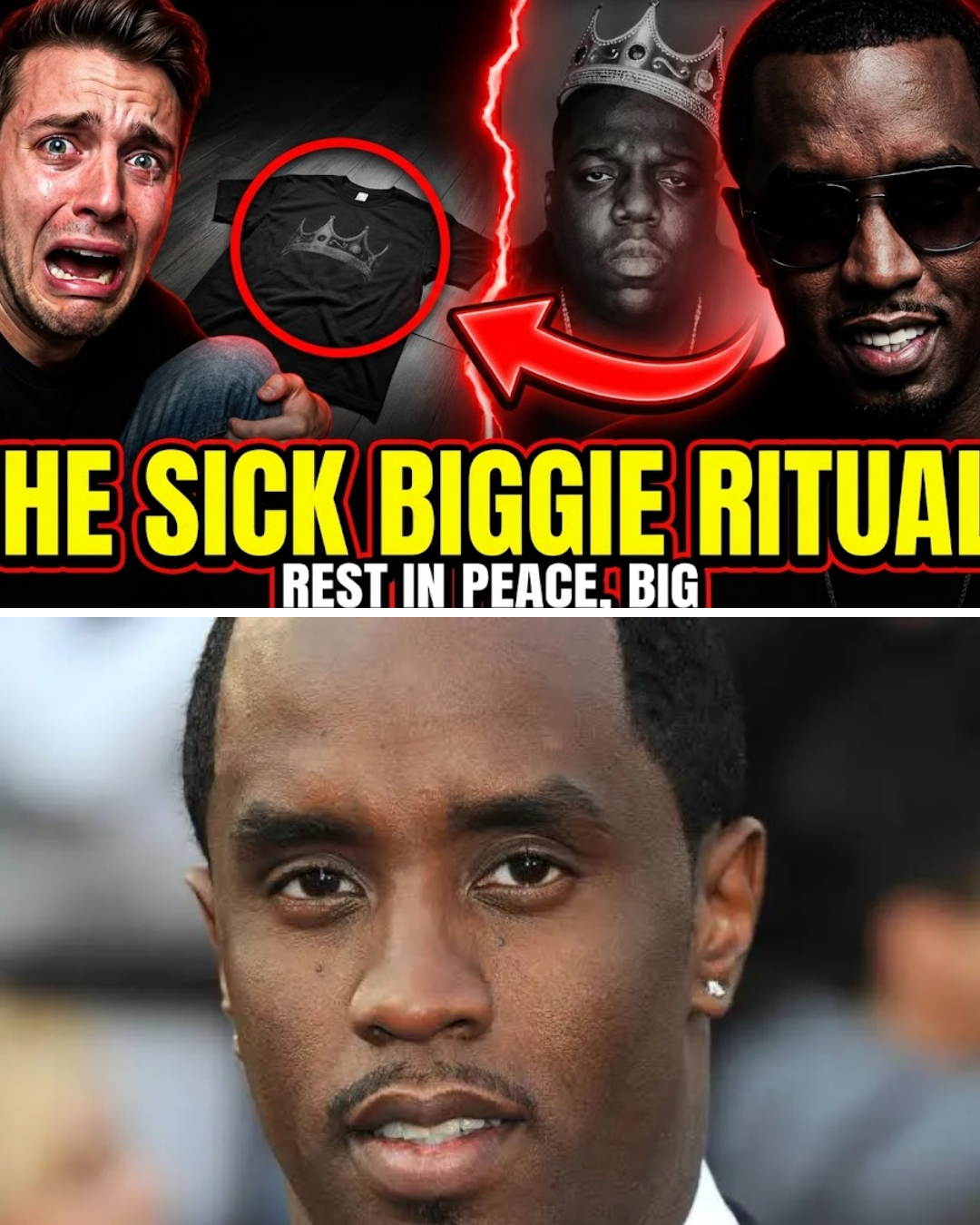
In a civil complaint reportedly filed by Jonathan Hay, a music industry figure, a disturbing scene is described in which Combs allegedly uttered the words “Rest in peace, BIG” while throwing a Notorious B.I.G. T-shirt toward Hay following an alleged assault. The lawsuit frames the moment not merely as an act of intimidation, but as a calculated psychological gesture layered with meaning.
It is important to note that these claims remain allegations within a civil filing. Combs has denied wrongdoing in multiple legal matters and has not publicly addressed this specific claim. No criminal conviction has been tied to the alleged incident described in Hay’s complaint.
Still, the symbolism cited in the lawsuit has ignited intense discussion.
Christopher Wallace—known to the world as The Notorious B.I.G.—was not only a legendary rapper but a close friend and collaborator of Combs. His 1997 murder remains one of hip-hop’s most enduring tragedies. Within that context, invoking Biggie’s name in a moment of alleged violence, as described in the lawsuit, carries emotional and psychological resonance.
According to Hay’s filing, the T-shirt was not a random object. The complaint suggests it functioned as a form of “psychological warfare”—a signal meant to intimidate, degrade, and communicate dominance. By allegedly pairing the phrase “Rest in peace, BIG” with the symbolic garment, Hay’s attorneys argue that Combs was drawing on the mythology of power, loyalty, and mortality that has long surrounded the Bad Boy era.
Legal experts caution, however, that civil complaints often present events in language designed to underscore emotional harm. The phrase “ritual,” used in commentary surrounding the case, does not necessarily imply occult meaning, but rather a repeated behavioral pattern or symbolic act intended to assert control.
Psychologists who specialize in trauma note that survivors frequently describe moments of symbolic humiliation as more haunting than physical acts themselves. Objects, phrases, and cultural references can become embedded in memory, intensifying feelings of vulnerability or fear. If Hay’s account is accurate, experts suggest the alleged act could be interpreted as an attempt to fuse personal trauma with broader cultural imagery.
Speculation has also circulated online about whether Biggie’s legacy was somehow connected to “secrets” referenced in the lawsuit. There is no verified evidence within publicly available court documents to suggest any link between Wallace’s death and the allegations raised by Hay. Conflating those narratives, legal analysts warn, risks drifting from documented claims into conspiracy theory.
The lawsuit reportedly includes a psychological evaluation of Hay, which his legal team argues supports the credibility of his testimony and documents the emotional impact of the alleged incident. Such evaluations are commonly introduced in civil cases involving claims of assault or intentional infliction of emotional distress.
For Combs, the accumulation of civil claims has intensified scrutiny of his past conduct and business empire. Each filing adds another layer to a legal battle that is unfolding in courtrooms rather than concert halls.
Whether the alleged T-shirt incident ultimately withstands legal scrutiny will depend on evidence, cross-examination, and judicial review. For now, it remains a contested claim—one that underscores how, in high-profile cases, symbolism can become as explosive as the allegations themselves.
As the proceedings continue, the line between cultural mythology and courtroom reality grows increasingly complex.