A Constitutional Earthquake: When the Unthinkable Shakes Britain
- TranThuy
- February 27, 2026
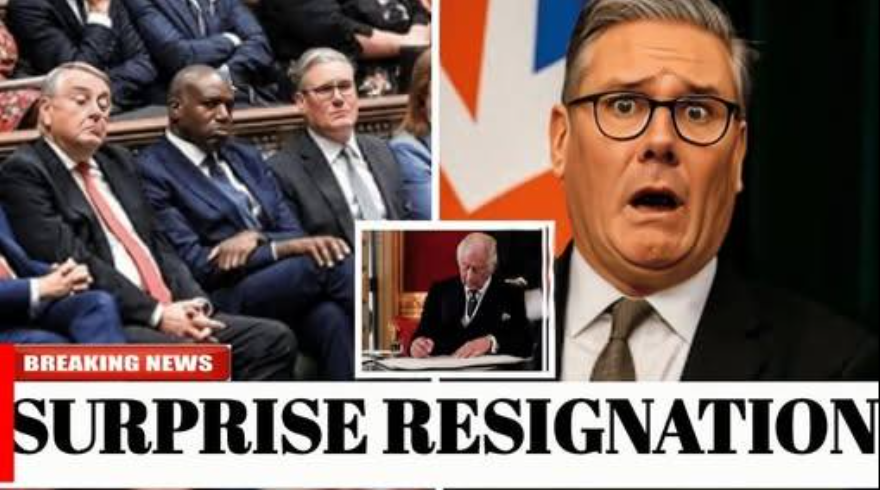
In a scenario that would shake the very pillars of the nation, imagine the Supreme Court of the United Kingdom delivering a ruling so explosive that it sends political shockwaves through every corner of Britain. A judgment demanding the immediate resignation of Keir Starmer would not merely rattle Westminster — it would rewrite constitutional history in real time. The announcement, broadcast live from the courtroom of the Supreme Court of the United Kingdom, would land like a thunderclap, leaving citizens stunned and commentators scrambling for words strong enough to capture the magnitude of the moment.
Such a decision would ignite fierce debate about parliamentary sovereignty, executive authority, and the fragile balance that has defined British governance for centuries. The United Kingdom has long prided itself on its unwritten constitution — a complex tapestry of statutes, conventions, judicial decisions, and historical practices. For the Court to effectively force the resignation of a sitting Prime Minister such as Keir Starmer would raise profound questions: Where does judicial authority end? Where does democratic mandate begin? In a system built on precedent and restraint, this ruling would test the very boundaries of constitutional possibility.
Commentators might describe it as the gravest constitutional rupture since the execution of Charles I of England in 1649 — a moment when the unthinkable became reality and the foundations of power were violently redefined. That historical parallel would not be invoked lightly. The execution of a reigning monarch shattered assumptions about divine right and absolute rule; similarly, a judicial order removing a prime minister would shatter assumptions about the limits of court intervention in political life. History would feel suddenly present, as if centuries of tradition were colliding with modern legal authority.
Inside Westminster, chaos would reign. Stunned Members of Parliament would rush into emergency meetings, party leaders would huddle behind closed doors, and constitutional scholars would fill television studios to interpret every word of the ruling. Supporters of Reform UK might hail the judgment as the dawn of political transformation, arguing that it signals a long-overdue reckoning with entrenched power. Others, however, would warn of instability, uncertainty, and the dangerous precedent of courts stepping into territory traditionally reserved for Parliament and voters.
Across the nation, households would be glued to live broadcasts, watching as the foundations of authority appear to tremble. Financial markets might fluctuate, international allies would seek reassurance, and citizens would debate the meaning of accountability and democracy. Was this justice triumphing over misconduct? Was it judicial overreach threatening democratic choice? Or was it something even more profound — a constitutional awakening forcing Britain to clarify rules that have long been guided by custom rather than codified law?
Whether viewed as justice, overreach, or constitutional apocalypse, one truth would stand clear: Britain’s unwritten constitution relies as much on restraint and convention as it does on formal statutes. The strength of the system has always rested on mutual respect between institutions — courts, Parliament, and government — each aware of its limits. If those conventions fracture, the tremors are felt not just in Westminster, but in every home across the kingdom. In that fragile balance between law and tradition lies the enduring question: can a nation built on precedent withstand a moment that rewrites precedent itself?