A Storm in the Senate: Debt, Defiance, and Democracy
- TranThuy
- February 27, 2026

A storm of words swept across the floor of the United States Senate this week as John Kennedy rose with fierce determination to deliver his warning. His voice, steady yet sharp, cut through the chamber as he accused Democrats of reckless federal spending and cautioned against a future burdened by mounting national debt. The polished desks and historic walls of the United States Senate seemed to absorb every syllable of the confrontation, amplifying the gravity of the moment.
Kennedy framed his argument around what he described as unsustainable budget growth. He spoke of trillions allocated through expansive federal packages, warning that today’s decisions could become tomorrow’s crisis. To him, the issue was not abstract mathematics but a moral reckoning — a question of responsibility to future generations. With pointed rhetoric and carefully chosen figures, he painted a picture of a nation drifting toward financial strain unless decisive restraint was restored.
His sharpest criticism was aimed squarely at Chuck Schumer, the Senate Majority Leader. Kennedy blamed Schumer for years of what he called unchecked spending and fiscal complacency. The accusation was not merely personal; it symbolized a broader partisan divide over the size and scope of government. As he spoke, members on both sides shifted in their seats, some nodding in agreement, others preparing rebuttals.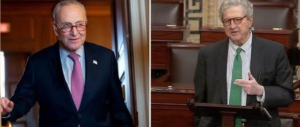
The chamber grew tense as competing visions for America’s future collided. For Republicans like Kennedy, the emphasis rested on curbing expenditures, reducing deficits, and reasserting fiscal discipline. For many Democrats, federal investment represents a tool for economic growth, social stability, and national progress. In that heated exchange, numbers on a page transformed into symbols of hope, fear, opportunity, and risk. The debate was not solely about balance sheets — it was about the direction of the nation itself.
Observers noted that such confrontations, while dramatic, are woven into the fabric of American governance. The Senate has long served as a stage for impassioned disagreement, where ideological battles are fought through speeches rather than swords. Though the rhetoric can be sharp, it reflects a system designed to air conflict publicly. Democracy, by its nature, invites friction; it thrives on contesting ideas and clashing philosophies.
By the time Kennedy concluded, the echoes of his speech lingered in the chamber. Supporters praised his candor and fiscal vigilance, while critics dismissed his warnings as partisan exaggeration. Yet beyond the applause or disapproval, one truth stood clear: democracy revealed its passionate heartbeat — loud, imperfect, yet undeniably alive. In moments like these, amid raised voices and pointed accusations, the enduring experiment of self-government continues to unfold before the eyes of the nation.