The Night Minas Gerais Stopped Breathing: Unprecedented Flooding Paralyzes Brazilian Heartland
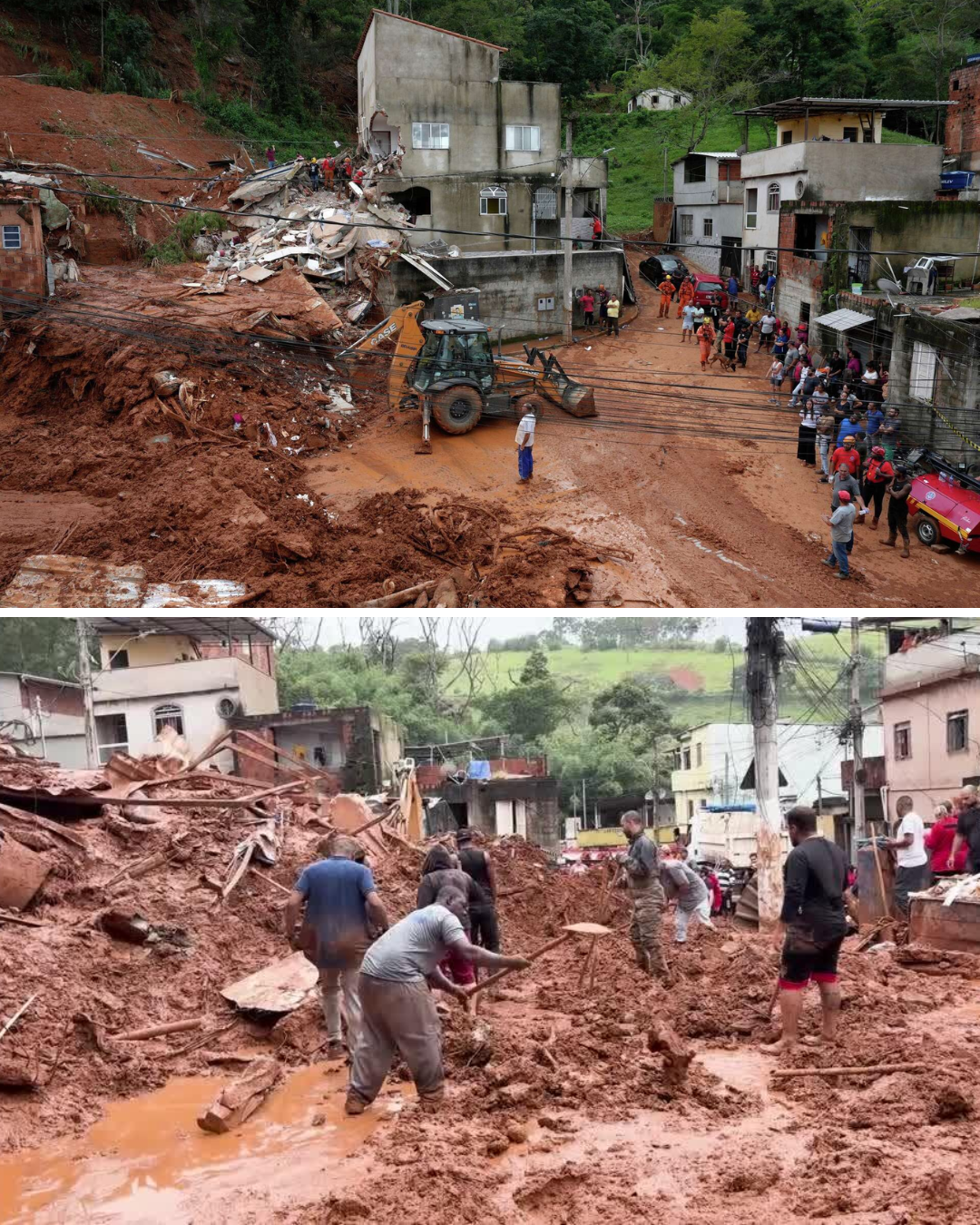
The southeastern Brazilian state of Minas Gerais witnessed what residents are describing as a night that “stopped breathing” after torrential rains unleashed a devastating series of floods and landslides that brought entire communities to a standstill. What began as routine seasonal precipitation rapidly escalated into one of the most chaotic natural events in recent memory, overwhelming rivers, rupturing landscapes, and turning streets into rivers of mud and debris.
Eyewitnesses reported that water levels rose with breathtaking speed as rivers such as the Paraibuna and Ubá breached their banks, inundating neighborhoods that had never before experienced such extreme inundation. Neighborhoods were cut off, homes were swallowed by mudslides, and families found themselves stranded on rooftops or clinging to unstable ground as entire hillsides gave way.
By the time morning broke, much of Juiz de Fora — one of the region’s largest cities — was submerged under a carpet of brown floodwaters. Streets once bustling with traffic were transformed into turbulent channels, forcing schools to cancel classes, businesses to shutter, and thousands of residents to abandon their homes in search of higher ground.
Elsewhere, in the city of Ubá, streets resembled swollen rivers, with vehicles left adrift and infrastructure strained to breaking point. According to local authorities, the scale of the floods was historic, overwhelming drainage systems and leaving entire blocks without power or clean water as emergency services scrambled to respond.
Stories of survival and loss began to emerge almost immediately. Families who had weathered childhood storms found themselves unprepared for the sheer force of nature. Some residents described a night when the skies opened without warning, and the world as they knew it was erased in hours. Others reported quick mudslides that ripped away houses and possessions, leaving behind nothing but mud and memories.
Officials declared states of emergency across multiple municipalities, mobilizing rescue teams, firefighters, and military support to conduct search-and-rescue operations. Makeshift shelters were established in local schools and community centers to house those displaced by the relentless flooding.
For many families, the emotional toll was as severe as the physical destruction. Videos and images shared on social media showed scenes of parents carrying children through waist-deep water, neighbors helping each other over debris-filled roads, and volunteers distributing food and clean clothing to those in need.
The psychological impact of the disaster also extended to long-term uncertainty. With roads destroyed and communication lines disrupted, many citizens reported difficulty contacting relatives or receiving updates about friends and loved ones who had been displaced or were missing after the floods.
Local leaders spoke of the extraordinary nature of this catastrophe, describing rainfall levels that astronomers said were unprecedented for the region. These extremes, coupled with saturated soil and the steep topography of much of Minas Gerais, created conditions in which even short bursts of intense rain could trigger catastrophic landslides and flash floods.
As dawn turned to day after that fateful night, the state’s residents awoke to landscapes transformed — entire streets swallowed by water, bridges rendered impassable, and homes reduced to rubble. What had been ordinary neighborhoods minutes before had become unrecognizable terrain, demanding grit, resilience, and enormous collective effort to navigate the path to recovery.
Emergency teams continue to work around the clock as authorities assess the full scale of the damage and count the human cost of the disaster. Many survivors remain displaced, living temporarily in evacuation shelters as the state begins the long and difficult process of rebuilding.
The night Minas Gerais stopped breathing will not soon be forgotten, its impact etched into the lives and memories of those who lived through it — a stark reminder of nature’s power and the fragility of human communities in its wake.