🚨 A Nation Awakens: The Mega-Raid That Shook America
- TranThuy
- February 28, 2026

Los Angeles. Houston. New York. Thirty-four states in total. In a single, coordinated sweep stretching across the country, thousands of lives changed overnight. What began in the early hours as quiet, strategic movements soon became what officials described as the largest gang takedown in United States history. For many communities, it felt like a storm had passed through — powerful, disruptive, and impossible to ignore.
The operation was led by the Federal Bureau of Investigation and U.S. Immigration and Customs Enforcement, with support from the Drug Enforcement Administration and the Bureau of Alcohol, Tobacco, Firearms and Explosives. Months — perhaps years — of intelligence gathering, surveillance, and digital tracking led to this moment. Tactical teams moved with precision, serving warrants and making arrests in neighborhoods that had long struggled with violence and fear. The scale of coordination across dozens of states reflected a level of planning rarely seen in domestic law enforcement efforts.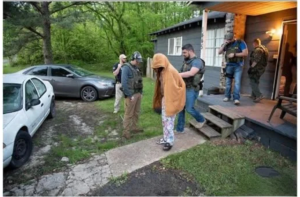
At the center of the investigation stood MS-13, a gang long associated with brutal violence and tightly organized operations. Authorities alleged that the group functioned less like a loose street gang and more like a corporation. Investigators described hierarchy charts outlining leadership roles, regional coordinators managing territories, and coded communication systems designed to avoid detection. According to officials, digital evidence mapped out addresses, responsibilities, and revenue streams reportedly generating hundreds of millions of dollars each year.
As the raids unfolded, tactical units recovered weapons, seized documents, and secured electronic devices believed to contain critical information. Hard drives and encrypted phones became key pieces of evidence, potentially revealing years of hidden activity. Officials stated that the operation dismantled major portions of the network’s infrastructure, disrupting communication channels and financial flows. For communities long affected by intimidation and violence, the arrests signaled a dramatic shift — a moment when fear gave way, at least temporarily, to relief.
Yet even as one structure appeared to crumble, uncertainty lingered. Law enforcement leaders acknowledged that organizations of such size and complexity rarely disappear overnight. Questions remain about whether all cells were truly dismantled or whether hidden layers still operate quietly in the shadows. The challenge now lies not only in prosecution but in prevention — ensuring that weakened networks do not rebuild themselves under new names or leadership.
For many families, this was not just another news headline flashing across television screens. It was deeply personal. Parents who once worried about their children walking home from school felt a cautious sense of hope. Business owners who endured threats and extortion began to imagine safer days ahead. While the future remains uncertain, the mega-raid stands as a powerful reminder that even the most entrenched criminal systems can be confronted. It marked a turning point — fragile, perhaps — but undeniably historic.