📚 History, Debate, and Dialogue: Raymond Ibrahim’s Viral Moment
- TranThuy
- February 28, 2026
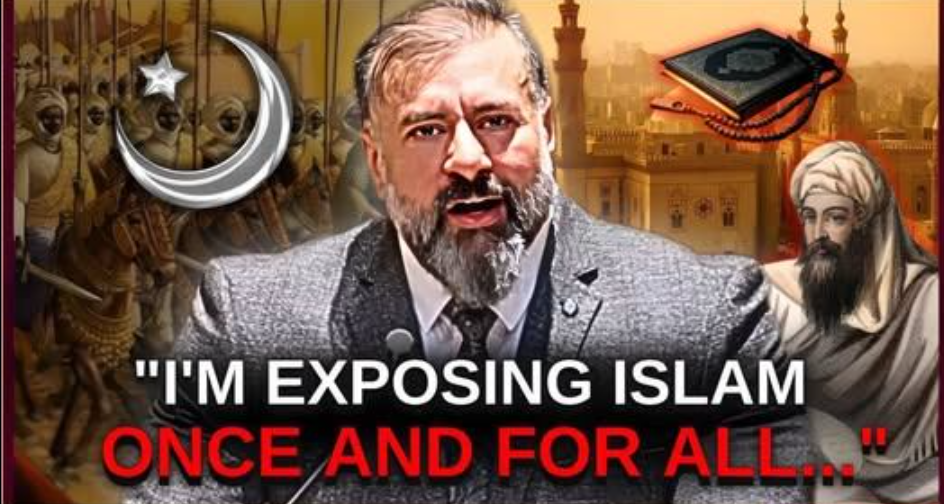
During a recent public appearance that quickly went viral across social media, Raymond Ibrahim delivered a forceful critique of how Islamic history has often been portrayed in Western narratives. Speaking with intensity and conviction, he argued that certain aspects of early Islamic conquests and historical conflicts have been softened, reframed, or selectively emphasized in modern academic and cultural discussions. According to Ibrahim, history deserves a more direct and unfiltered examination, even when the subject matter is uncomfortable or controversial.
His remarks immediately sparked widespread debate. Supporters praised him for challenging what they see as established or politically cautious interpretations of the past. They argued that open discussion and critical analysis are essential to intellectual honesty and that no historical subject should be immune from scrutiny. For them, Ibrahim’s comments represented a call to revisit primary sources and reassess long-standing assumptions about early expansions and inter-civilizational encounters.
Critics, however, raised concerns about the tone and potential implications of his statements. They cautioned against broad generalizations about Islam, a faith followed by more than a billion people worldwide. Many emphasized the distinction between historical events, political movements, and the beliefs of contemporary Muslim communities. Scholars and commentators noted that history is complex, shaped by multiple perspectives, and that reducing it to a single narrative — whether critical or defensive — risks oversimplifying a rich and diverse past.
Beyond the immediate controversy, the moment revealed how deeply intertwined history and identity can be. Interpretations of past events influence how societies understand themselves and others. Discussions about early conquests, religious movements, and cultural exchanges are not merely academic exercises; they shape public perception, foreign policy conversations, and interfaith dialogue. In this sense, debates like the one sparked by Ibrahim highlight the enduring power of historical storytelling.
The viral spread of his speech also demonstrated how digital platforms amplify intellectual disputes. In previous decades, such discussions might have remained confined to academic journals or small conferences. Today, a single appearance can reach millions within hours, inviting commentary from scholars, activists, and everyday citizens alike. This rapid circulation intensifies both support and criticism, often compressing nuanced debates into short clips and polarized reactions.
Ultimately, the discussion surrounding Ibrahim’s remarks underscores a broader truth: history is never just about the past. It informs cultural memory, shapes national narratives, and influences how communities relate to one another in the present. Whether one agrees or disagrees with his perspective, the conversation it generated serves as a reminder that examining history requires both courage and care — courage to confront difficult chapters, and care to avoid turning scholarship into division.