King vs. Brother: The Most Brutal Royal Power Play in a Century
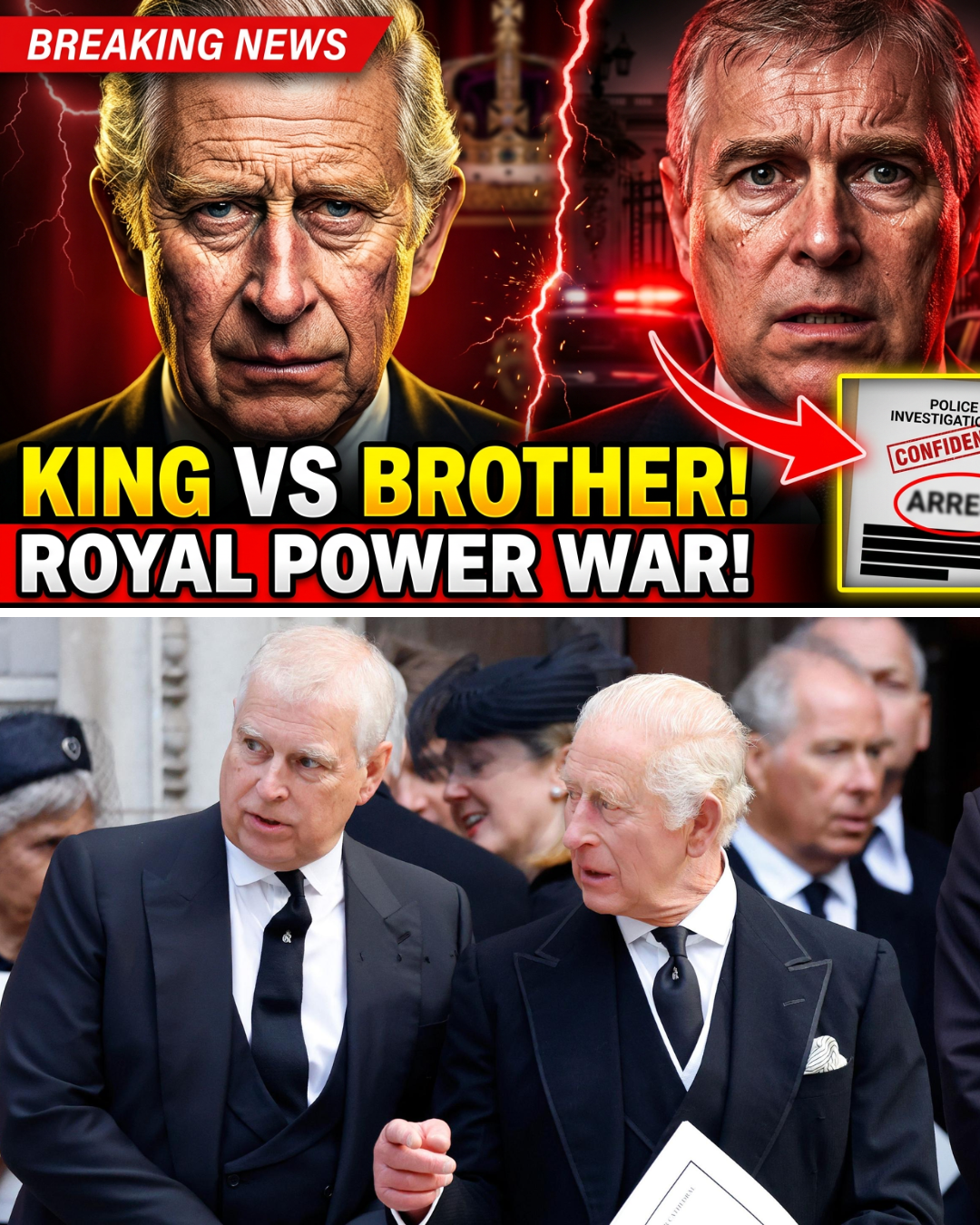
There is no rulebook for what King Charles III has been forced to do to his own family. Over the past year, the reigning monarch has stripped his younger brother of his princely title, expelled him from the royal estate, publicly declared his “profound concern” over Andrew’s alleged conduct, and finally — in an act without modern precedent — endorsed a police investigation that resulted in Andrew’s arrest. Each step in this escalating repudiation has been framed in the careful, bloodless language of palace communications. But behind the formal statements, the reality is stark: a king is dismantling the public existence of his own brother, piece by piece.
The context makes the ferocity of this rupture even more remarkable. Charles and Andrew grew up together in the most protected family environment in the British establishment. They shared a childhood at Balmoral and Windsor, attended royal events side by side for decades, and maintained, by all accounts, a relationship that was close if sometimes strained by the enormous differences in their personalities and public profiles. Today, the palace communicates about Andrew with the kind of careful distance one reserves for a former employee who has been escorted off the premises.
The palace’s statement following Andrew’s arrest was brief, and precise in a way that speaks volumes: Charles expressed his “deepest concern” and confirmed that Buckingham Palace would “cooperate fully” with police inquiries. There was no mention of brotherly support. No appeal for the public to withhold judgment. The Crown, in that statement, aligned itself unambiguously with the investigators rather than the investigated.
From a constitutional standpoint, what Charles has done is historically significant. British monarchs have traditionally maintained a rigid separation from legal and political controversies involving family members. The abdication crisis of 1936 was managed with extraordinary secrecy. More recently, the controversies surrounding Diana’s death were met with royal silence so prolonged it damaged the monarchy’s public standing. Charles has taken the opposite approach: visible, vocal, and calculated disassociation.
The strategic logic is clear. If Charles allows Andrew’s scandal to be perceived as a “royal problem,” the institution suffers collectively. By publicly separating Andrew from the monarchy — stripping him of titles, evicting him from Crown property, and endorsing the investigation — Charles is attempting to draw a firewall between one man’s alleged crimes and the institution itself. The gamble is that the public and the press will accept this distinction.
The question that hangs over all of this is whether the gamble will pay off. Constitutional historians note that firewalls in royal scandals have a tendency to be tested. If Andrew is formally charged and the case goes to trial, details about his relationship with Epstein will be aired publicly in ways that no palace statement can contain. Every email, every financial meeting, every visit to the Royal Lodge, every contact between Epstein and a member of the British establishment will be dissected in open court. In that environment, the carefully maintained distinction between “Andrew the individual” and “Andrew the prince” may prove impossible to sustain.
For now, Charles is playing the long game. Whether history judges him as the king who saved the monarchy or the man who threw his brother to the wolves will depend entirely on what the next act of this extraordinary drama reveals.