The Khamenei Question: Is Iran’s Supreme Leader Dead, Alive, or Incapacitated — and Why It Matters Enormously
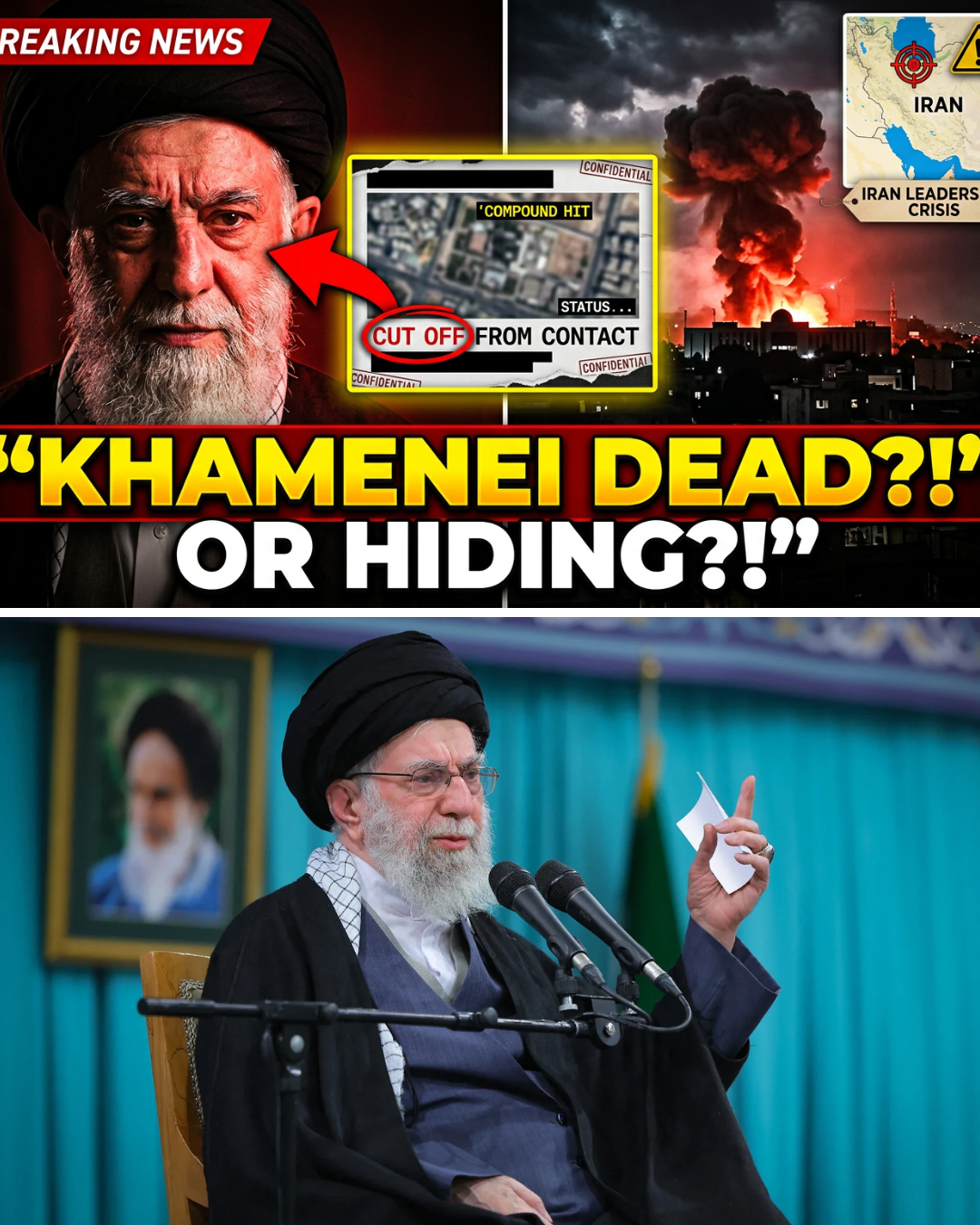
Of all the questions thrown up by Saturday’s US-Israel strikes on Iran, none carries higher stakes than the one that no government or intelligence agency is yet willing to answer definitively: is Ali Khamenei alive?
An Iranian official confirmed that President Masoud Pezeshkian survived the strikes. That confirmation — specific, named, and immediate — tells us two things. First, that the Iranian government is capable of quickly verifying and communicating the survival of senior officials when they wish to do so. Second, that the conspicuous absence of a similar confirmation about Khamenei is not an accident. It is a silence that speaks.
What is known is this: Israeli and American forces targeted the compound of Iran’s Supreme Leader. Satellite imagery confirms heavy damage. Multiple credible Israeli media reports state that Khamenei was targeted and may have been struck. An Iranian official — speaking but not identified by name — confirmed only that the supreme leader is “cut off from contact.” In the Iranian governmental system, that phrase is almost without precedent. Khamenei is not a ceremonial figurehead. He is the commander-in-chief of Iran’s armed forces, the ultimate authority over its nuclear program, and the singular voice that determines whether Iran escalates, negotiates, or retreats. “Cut off from contact” either means he is in a secure, hardened facility operating under blackout protocols — or it means something far worse.
The implications of each scenario diverge dramatically. If Khamenei is alive and simply sequestered, the Iranian response to the strikes — already including ballistic missile attacks across the Middle East — will be shaped by his strategic judgment. Whatever that means for escalation, it is at least the known quantity of a predictable adversary. If he is dead or incapacitated, Iran faces an immediate succession crisis inside the most opaque governmental structure in the modern world. The mechanisms for leadership transition in the Islamic Republic have never been fully tested. The Assembly of Experts would, in theory, convene to appoint a new Supreme Leader. In practice, a sudden power vacuum at the apex of a state under military attack is a recipe for internal chaos, factional conflict, and the kind of unpredictability that makes nuclear-armed neighbors extremely nervous.
For Israel, the prospect of a post-Khamenei Iran is not necessarily a comfortable one. A weakened but defiant Islamic Republic, led by hardline Revolutionary Guard factions no longer constrained by Khamenei’s strategic caution, could prove more dangerous than the known adversary. History offers cautionary lessons: the fall of Saddam Hussein eliminated a known threat but created conditions for instability that persisted for decades.
For the United States, the question is whether operations were planned with a post-Khamenei scenario in mind, and what contingency protocols exist for a nuclear-armed adversary undergoing sudden decapitation. Intelligence officials will be working through the night, every night, until the supreme leader appears publicly, speaks, or is confirmed dead. Until one of those three things happens, the world is operating in a fog of strategic uncertainty unlike anything it has experienced in the post-Cold War era.
The silence from Tehran is not just diplomatic. It is the most dangerous form of communication — the kind that fills itself with every worst-case scenario, and invites everyone watching to prepare for them.