Minneapolis’s ‘Family Mob’: The Gang That Ruled a City Through Fentanyl and Fear
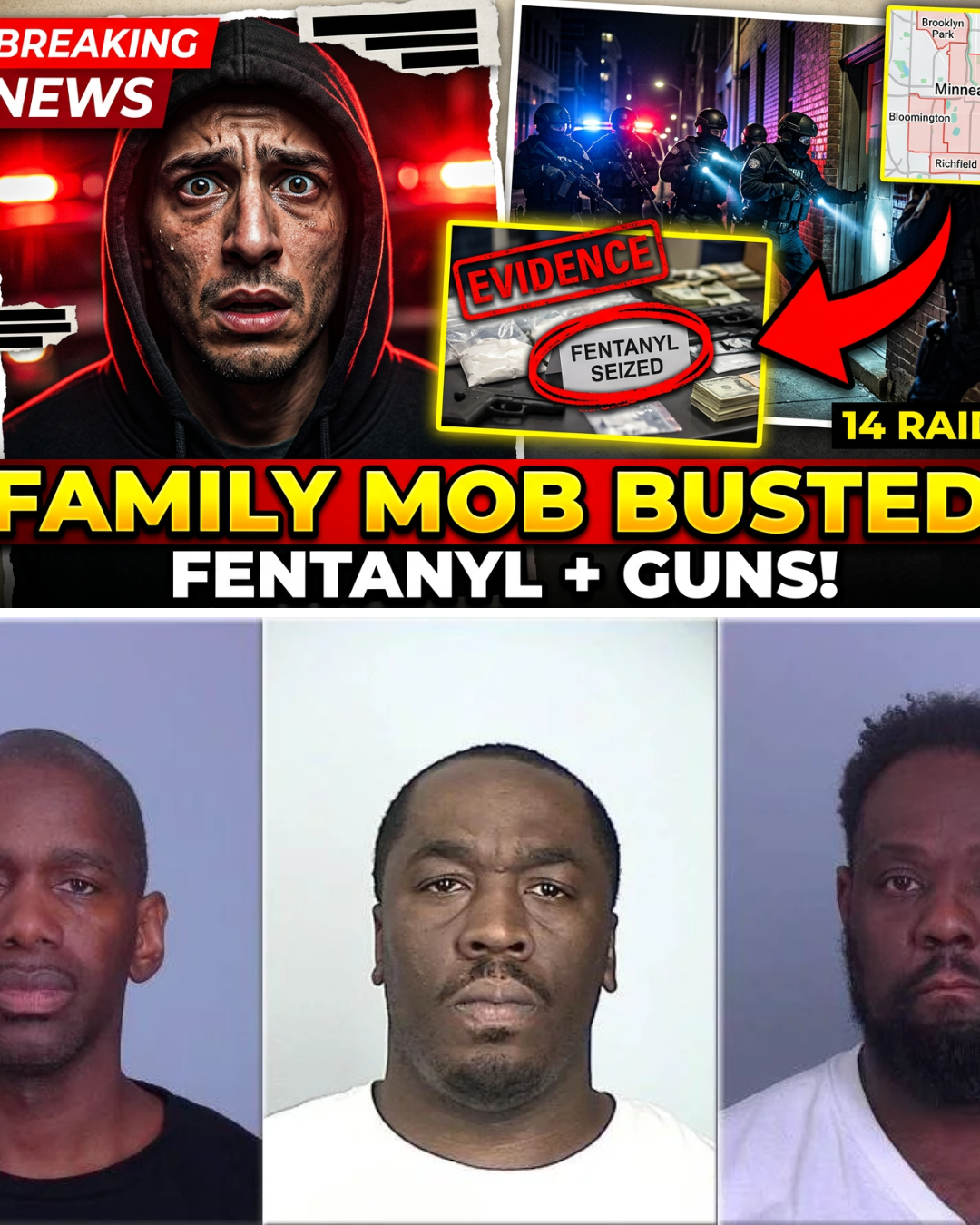
They called themselves the Family Mob. And for years, in the neighborhoods of Minneapolis, Bloomington, Brooklyn Park, and Richfield, the name was not a boast. It was a warning.
On Wednesday, February 25, 2026, that reign came to an abrupt and very public end. Before dawn, eight SWAT teams — drawn from the FBI, the Minneapolis Police Department, the Hennepin County Sheriff’s Office, and the Drug Enforcement Administration — executed 14 simultaneous search warrants across the Minneapolis metropolitan area. By the end of the day, 12 defendants, most with violent criminal histories, were in federal custody. Seven more faced related state charges. The Family Mob, law enforcement declared, had been dismantled.
The indictment reads like a catalogue of urban horror. The Family Mob operated, according to prosecutors, through a combination of fentanyl distribution and systematic violence. “Ruled by intimidation and violence,” DEA Special Agent in Charge Dustin Gillespie said in a statement, the gang had “spread poison through a beloved Minneapolis community” and had “wrongly assumed they could operate with impunity.” That word — impunity — is key to understanding why this case resonates far beyond the Twin Cities.
Minneapolis has been, since the murder of George Floyd in 2020, a city in a prolonged identity crisis. Its police department has been restructured, resized, and subjected to a level of political and public scrutiny that few urban law enforcement agencies have faced in American history. That scrutiny created, critics have argued, a period of operational uncertainty in which criminal organizations could consolidate power. The Family Mob, by the timeline of the indictment, appears to have done exactly that.
The fentanyl dimension is particularly alarming. The Family Mob allegedly trafficked synthetic opioids into communities across the metro area during a period when fentanyl was killing more Americans annually than any other drug in history. Every kilogram of fentanyl trafficked by this organization represented not just a distribution network but a death toll — a statistical certainty, expressed in overdose reports filed in ERs from South Minneapolis to Brooklyn Park. The seizures executed during Wednesday’s warrants included not just narcotics but firearms, reflecting the gang’s use of violence as a business tool.
What is perhaps most chilling about the Family Mob case is how ordinary the operation apparently appeared from the outside. Gang activity, particularly in mid-sized American cities, often concentrates in visible, recognizable patterns. The Family Mob was different. Their operation was described by investigators as “widescale” and expansive, touching multiple jurisdictions and evading detection long enough to become deeply embedded in the community.
The coordinated nature of the takedown — FBI, DEA, local and county law enforcement moving simultaneously across a broad geographic area — reflects lessons learned from previous gang prosecutions about the dangers of piecemeal approaches. When you arrest one arm of an organization, the others adapt. When you move on all fronts at once, at four in the morning, with search warrants covering every major safe house and supply depot simultaneously, you remove the possibility of adaptation.
What remains to be seen is whether the dismantling of the Family Mob will create the space for legitimate economic activity and community restoration in the neighborhoods they controlled — or whether, as history in so many cities has demonstrated, another organization will simply fill the vacuum they have left behind.