War Without Authorization: Congress vs. the Commander-in-Chief
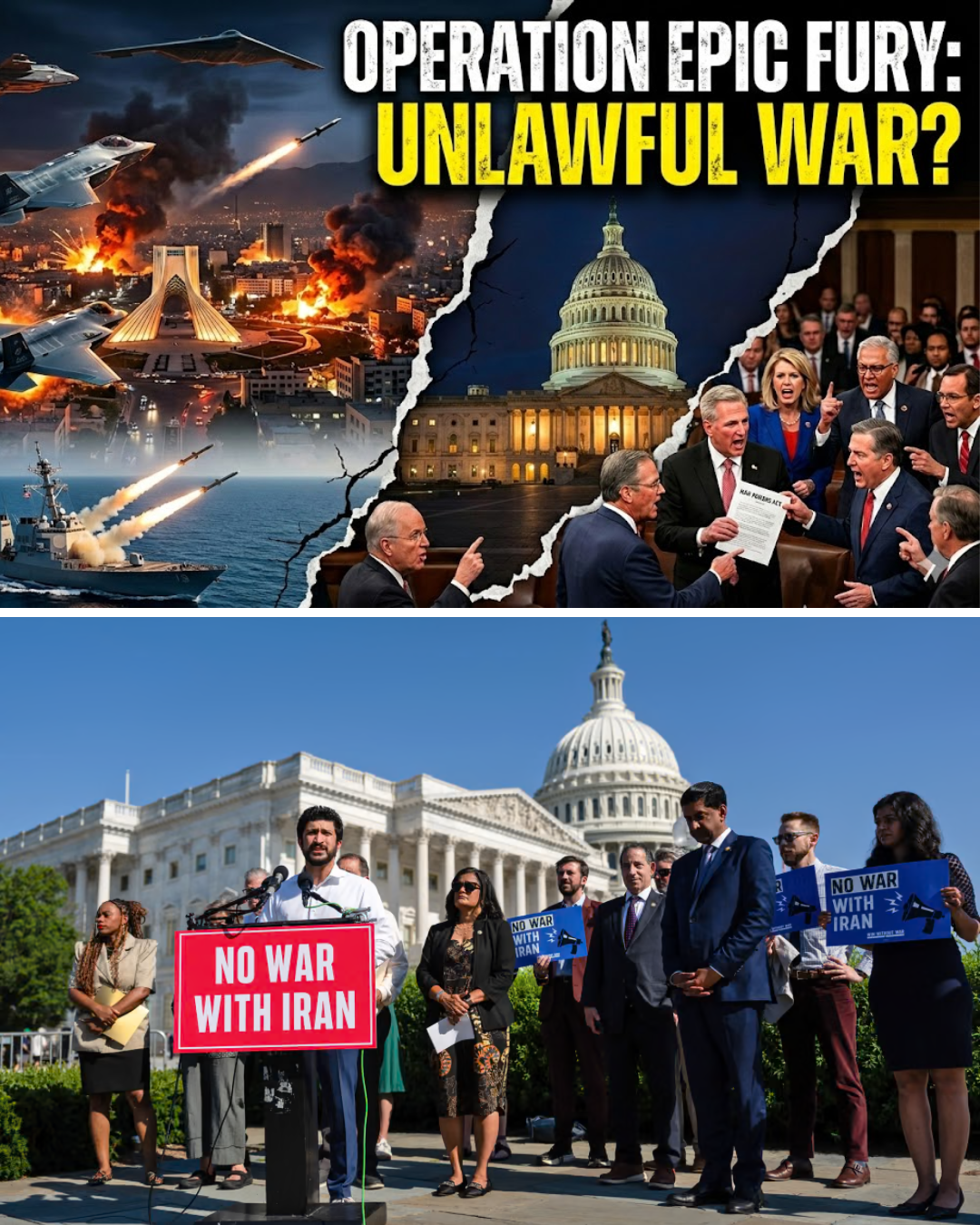
As U.S. warplanes began their second day of strikes over Iranian cities on March 1, 2026, a parallel battle was opening on Capitol Hill — one that may ultimately shape the legal and constitutional legacy of Operation Epic Fury as much as any battlefield outcome. Democratic lawmakers, joined by a small but notable cohort of Republican skeptics, are demanding to know how the most significant U.S. military operation since the 2003 invasion of Iraq was launched without a single vote of congressional authorization.
“The United States is now engaged in a war,” said one senior Democratic senator in a statement that echoed across cable news networks Sunday morning. “And the American people have a right to know why their representatives were not consulted.” The lawmaker’s remarks came in response to confirmed reports that the White House provided congressional leaders with notification of the operation only hours before the first strikes hit — a briefing, not a debate, and certainly not a vote.

Al Jazeera was among the first to report that U.S. strikes on Iran had “lead to renewed demands for war powers legislation,” noting that Democratic lawmakers “largely condemned the strikes, emphasizing the lack of congressional approval.” The War Powers Resolution of 1973 requires the president to notify Congress within 48 hours of committing U.S. forces to armed conflict, and limits unauthorized military engagement to 60 days without legislative approval.
The White House legal team is expected to argue that existing authorizations for the use of military force (AUMFs), combined with the president’s constitutional authority as commander-in-chief and the imminent threat posed by Iran’s nuclear and missile programs, provide sufficient legal basis for the operation. Supporters of the strikes point to the collapse of nuclear negotiations, Iran’s ongoing ballistic missile development, and its support for proxy groups that have repeatedly attacked U.S. forces as justification.

But the War Powers debate masks a deeper constitutional question that has been building for decades: has the executive branch permanently acquired the de facto power to take the nation to war unilaterally? Every president since Ronald Reagan has tested and stretched the limits of the commander-in-chief clause. The 2001 and 2002 AUMFs have been stretched to cover conflicts their authors never envisioned. And Congress — often paralyzed by partisan gridlock — has repeatedly failed to reassert its constitutional authority over war-making.
Operation Epic Fury represents a quantum leap in that creeping executive expansion. Previous U.S. strikes on Iranian soil — including those in June 2025 targeting nuclear facilities — were framed as defensive or limited operations. The February 28 operation was openly, explicitly designed to eliminate Iran’s supreme leader, decapitate its military command, and potentially trigger regime change in a country of 87 million people. That is not a limited strike. That is a war.

Internationally, the legal implications compound. The Atlantic Council noted that the U.S.-Israeli attack has triggered the application of international humanitarian law, as it now meets the threshold of an international armed conflict. Iran has already appealed to the UN Security Council, accusing Washington and Tel Aviv of breaching international law. Whether those appeals gain traction is uncertain — the U.S. holds a permanent Security Council seat with veto power — but the diplomatic framing battle has begun.
What happens constitutionally if Congress passes a resolution invoking the War Powers Act and demanding a ceasefire? The White House would likely veto it. Can Congress override that veto with a two-thirds majority? In the current political environment, almost certainly not. Which means the constitutional guardrails may hold procedurally even as they fail substantively.
The soldiers flying those missions and the sailors defending against Iranian missiles did not ask these legal questions before they acted. But the answers will define American democracy’s relationship with war for a generation.