Iran’s Digital Blackout: What Tehran Is Hiding From the World
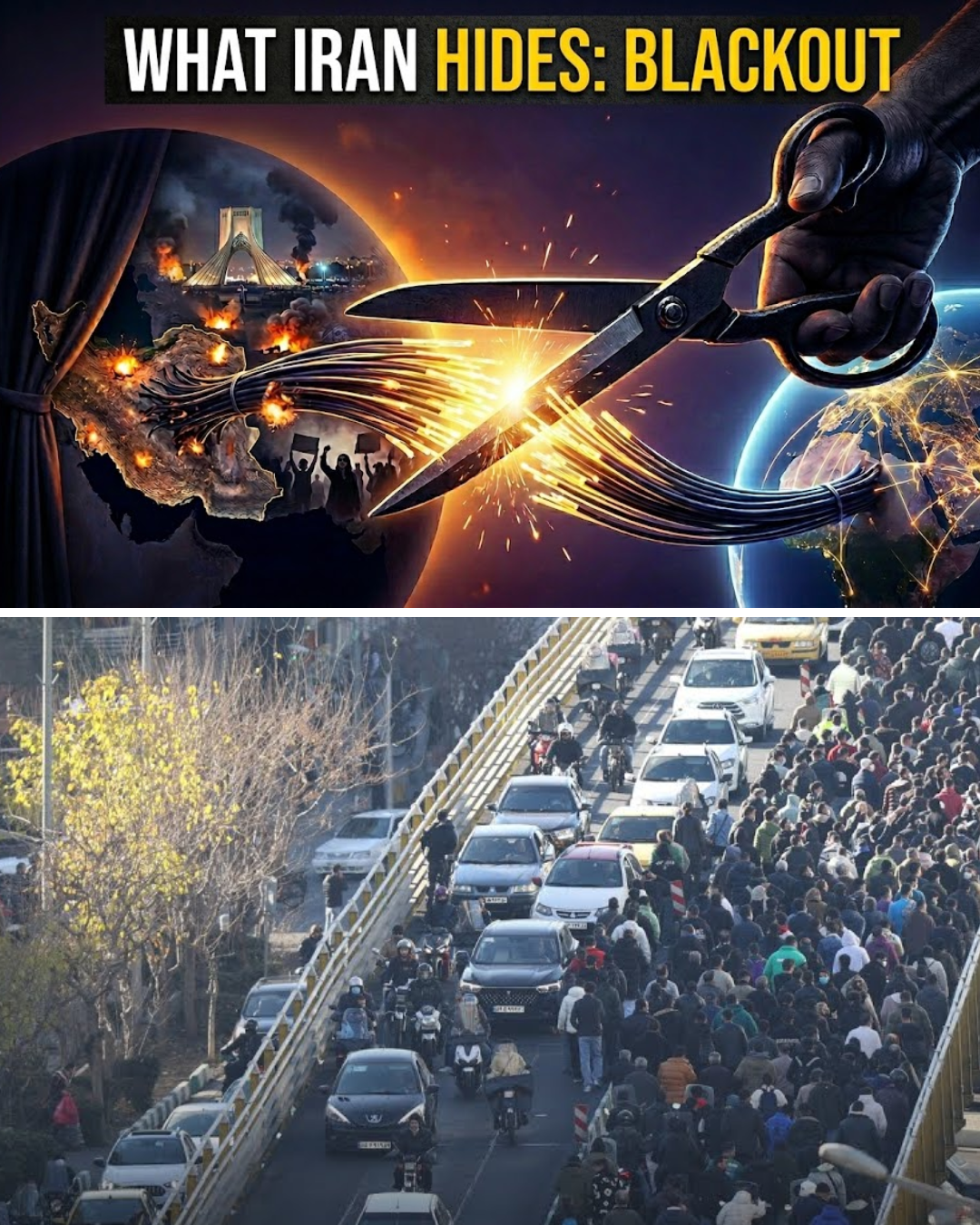
When a government cuts its country off from the internet during wartime, it is rarely a technical coincidence. As Operation Epic Fury entered its second day on March 1, 2026, Iran was experiencing what CNBC described as a “near-total internet blackout” — a deliberate severing of the country’s digital connections with the outside world that raises urgent and disturbing questions about what is happening inside a nation of 87 million people that the regime does not want the world to see.
Iran has a documented history of using internet shutdowns as a tool of social control. During the 2019 fuel price protests — which left hundreds dead according to Amnesty International — Tehran cut off domestic internet access for nearly two weeks to prevent protesters from coordinating and to stop footage of security force violence from reaching international media. A similar blackout was deployed during the Mahsa Amini protests of 2022-2023. The current shutdown, however, is operating on a different scale and under infinitely more volatile circumstances.

The blackout serves multiple simultaneous purposes for what remains of Iran’s leadership apparatus. First, it prevents the Iranian civilian population from accessing real-time information about the scale of the damage inflicted by U.S. and Israeli strikes — satellite imagery, casualty figures, footage of destroyed military and government installations. Controlling the information environment is essential for any government attempting to project resilience and continuity in the immediate aftermath of a decapitation strike.
Second, the blackout suppresses internal coordination among opposition groups, protest networks, and any factions within the IRGC or government that might be tempted to exploit the power vacuum created by Khamenei’s death. Analysts at Channel News Asia noted that the IRGC is particularly focused on preventing “secessionist factions” from acting during the transition — a concern that Ali Larijani himself voiced publicly when he warned of severe consequences for any such groups. An internet blackout is the bluntest possible instrument for that suppression.
Third — and perhaps most strategically significant — the blackout limits the ability of foreign intelligence services to collect open-source intelligence about Iran’s real-time military and political situation. When satellite phones go dark and social media feeds go silent, the intelligence community loses a valuable supplementary layer of situational awareness about what IRGC commanders are saying to each other, what civilian populations are experiencing, and where the fractures in the regime’s authority are deepest.

But blackouts are a double-edged sword. They also prevent the Iranian government from communicating with its own population — from delivering the narrative of national defiance and martyrdom that is central to the Islamic Republic’s political theology in moments of crisis. The regime cannot simultaneously cut off the internet and use it to mobilize patriotic sentiment.
There is also the question of what is actually happening in Tehran and other major cities under the communications blackout. Reports filtering through satellite connections and VPNs suggest significant structural damage in parts of the capital. Independent verification of casualty figures is impossible. The Iranian government has confirmed at least 200 deaths from the strikes, but that figure is almost certainly an undercount, and it almost certainly omits civilian casualties that the regime has political reasons to suppress.
For journalists and human rights organizations, the blackout represents an acute emergency. Without real-time documentation, war crimes cannot be immediately recorded. Without connectivity, trapped civilians cannot call for help. Without social media, the world’s attention drifts to the geopolitical chess match and away from the human beings caught underneath it.
The internet will come back on. When it does, what Iranians share with the world — and what they have lived through — may be the most consequential news of this conflict.