Iran Fires at British Bases in Cyprus: Is Article 5 of NATO Now on the Table?
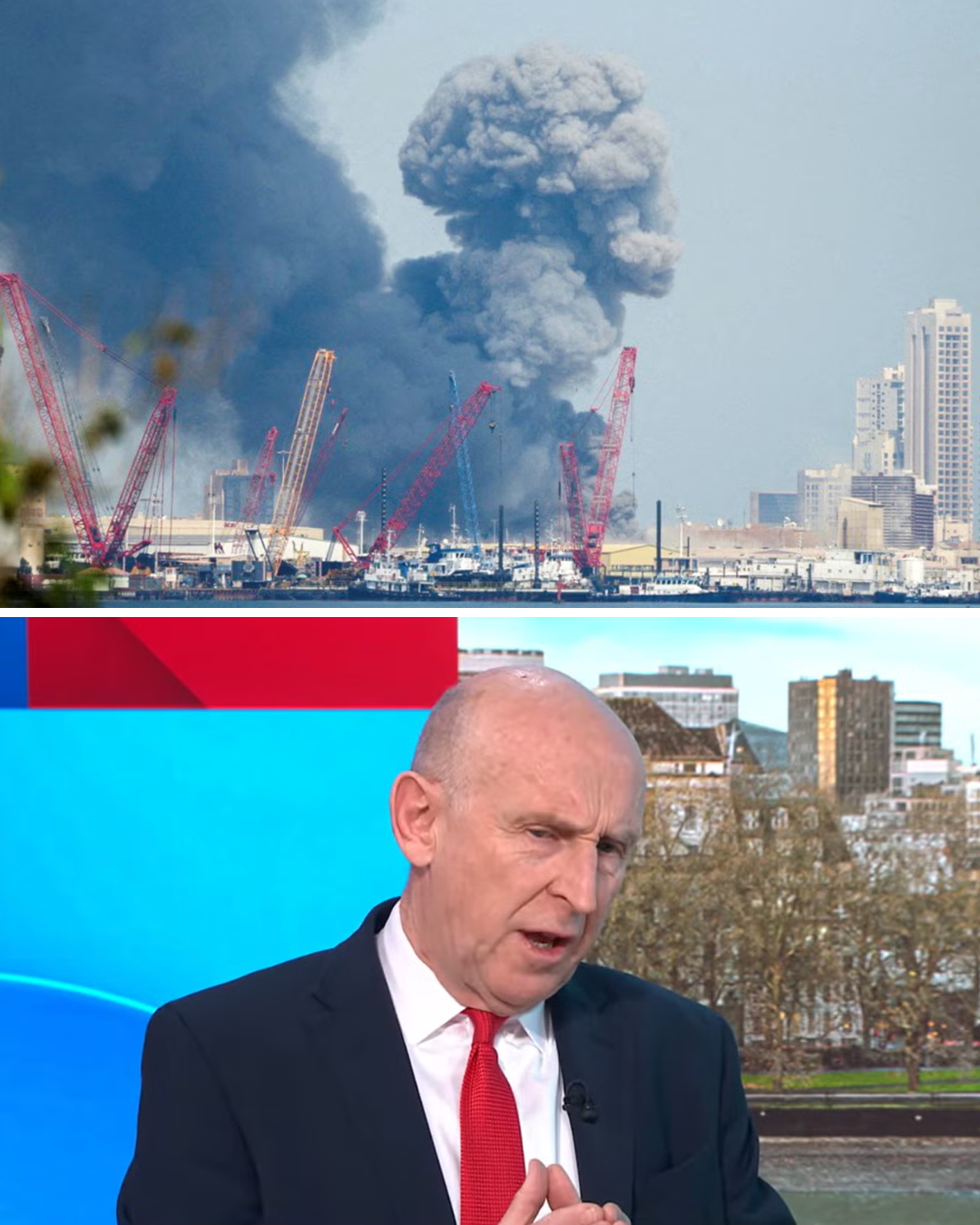
In a development that dramatically widened the geopolitical perimeter of the Iran-U.S. war, British Defence Secretary John Healey confirmed Sunday that Iran had fired two missiles toward British military bases on Cyprus — sovereign UK territory and, by extension, NATO territory. While Healey stated he did not believe the bases were under direct attack, describing the incident as missiles passing “toward” UK facilities, the implications of Tehran deliberately targeting British soil are seismic.
The United Kingdom is a NATO member. NATO’s Article 5, the bedrock of the alliance’s collective defense architecture, holds that an armed attack against one member is an attack against all. Whether two missiles “toward” British bases in Cyprus meet the Article 5 threshold is a question that lawyers, defense ministers, and heads of state across Europe are now urgently debating behind closed doors. The answer will define whether a conflict that began as a U.S.-Israeli bilateral operation could rapidly transform into a NATO versus Iran confrontation.
Cyprus hosts two British Sovereign Base Areas — Akrotiri and Dhekelia — which are not merely military installations but legally British territory, governed by a 1960 treaty at Cyprus’s independence. They are not simply forward-operating bases in a foreign country: they are, under international law, the United Kingdom itself. Any missile deliberately fired at those facilities — regardless of whether it caused damage — constitutes, at minimum, an act of aggression against a NATO member state.
Iran’s apparent motivation for targeting British assets is not difficult to discern. London has provided strong political support for the U.S.-Israeli operation, with UK government spokespeople describing it as targeting “a regime that has posed a direct threat to regional stability for decades.” More practically, British intelligence and signals facilities on Cyprus are widely understood to provide real-time support to U.S. and Israeli military operations in the region. In Tehran’s strategic calculus, Cyprus is not a neutral bystander — it is an active participant in the conflict being waged against it.
The incident puts British Prime Minister Keir Starmer in an extraordinarily difficult political position. A Labour government elected partly on a platform of restoring multilateral consensus to British foreign policy now faces pressure to invoke or explicitly waive Article 5 protections in the context of a conflict that it did not initiate. Invoking Article 5 would potentially drag Germany, France, Italy, and the entire NATO alliance into a war against Iran. Declining to invoke it would permanently weaken the credibility of the alliance’s foundational commitment.
European NATO members — Germany and France in particular — are watching this development with barely concealed alarm. Neither Berlin nor Paris was consulted about Operation Epic Fury. Neither has endorsed it. French President Emmanuel Macron, who had been pursuing his own diplomatic back-channel to Tehran throughout January and February, was reportedly “furious” when strikes commenced without prior warning to European allies. A formal Article 5 invocation by the UK would present European governments with an impossible choice: honor their alliance commitments and enter a Middle East war, or publicly demonstrate that Article 5 is selective.
There is also the China dimension. Beijing has long argued that U.S. unilateralism — the willingness to launch military operations without UN authorization or allied consensus — undermines the rules-based international order. The Cyprus missile incident, and the messy Article 5 question it creates, provides China with an extraordinary propaganda opportunity: evidence that American-led adventurism drags its allies into conflicts they never chose, while the U.S. bears none of the political cost.
Britain did not start this war. But two Iranian missiles arcing toward its territory mean it now has a stake in how it ends that cannot be managed through carefully worded press statements alone.