40 Officials Dead: The Most Comprehensive Decapitation Strike in Modern Military History
History records isolated, controversial cases of wartime leadership targeting: the Allied shoot-down of Admiral Yamamoto’s transport aircraft in 1943; Israel’s decades-long targeted killing program; America’s 2020 drone strike on General Qasem Soleimani. None of these remotely approaches what U.S. and Israeli forces accomplished in the opening hours of Operation Epic Fury on February 28, 2026. According to U.S. intelligence sources cited by CBS News, approximately 40 Iranian government officials — including the supreme leader, the defense minister, the IRGC commander-in-chief, and multiple senior security council members — were killed in a single coordinated strike package.
Forty officials. In a single night. This is not targeted killing as military strategists have historically conceptualized it. This is the systematic elimination of an entire layer of government — a deliberate attempt to collapse the institutional decision-making architecture of a sovereign state through precision-guided violence.
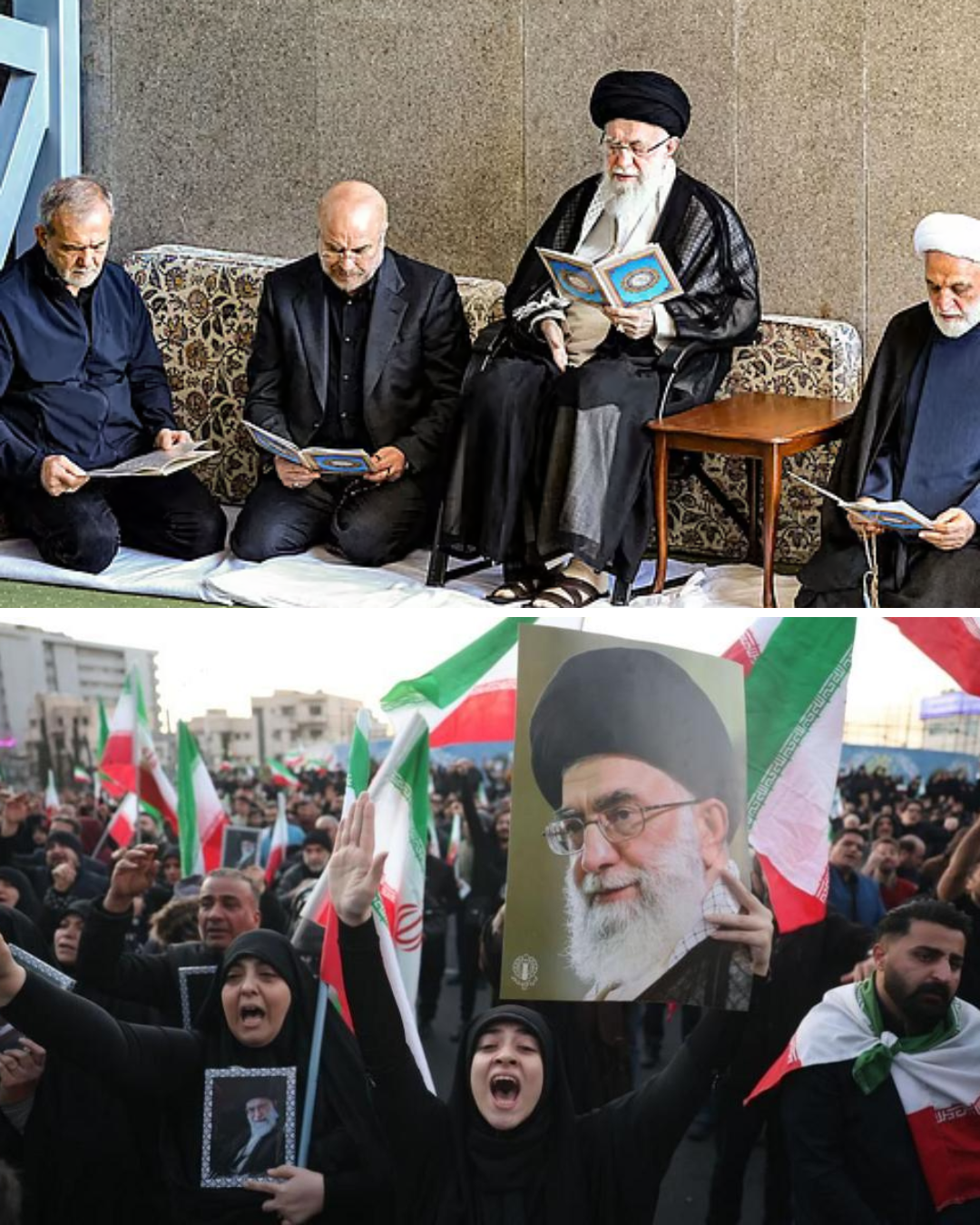
Supreme Leader Ayatollah Ali Khamenei was killed in a strike on his Tehran office, where he was reportedly working at the time of the attack. Iranian Defense Minister Amir Nasirzadeh and IRGC commander-in-chief Mohammed Pakpour were also killed, according to two senior U.S. officials speaking to CBS News on condition of anonymity. Khamenei’s daughter, son-in-law, daughter-in-law, and grandchild were also among the dead — victims of the same strike that targeted their father. The scope of the death toll among the Iranian leadership suggests either extraordinary intelligence penetration of Iranian government locations and movements, or a targeting protocol that struck every known headquarters building simultaneously, regardless of who was confirmed inside.
The intelligence dimension of this operation deserves serious scrutiny. Killing 40 officials in a single overnight operation requires knowing where all of them are at the same time. Iran’s security protocols for protecting senior government officials are among the most sophisticated in the region — the result of decades of Israeli assassination campaigns targeting nuclear scientists and military commanders. That those protocols apparently failed catastrophically suggests either a fundamental breach in Iranian operational security — possibly through an insider — or intelligence gathering of a quality that has never previously been demonstrated publicly.
The operational planning behind the strikes is equally remarkable. CBS News reported that the U.S. and Israeli strike packages targeted different objective categories: Netanyahu’s statements claimed responsibility for the leadership decapitation strikes, while the White House explicitly disclaimed responsibility for targeting Iranian leadership, instead claiming credit only for strikes against military infrastructure and missile programs. This carefully managed division of attribution suggests sophisticated pre-war negotiation between Washington and Tel Aviv about who would formally “own” which elements of the operation — legally, politically, and historically.
Under Protocol I to the Geneva Conventions, attacking civilian government officials who are not “directly participating in hostilities” raises serious questions about protected persons under humanitarian law. The supreme leader is simultaneously the commander-in-chief of the Iranian armed forces and a religious-political official — his status as a “combatant” under IHL is genuinely contested. The defense minister and IRGC commander are more clearly legitimate military targets. But the death of Khamenei’s family members — including a grandchild — in the same strike raises questions that no legal framework easily resolves.
Military strategists will study Operation Epic Fury’s decapitation architecture for decades, regardless of how this conflict resolves. The question they will struggle to answer is the one that has always haunted leadership targeting as a strategy: does killing the head make the body stop? Or does it simply make the body thrash unpredictably, without any mechanism for self-control?
Forty officials are dead. The answer to that question is now being written in real time.