Behind Every Number, A Family Shattered
Reports from inside Iran, supported by eyewitness testimony and documented accounts, speak of more than ninety thousand lives lost over the years — individuals killed, many accused of nothing more than demanding dignity, reform, or freedom.
But even if a government takes only one life, the loss never belongs to that person alone.
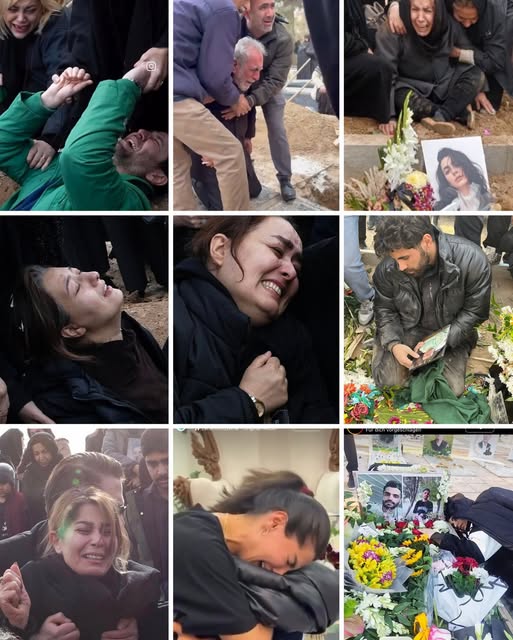
When a single individual dies, the impact spreads outward in quiet, devastating circles. A father loses a child he once lifted onto his shoulders. A mother loses the heartbeat she carried beneath her own. Brothers and sisters lose the laughter that defined their childhood. A spouse loses the future they planned in ordinary conversations. Children lose the steady hand that made the world feel safe.
The death of someone who dared to speak, to protest, or simply to hope for something different is never isolated. It echoes through kitchens and living rooms. It lingers in empty chairs at dinner tables. It turns birthdays into memorials. It transforms everyday routines into reminders of absence.
Grief, in these families, is not an event. It becomes part of daily life — folded into morning silence, woven into photographs on walls, stitched into the spaces where a voice used to be.
Statistics can feel abstract. Ninety thousand. A number that almost overwhelms comprehension. But behind every figure is a name. Behind every name is a family. And behind every family is a story permanently altered.
Political debates may center on power, ideology, or control. Yet for those left behind, the reality is far simpler and far more painful: someone they loved is gone.
Every person who stands for change carries more than their own life. They carry the hopes, memories, and fragile dreams of everyone who stands behind them.
To lose one is to fracture many.
And no number, however large, can fully contain that truth.