“The Ayatollah Is Dead. The War Has Just Begun.”
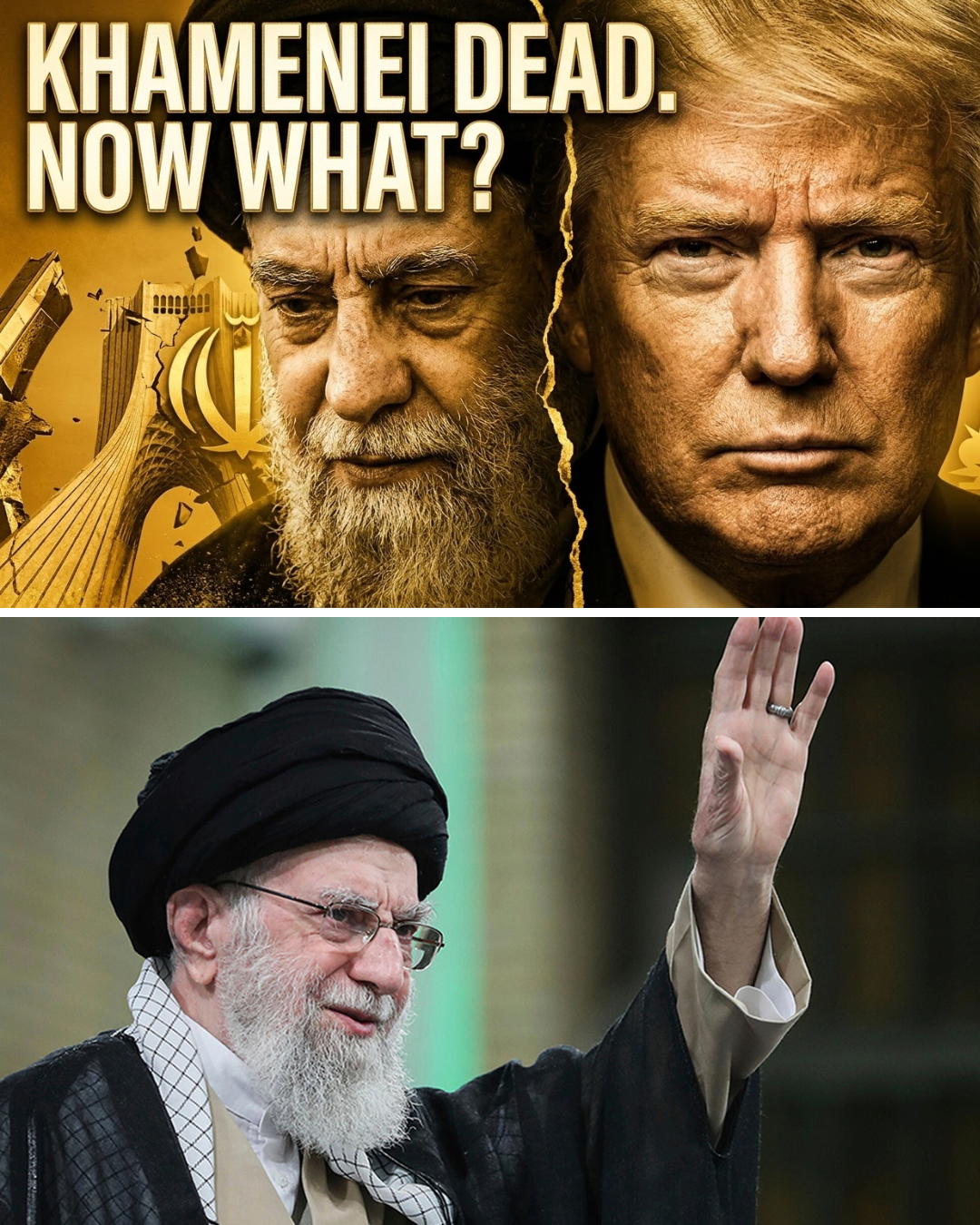
TEHRAN / WASHINGTON — In the early hours of Saturday, March 1, 2026, the world woke up to a geopolitical earthquake decades in the making. Ayatollah Ali Khamenei, the 85-year-old Supreme Leader of the Islamic Republic of Iran, was killed in a coordinated airstrike carried out jointly by United States and Israeli forces. With him died approximately 40 of Iran’s most senior military and security commanders — an execution of the Islamic Republic’s entire command structure, conducted from 30,000 feet in the sky.

The operation, formally designated “Operation Epic Fury,” was the most audacious military action the United States had undertaken since the 2003 invasion of Iraq. President Donald Trump, in a six-minute video address released from the White House, declared that Khamenei “had the blood of hundreds, and even thousands, of Americans on his hands” and described the strikes as having “hit hundreds of targets in Iran, including Revolutionary Guard facilities.” He vowed the campaign would continue “until all of our objectives are achieved,” estimating a timeline of “four weeks or less.”
But what does it actually mean to kill a Supreme Leader?
For 36 years, Khamenei was not merely Iran’s head of state — he was the theological and political keystone of an entire civilizational architecture. Every major policy decision, from nuclear enrichment levels to regional proxy strategy, flowed through his authority. His word was final. His death does not simply remove a man from power; it removes the legitimizing force of an entire system of governance.
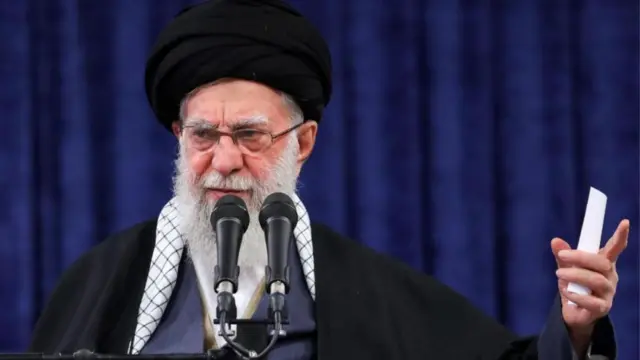
Iran’s constitution, under Article 111, provides a procedural answer: a temporary council will assume leadership until the Assembly of Experts selects a new Supreme Leader. Ali Larijani, Iran’s security chief and a Khamenei loyalist, announced Sunday that “the transition process has commenced.” Yet political scientists are deeply skeptical. The constitution was written in peacetime. Its provisions were never tested under conditions of active bombardment, decapitated command, and national hysteria.
The successor question is already generating fierce speculation. Khamenei’s son, Mojtaba Khamenei — a shadowy, behind-the-scenes figure believed to manage his father’s wealth — has been floated as one candidate. Ali Larijani, experienced and politically calculated, represents another faction. Hassan Khomeini, grandson of the Islamic Republic’s founder, appears to be positioning himself, having recently substituted for Khamenei at a key revolutionary ceremony in February 2026.
But here lies the most explosive question the world must now grapple with: Is this a decapitation strike — or the opening chapter of regime collapse?
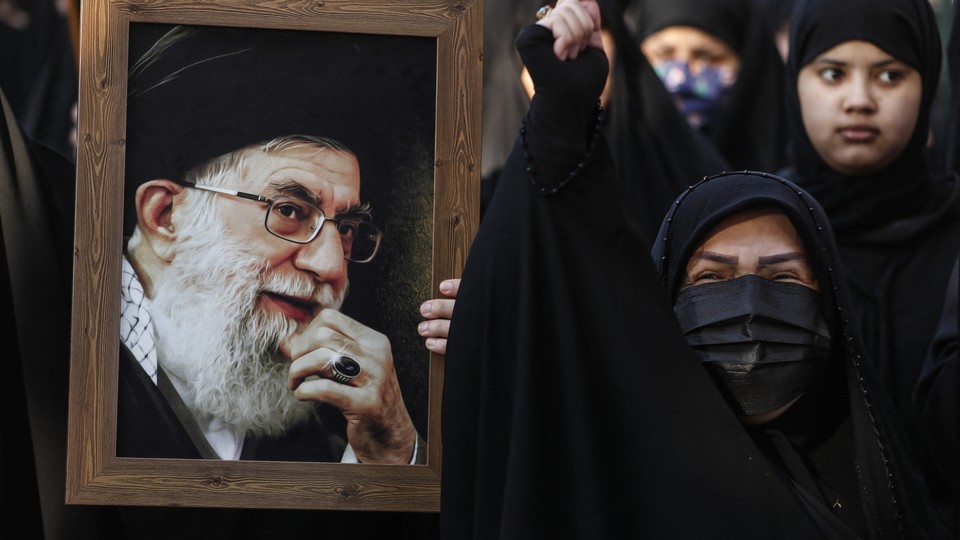
White House strategists, according to multiple senior officials, spent months debating whether removing Khamenei would trigger a popular uprising by Iran’s long-suffering civilian population, who have endured years of economic devastation, internet blackouts, and brutal crackdowns following the 2025–2026 protests. The calculus was brutal but deliberate: create a leadership vacuum large enough that no single figure could reassert total theocratic authority before the people of Iran had the chance to assert themselves.
It is a strategy that mirrors, uncomfortably, the logic of 2003 Baghdad — where the removal of Saddam Hussein was expected to produce spontaneous democratic flowering. What followed was two decades of sectarian bloodshed, institutional collapse, and the rise of ISIS.
Geopolitical analyst Luciano Zaccara of Qatar University was blunt: “Trump’s goal is regime surrender, not change. His approach involves destroying as much as he can to impose conditions rather than negotiate.”
Yet there are those who argue the analogy to Iraq is deeply flawed. Iran is not Iraq. Its society is more educated, its middle class more politically conscious, its reform movements more organized. The question is not whether a power vacuum will emerge — it already has. The question is who will fill it, and whether Washington has any plan for the morning after.
The death of a Supreme Leader is, in historical terms, a once-in-a-generation rupture. What emerges from the rubble of Khamenei’s legacy — a more moderate Iran, a more radical one, or simply a more chaotic one — may define the Middle East for the next 50 years.
History will judge whether Operation Epic Fury was a masterstroke of strategic foresight — or the most catastrophic miscalculation since the fall of Baghdad.