Massive 20-Meter Discovery Emerges During Railway Construction Project
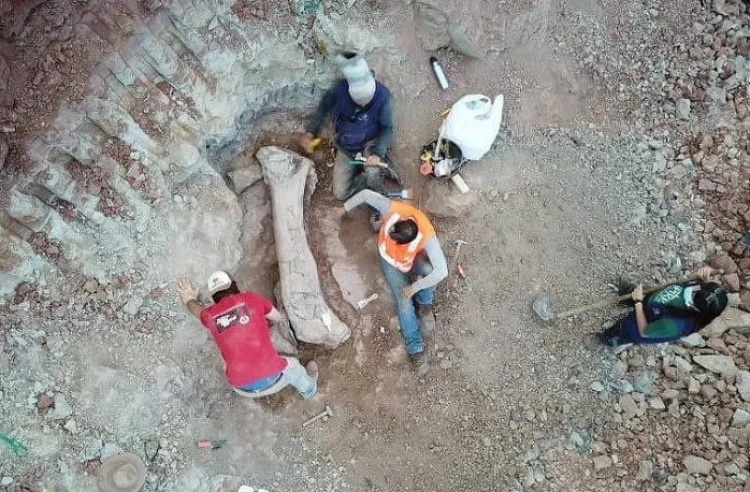
A previously unknown monster has emerged from the Itapecuru Formation in northeastern Brazil.
According to Sci-News, the new South American creature, named Dasosaurus tocantinensis, is a member of the great Sauropod family (saurid dinosaurs) that lived approximately 120 million years ago, during the early Cretaceous period.
A partial fossilized skeleton of Dasosaurus tocantinensis was found in the Itapecuru Formation during railway construction near the town of Davinópolis, Maranhão state, northeastern Brazil.
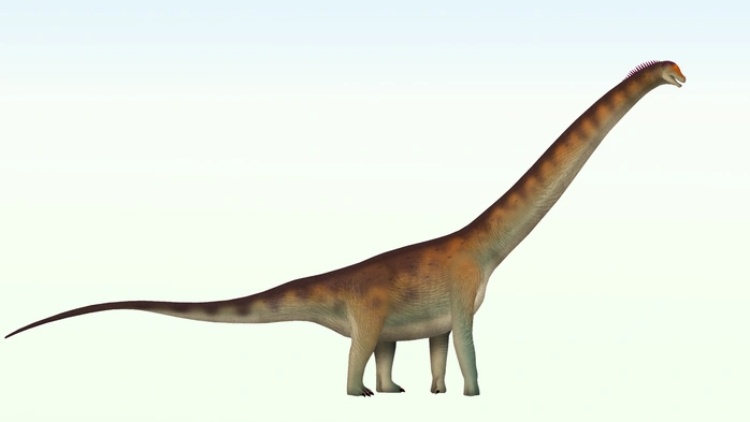
The creature’s caudal vertebrae have a unique set of three long ridges and grooves, while the femur shows a distinct bulge on its side. These are anatomical features never before seen together in any previously described species.
Writing in the scientific journal Journal of Systematic Palaeontology, the research team, led by Max C. Langer from the University of São Paulo (Brazil), stated that this creature could have been up to 20 meters long.
Like other Sauropods, it possessed a massive body, a very long neck and tail, and four sturdy legs.
This new species belongs to the “titanosauriform” group of dinosaurs, meaning it resembles the Titanosaurus but not belongs to this branch.
Comparisons suggest it may be the closest known relative of Garumbatitan morellensis, a Sauropod that lived in what is now Spain about 122 million years ago.
Besides naming a new species, this discovery also strengthens evidence that early Cretaceous South America was not an isolated evolutionary region.
Instead, this area was part of a dynamic land network that allowed dinosaurs to move between continents long before the Atlantic Ocean fully formed.
This new species belongs to the “titanosauriform” group of dinosaurs, meaning it resembles the Titanosaurus but doesn’t belong to this branch.
Comparisons suggest it may be the closest known relative of Garumbatitan morellensis, a sauropod that lived in what is now Spain about 122 million years ago.
Besides naming a new species, this discovery strengthens evidence that early Cretaceous South America was not an isolated evolutionary region.
Instead, the area was part of a dynamic land network that allowed dinosaurs to move between continents long before the Atlantic Ocean fully formed.