THE DEATH OF A SUPREME LEADER: How the Killing of Khamenei Rewrote the Rules of Modern Warfare
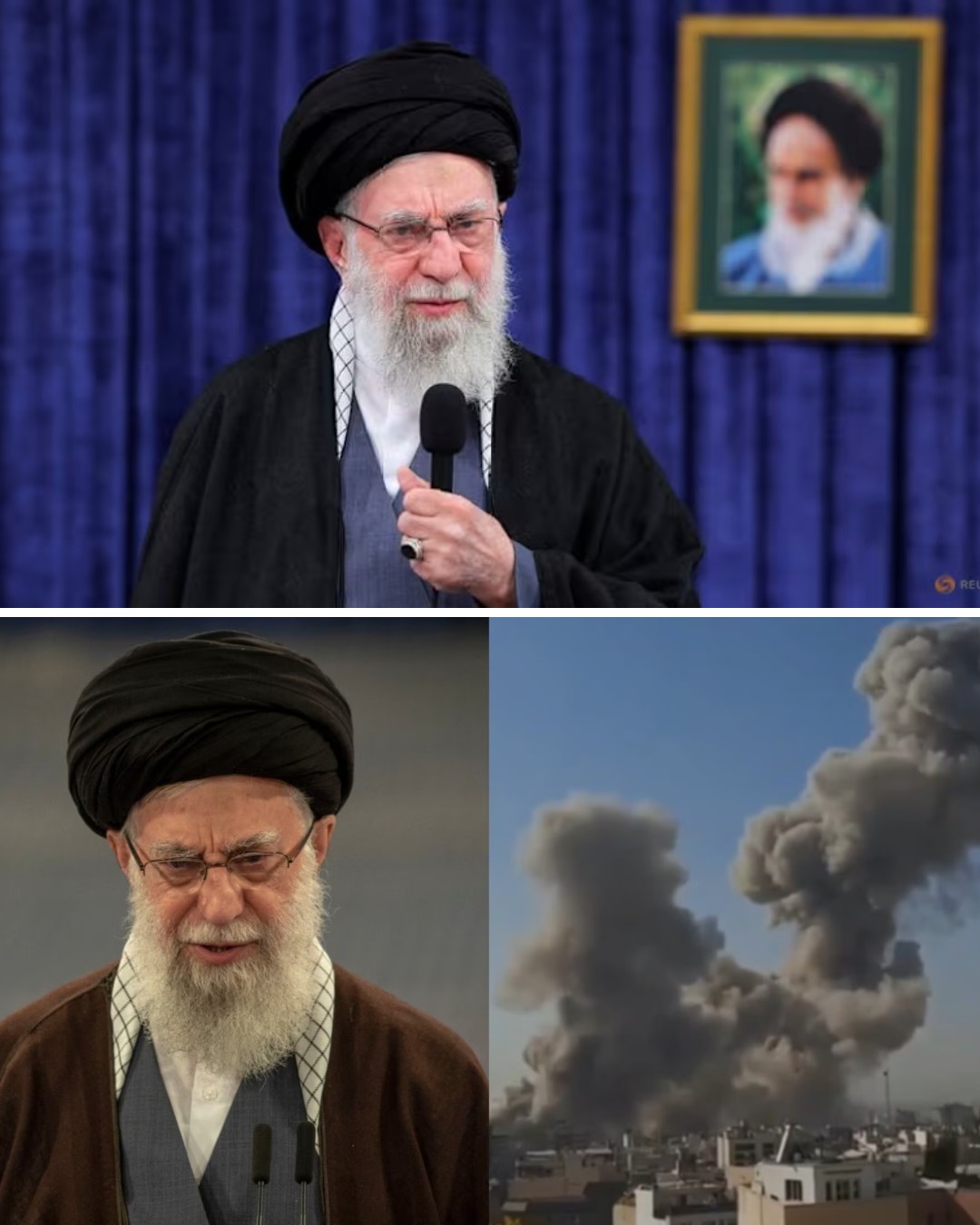
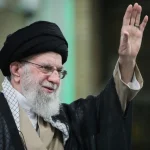
For 36 years, Ayatollah Ali Khamenei ruled Iran with an iron fist — surviving wars, sanctions, assassinations of his generals, and wave after wave of domestic revolt. He outlasted eight U.S. presidents. He watched empires reconfigure the Middle East around him. He was, in the eyes of many, untouchable. On the morning of February 28, 2026, the CIA proved otherwise.
The joint U.S.-Israeli strike that killed Khamenei at a senior officials’ compound in Tehran did not simply eliminate a single man. It decapitated an entire theological-military system that had defined Iranian governance since the 1979 Revolution. According to CBS News, the CIA had spent months tracking the Supreme Leader’s movements, learning his patterns, his safe houses, and his meeting schedules. The intelligence breakthrough came when agents confirmed that Khamenei would attend a Saturday morning gathering of Iran’s senior military and intelligence apparatus. Two hundred U.S. and Israeli fighter jets were already airborne. Within hours, Iran’s entire military command structure — built over four decades — was, in the words of one official briefing, “largely gone.”
The operation’s success raises questions that will define the doctrine of warfare for a generation. Can a nation be decapitated faster than it can respond? The answer, terrifyingly, appears to be yes. In a single morning strike, the United States and Israel removed not just a figurehead, but the ideological engine of one of the world’s most entrenched theocracies. Forty top Iranian military officials were killed alongside Khamenei, according to the Israeli military. The Revolutionary Guard, Iran’s most powerful armed force, found itself leaderless in the most critical moments after the strike.
Yet history offers a sobering counterpoint: decapitation strikes rarely end wars cleanly. The killing of Osama bin Laden did not end al-Qaeda. The assassination of Qasem Soleimani in 2020 did not neutralize the IRGC — it radicalized it. The question that analysts are now wrestling with is whether eliminating Khamenei will fracture Iran’s will to fight, or whether it will transform a calculated military regime into an enraged, decentralized insurgency with nothing left to lose.
From a psychological warfare perspective, the impact on Iranian society is seismic. Khamenei was not merely a politician; he was the Velayat-e Faqih — the Guardian Jurist, the living embodiment of God’s authority over the Islamic state. His death creates a theological vacuum that no missile strike can fill. Iran has declared 40 days of national mourning. But behind the mourning, a power struggle of extraordinary complexity is already brewing among hardliners, Revolutionary Guard commanders, and reformist factions who have waited decades for precisely this moment.
There is also the legal dimension. The killing of a head of state in a pre-emptive strike — even framed as self-defense — tears at the fabric of international law that has, however imperfectly, governed great power conflict since 1945. China and Russia have already condemned the strikes. The United Nations Security Council is in emergency session. The precedent set here is stark: if the United States can kill a supreme leader of a sovereign nation because of a nuclear weapons program, what protection does any government possess from a technologically superior adversary?
The intelligence operation itself deserves scrutiny. The CIA’s months-long tracking of Khamenei suggests a penetration of Iranian security at the highest levels. This is not merely a matter of satellite imagery; it implies human intelligence assets embedded at the apex of the Islamic Republic. For Iran’s new leadership — whoever they turn out to be — the discovery that the inner circle was compromised will trigger a brutal internal purge, making the regime less predictable, not more.
Operation Epic Fury, as Washington has branded the campaign, was designed to destroy Iran’s nuclear program, its ballistic missile infrastructure, and its military command in one decisive blow. Whether it achieves all three objectives remains to be seen. But the killing of Khamenei is already the defining moment of the conflict — an event that will be studied, debated, and mourned in ways that will reverberate far beyond the borders of Iran or Israel.
The Supreme Leader is dead. The war is far from over.