DUBAI IN FLAMES: The Night the World’s Safest City Discovered It Was Never Safe At All
For decades, Dubai sold the world a fantasy: a glittering, tax-free, war-proof oasis where billionaires parked yachts, influencers chased golden sunsets, and the global elite escaped geopolitical turbulence. The Burj Khalifa scraped the clouds. The Palm Jumeirah jutted into a tranquil Gulf. Conflict was something that happened to other cities — Beirut, Mosul, Kabul. Not here.
On the night of February 28, 2026, Iran shattered that illusion with 137 missiles and 209 drones.
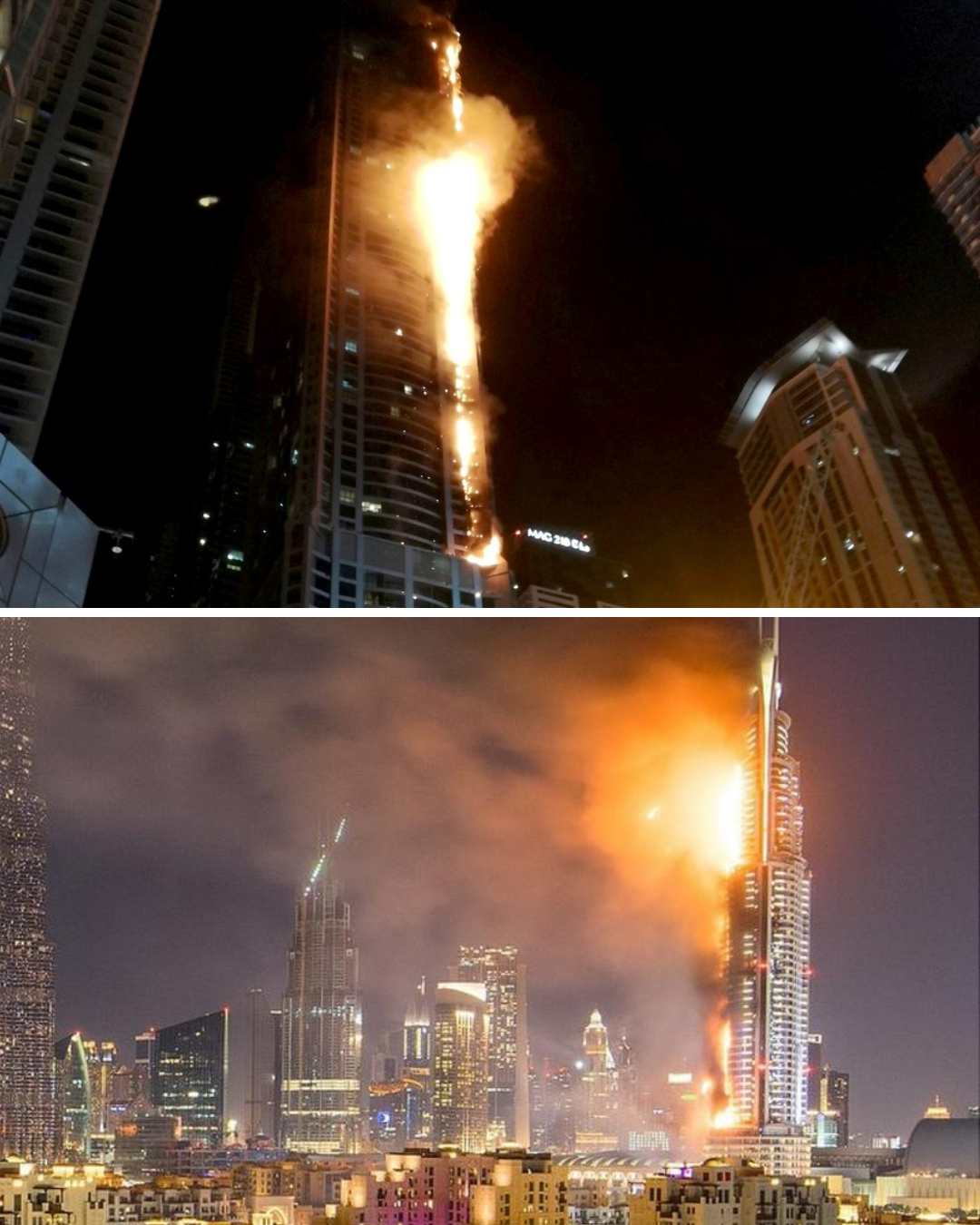
Videos that flooded social media within minutes showed streaks of fire arcing past the Burj al-Arab — the sail-shaped hotel that has become perhaps the single most recognizable symbol of Gulf opulence — before debris caused it to catch fire. Another video showed a direct strike on the Palm Jumeirah, the iconic man-made island where villas sell for tens of millions of dollars. The government of Dubai confirmed the strike, reporting four injuries, with the description feeling almost surreal: “an incident occurred in a building in the Palm Jumeirah area.” In the language of crisis communications, even war becomes a real estate bulletin.
Dubai International Airport — the world’s busiest airport for international passenger traffic — sustained damage and suspended operations. Flights across the Gulf were cancelled or diverted. For a city whose entire economic identity rests on the frictionless movement of capital, goods, and wealthy tourists, the closing of its airport was not just a security event. It was an existential signal.
The attacks on Gulf states represent a calculated Iranian strategy: if the UAE, Bahrain, Qatar, and Kuwait host American military bases, then they are legitimate targets under Iranian doctrine. Iran’s Secretary of the Supreme National Security Council, Ali Larijani, stated it with cold clarity: “These bases are not part of the land of those countries; rather, they are American soil.” It was simultaneously a legal argument, a threat, and a warning to Arab governments that neutrality in this conflict would not protect them.
The human cost in the Gulf was immediate. More than 100 people were injured and at least four killed across the UAE, Qatar, Bahrain, and Oman. At Abu Dhabi International Airport, one person was confirmed dead after an Iranian munition struck the facility. These are relatively contained figures given the scale of the missile barrage — a testament to regional air defense systems — but the psychological impact dwarfs the physical toll.
The deeper question now facing Dubai’s leadership is one of identity. The city-state has spent 30 years positioning itself as neutral ground — a place where Israelis and Iranians could both conduct business, where American executives and Chinese investors could close deals at the same breakfast table. That careful neutrality is now in tatters. The Abraham Accords normalized relations between the UAE and Israel. Iranian missiles were the inevitable response.
For the 3.5 million expatriates who call Dubai home — South Asians, Africans, Europeans, Americans — the night of February 28 introduced a new, unwanted reality. Many had moved to Dubai precisely because it seemed immune to the instability of their home countries. The social media dispatches from that night — terrified migrant workers filming missiles from their apartment balconies, influencers posting disbelief from luxury hotels — captured a city mid-transformation: from stage set to battleground.
The economic consequences are already cascading. Global insurance markets moved instantly to reprice Gulf risk. And the tourism industry — which welcomed 17 million visitors in 2025 alone — faces a crisis of confidence that no marketing campaign can easily reverse.
The fantasy of an invulnerable Dubai served everyone well for three decades. The question now is not just whether Dubai can recover. The question is what kind of city, and what kind of illusion, emerges from the ruins of the Palm.