THE HORMUZ CHOKEPOINT: How One Strait Holds the Global Economy Hostage
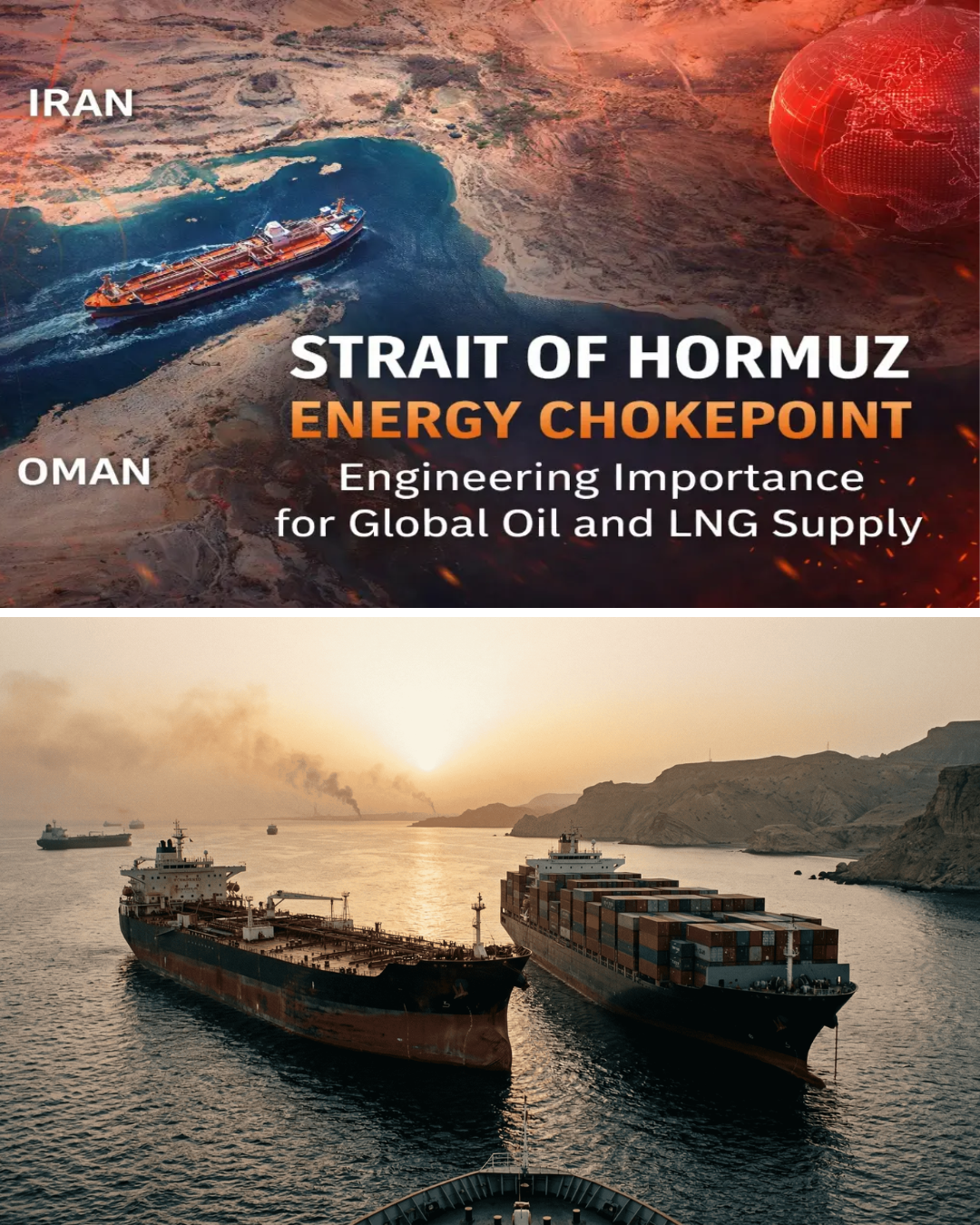
A narrow body of water — at its tightest, barely 33 kilometers wide — has become the most consequential geography on earth this week. The Strait of Hormuz, the channel between Iran and Oman through which approximately one-fifth of the world’s seaborne oil travels daily, has effectively ceased to function. And with it, the economic foundations of dozens of nations are trembling.
The moment Iranian forces attacked vessels in the Strait, the global energy market responded with a ferocity not seen since the 1973 oil embargo. Brent crude surged as much as 13 percent, briefly topping $82 a barrel. West Texas Intermediate climbed sharply. Tanker traffic through the strait — which normally handles 15 million barrels per day — has largely halted, with shipping companies imposing voluntary pauses as their insurers refused to underwrite vessels transiting a war zone. Oil analysts at Wood Mackenzie warned that if flows are not restored quickly, prices could exceed $100 a barrel.
Two vessels were struck while attempting to traverse the Strait on Sunday alone. Iran’s Revolutionary Guard confirmed it had hit three U.S. and UK oil tankers in the Gulf and the Strait of Hormuz. Hundreds of additional vessels — oil supertankers, LNG carriers, container ships — dropped anchor in nearby waters rather than risk the passage. The ripple effects are immediate and global: refineries in Asia, Europe, and North America that rely on Gulf crude are calculating how long their reserves can sustain operations.
To understand why this matters at a civilizational scale, consider the geography. The Strait of Hormuz is not merely a trade route — it is the sole maritime exit for the petroleum of Saudi Arabia, Iraq, Kuwait, the UAE, and Qatar. Combined, these nations account for roughly 30 percent of globally traded oil. There is no credible short-term alternative. The proposed East-West pipeline through Saudi Arabia has capacity for only a fraction of current flows.
For China, the stakes are acute. Beijing purchases an estimated 1 to 1.5 million barrels per day of Iranian crude. Beyond Iranian oil, China imports vast quantities of Saudi, Iraqi, and Emirati crude — almost entirely via the Strait. Chinese state media has condemned the U.S.-Israeli strikes, but Beijing’s condemnations mask a more urgent private calculation: every day the Strait remains closed costs the Chinese economy in ways that no diplomatic statement can absorb.
India, Japan, and South Korea — all major importers of Gulf oil — are equally exposed. Airline shares across Asia fell sharply as markets opened on Monday. Investors moved into the dollar, gold, and Swiss franc, the classical safe havens of crisis periods.
The irony is devastating: the United States, whose shale revolution made it the world’s largest oil producer, is substantially less dependent on Gulf energy than it was during the 1970s oil shocks. Yet the economic devastation from a Hormuz closure will fall most heavily on American allies and trading partners, not on America itself. A global recession triggered by $100-plus oil will not distinguish between the belligerents and the bystanders.
The military calculus around the Strait is equally complex. Iran has spent decades building anti-ship missile batteries, submarine capabilities, and fast-attack boat fleets specifically designed to make the Strait ungovernable in wartime. Operating U.S. naval assets inside such a dense missile envelope is a fundamentally different proposition than blue-water operations.
The Strait of Hormuz has always been the unspoken hostage in Iran-U.S. tensions. This week, Iran called the bluff. The entire world is now negotiating the ransom.