148 CHILDREN: The Strike on a Girls’ School That the World Cannot Afford to Look Away From
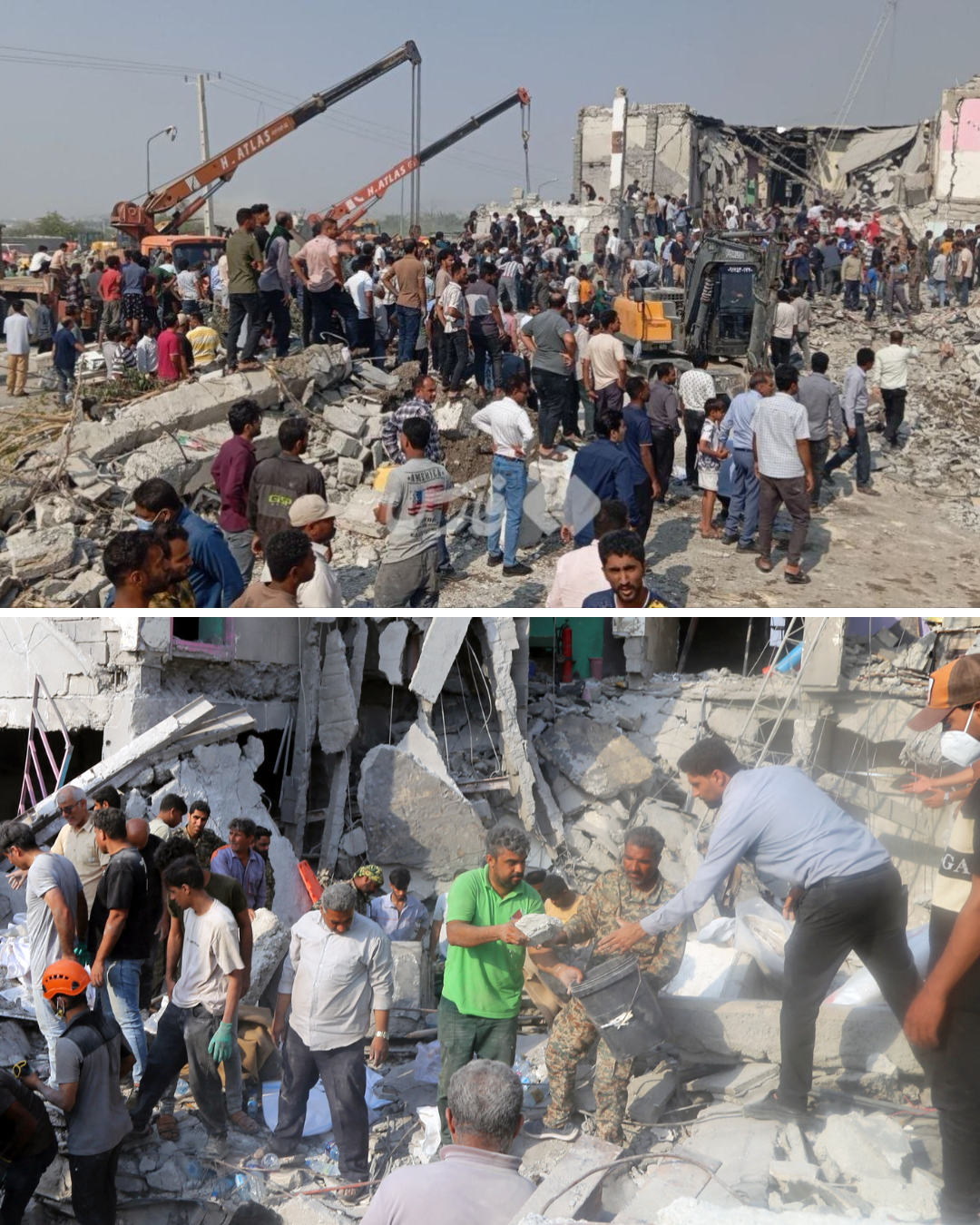
War produces atrocities. This is not a revelation — it is a grim constant of human conflict documented across centuries. What separates one atrocity from another, in the court of global opinion and in the eventual dock of international justice, is the specificity of the horror and the willingness of the powerful to be held accountable for it. The strike on Minab demands that reckoning.
According to Iranian judiciary officials, a strike on an elementary school for girls in the southern Iranian city of Minab killed 108 children. A separate compilation by Al Jazeera, drawing on multiple official sources, puts the figure at 148 children killed in the same strike. The discrepancy in the numbers itself tells a story: the chaos of war, the collapse of reliable information infrastructure, and the grim possibility that the full death toll may still be rising.
The city of Minab sits in Hormozgan Province in southern Iran, close to the Strait of Hormuz. It is not a military hub. It is a historic port city known for its traditional markets, its embroidered textiles, and the distinctive patterned masks — the “boregheh” — worn by its women. The elementary school was, by every account, a civilian institution. The children inside it were, by every definition, non-combatants.
Israel’s military stated that its strikes targeted “multiple sites where senior Iranian officials had gathered in Tehran” and focused on missile launchers and military infrastructure. The Israeli Defense Forces have not addressed the Minab school strike directly. The United States has also not issued a public statement attributing responsibility or acknowledging the school as a target.
This silence is itself consequential. Under international humanitarian law — specifically the Geneva Conventions and their Additional Protocols — parties to a conflict are obligated to take all feasible precautions to avoid civilian casualties, to distinguish between combatants and civilians, and to refrain from attacks whose anticipated civilian harm is disproportionate to the concrete military advantage gained. The strike on a girls’ elementary school in a non-military city does not, on its face, satisfy these requirements.
The geopolitical context will inevitably complicate the legal analysis. Supporters of the operation will argue that Iran’s nuclear program represents an existential threat that justifies extraordinary military action; that Iran deliberately co-locates military assets near civilian infrastructure; and that in the fog of a complex multi-front air campaign, tragedies of this kind must be weighed against the larger stakes. Critics will argue that none of these justifications can be applied retroactively to 148 dead children.
The International Criminal Court has jurisdiction over war crimes committed in conflicts involving states that have ratified the Rome Statute. The United States has not ratified it; Israel withdrew its signature in 2002. Iran is not a member either. This legal architecture — or rather, its absence — means that formal prosecution at the ICC is unlikely. But “unlikely” and “impossible” are different words.
What cannot be obscured by legal technicalities is the image that has now embedded itself in the global consciousness: an elementary school in Minab, populated by girls in their school uniforms, destroyed in a strike whose military rationale has yet to be articulated. Human Rights Watch and Amnesty International have called for immediate investigation. The UN High Commissioner for Human Rights has demanded accountability from all parties.
Every war claims to be fighting for civilization. In Minab, something civilized was unmistakably destroyed.