IRAN’S NEXT SUPREME LEADER: The Power Vacuum That Will Shape the Middle East for Decades
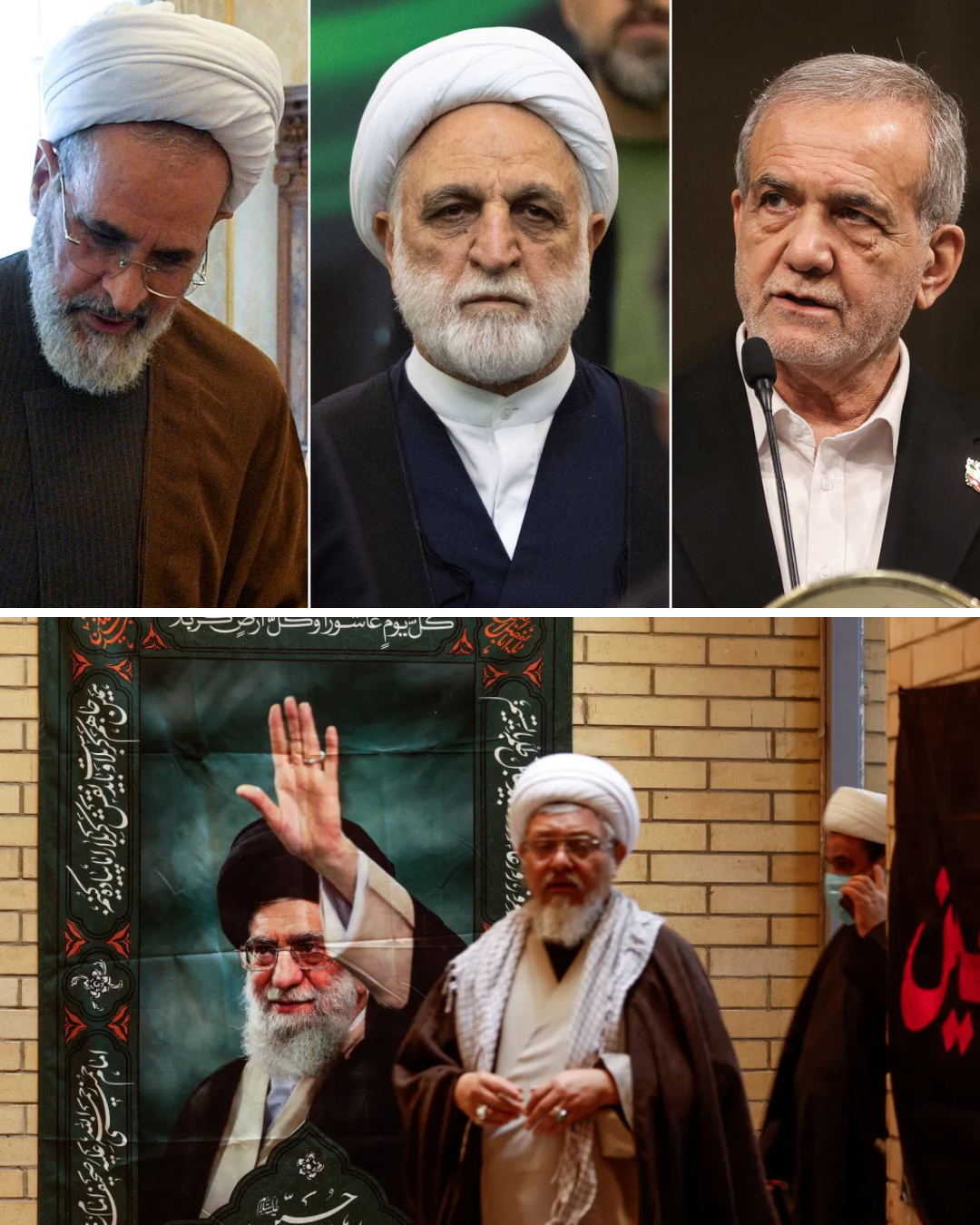
When Ayatollah Ruhollah Khomeini died in 1989, the Islamic Republic had a ready successor: Ali Khamenei, elevated to Supreme Leader through a process that was, by the standards of theocratic governance, remarkably smooth. The transition preserved the Velayat-e Faqih — the doctrine of clerical guardianship over the state — and the revolution continued.
Today, with Khamenei dead under the rubble of a U.S.-Israeli strike, the succession question is dramatically more complicated, and its outcome will determine not merely who leads Iran, but what kind of Iran emerges from this war.
The formal mechanism is clear: the Assembly of Experts, an 88-member body of senior clerics elected every eight years, is constitutionally empowered to appoint a new Supreme Leader. But the Assembly is meeting amid active warfare, with its members scattered, communications infrastructure degraded by strikes, and the IRGC — which has traditionally served as the power behind the throne — now leaderless following the simultaneous killing of its senior commanders.
Three broad factions are already maneuvering for influence. The first is the hardline clerical establishment centered in Qom, which would prefer a theologically credentialed ayatollah who can claim the mantle of Khomeini’s legacy. The problem is that the most qualified clerics — those at the Grand Ayatollah level — have historically been reluctant to subordinate spiritual authority to state power. Several prominent Grand Ayatollahs inside Iran have quietly opposed the fusion of religious and political rule for decades.
The second faction is the Revolutionary Guard Corps itself. The IRGC has, over the past two decades, evolved from a military force into a political and economic empire, controlling vast swathes of the Iranian economy and maintaining parallel intelligence and foreign policy operations. With its senior leadership decimated, the IRGC faces an acute internal succession crisis simultaneously with the national one. But its institutional culture — disciplined, ideologically coherent, and contemptuous of reform — means it will work aggressively to ensure that whoever becomes Supreme Leader is answerable to the Guard’s strategic interests.
The third faction is the one that Western analysts most hope for and Iranian hardliners most fear: reformists and pragmatists who have spent years arguing that Iran’s confrontational foreign policy has produced only impoverishment and isolation. Former President Hassan Rouhani, currently under house arrest, has long embodied this tendency. So, in different ways, have figures like Mohammad Khatami and a younger generation of politicians who have watched Iran’s economy collapse under sanctions and its young people flee.
The wildcard is the Iranian street. The 2025–2026 protests — which the regime suppressed with brutal violence — demonstrated that a substantial segment of Iranian society is not willing to simply accept indefinite theocratic rule. The killing of Khamenei has removed the single most powerful symbol of the system’s legitimacy. Behind the state-mandated mourning, there are reports of quiet, careful celebrations in Tehran neighborhoods where the regime has been most violently repressive.
The international community is watching with a mixture of hope and dread. A pragmatic successor, willing to negotiate Iran’s nuclear program in exchange for sanctions relief and security guarantees, would offer a path out of the current catastrophe. A hardline successor — or, more dangerously, a fractured leadership vacuum — would transform the conflict from a military campaign into a permanent insurgency.
History offers grim warnings. The removal of Saddam Hussein in 2003 was similarly framed as a decapitation that would liberate a people. What followed was two decades of violence, sectarian conflict, and regional destabilization that reshaped the entire Middle East.
Iran’s next Supreme Leader has not yet been named. But the choice will echo for generations.