HEZBOLLAH STRIKES BACK: How Iran’s Longest Arm Is Turning Lebanon Into the War’s Second Front
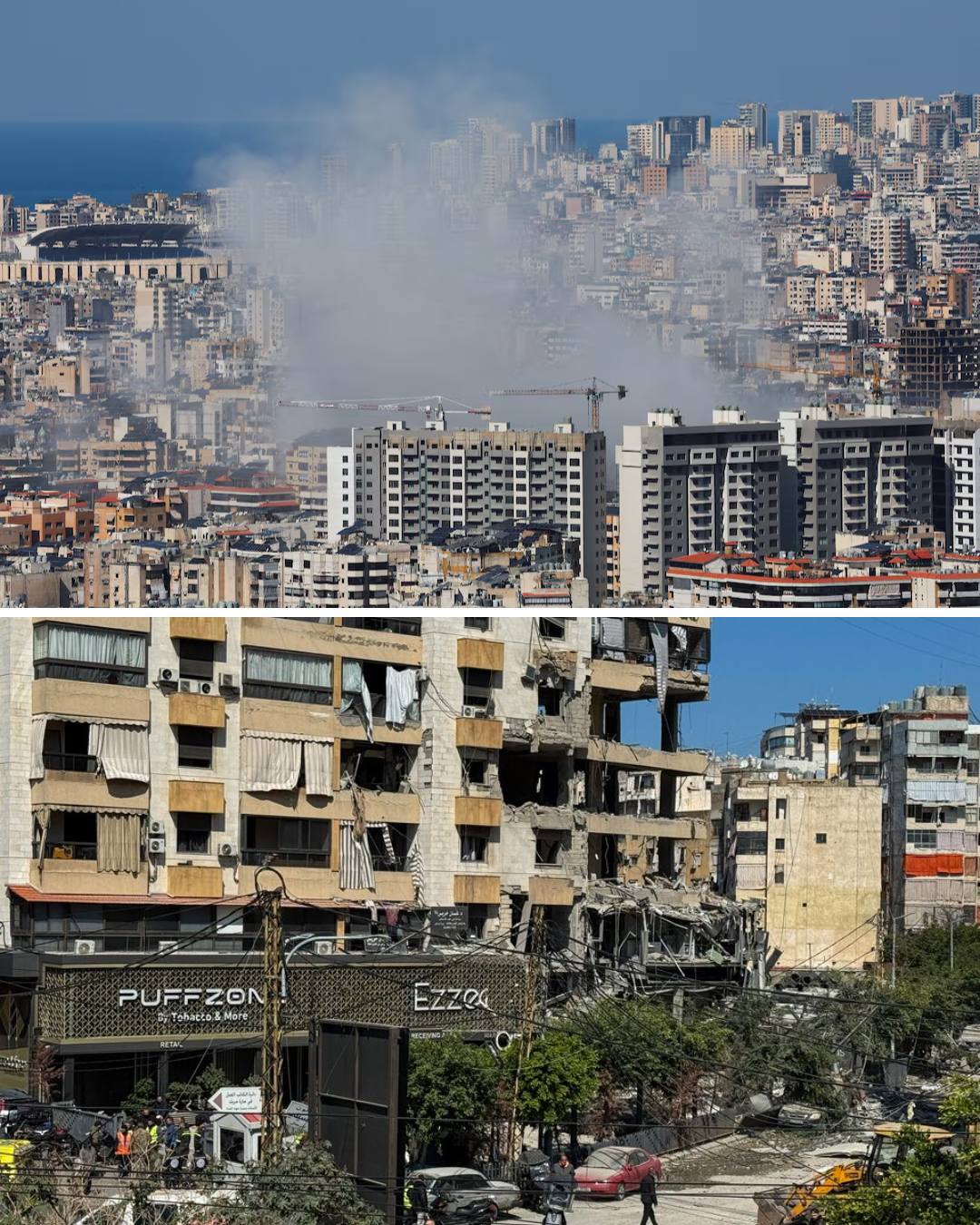
The rockets came from Lebanon. Within hours of Ayatollah Khamenei’s death, Hezbollah announced it was launching strikes against Israeli targets, describing the operation as retaliation for “the killing of Iran’s Supreme Leader” and for “repeated Israeli aggressions.” In a single statement, the Lebanese militant organization — armed, financed, and ideologically sustained by Tehran for four decades — confirmed what military analysts had long warned: any war with Iran would not be a bilateral conflict. It would be a regional one.
Hezbollah’s involvement transforms the strategic calculus of Operation Epic Fury in ways that extend well beyond the missile trajectories. The organization maintains an estimated arsenal of 130,000 to 150,000 rockets and missiles — the largest non-state weapons stockpile in the world. Its fighters are battle-hardened from years of combat in Syria. More importantly, Hezbollah’s missiles are capable of reaching virtually every major Israeli city, including Tel Aviv, Haifa, and the Dimona nuclear research complex.
Israel was already engaged in “large-scale” strikes targeting what it described as the “heart of Tehran” on Sunday, with 200 fighter jets conducting campaigns to “establish aerial superiority and to pave the path to Tehran.” The addition of a serious Hezbollah offensive on Israel’s northern border creates a two-front military reality that stretches Israeli Air Force logistics, air defense batteries, and intelligence resources simultaneously.
For Lebanon, the consequences are devastating regardless of which side one supports. The country has never fully recovered from the 2006 Lebanon War, or from the August 2020 Beirut port explosion, or from the economic collapse that has reduced it to one of the world’s poorest nations. Another major military confrontation on Lebanese soil risks transforming a broken state into a failed one. Hospitals that lack basic supplies, a currency that has lost 98 percent of its value, and a government incapable of basic functions are not the infrastructure of a nation that can absorb a renewed war.
The question of whether Hezbollah’s leadership has genuine operational independence — or whether it is functionally obligated to respond to the killing of its patron — is one that analysts have debated for years. The answer, in practice, appears to be both: Hezbollah is strategically aligned with Iran in ways that make non-response to Khamenei’s killing functionally impossible for its own credibility, but it also retains tactical decision-making that allows it to calibrate the intensity and timing of its response.
There is also the Shia demographic dimension. Hezbollah’s base of support draws deeply from Lebanon’s Shia community, for whom Khamenei represented not just a political ally but a religious authority. Leaders who fail to translate that mourning into action risk losing the political legitimacy that sustains their military power.
The involvement of Hamas adds another vector. While Hamas’s military capabilities have been significantly degraded by prior Israeli operations, its ideological alignment with the resistance axis creates the possibility of renewed violence in Gaza precisely when Israeli military resources are stretched between Tehran, Lebanese Hezbollah, and Gulf-based Iranian drone attacks.
Western governments are watching the northern front with particular alarm. The U.S. maintains significant bases across the Gulf — in Bahrain, Qatar, and Kuwait — all of which have now been targeted by Iranian munitions. A simultaneous Hezbollah escalation strains American capacity to simultaneously protect Gulf allies, sustain the air campaign against Iran, and prevent a full-scale Lebanon war.
Hezbollah’s rockets are in the air. The second front is open. The war that began as a surgical strike is metastasizing by the hour.