CHINA’S SILENT CALCULATION: Why Beijing Is the War’s Most Powerful Spectator
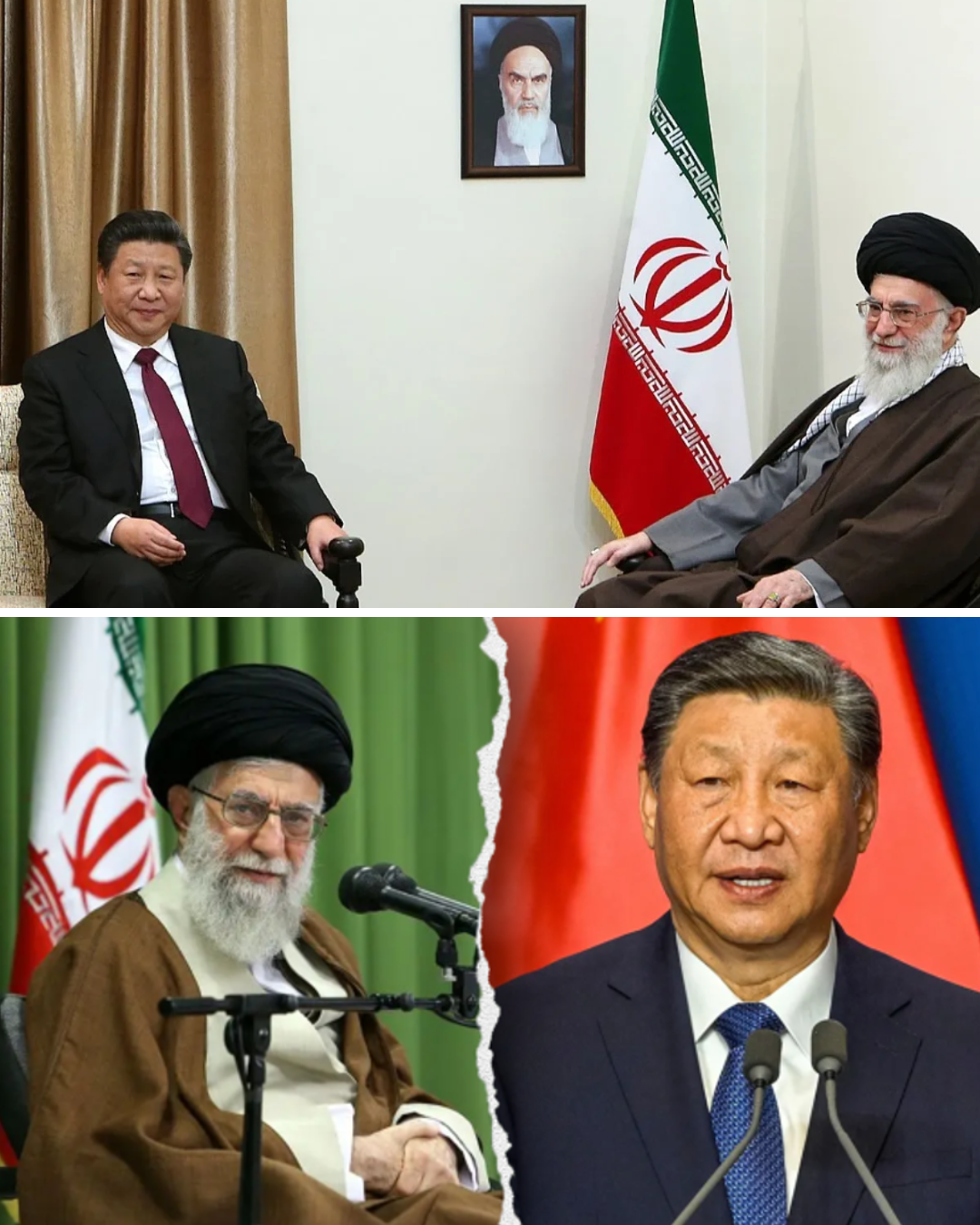
China has not fired a single missile. It has not deployed a warship. Its diplomats have issued carefully worded condemnations of the U.S.-Israeli strikes, called for restraint, and invoked the principles of national sovereignty and territorial integrity. On the surface, Beijing appears to be doing what it always does in Middle Eastern conflicts: observing from a safe distance, preserving all options, and waiting for the dust to settle before calculating what it has won or lost.
Look more carefully, and the picture is far more complicated — and far more consequential.
China is Iran’s largest trading partner and its most important diplomatic protector. In 2021, the two countries signed a 25-year strategic cooperation agreement worth an estimated $400 billion, encompassing energy, infrastructure, and security cooperation. China purchases an estimated 1 to 1.5 million barrels per day of Iranian crude oil — purchases conducted through shadow networks specifically designed to circumvent U.S. sanctions. With the Strait of Hormuz now effectively closed and Iran’s oil export infrastructure under direct military assault, that supply line is severed. Beijing is absorbing an immediate energy shock even as it issues public statements of restraint.
But the deeper Chinese calculation is strategic, not merely economic. The United States and Israel have just demonstrated something that profoundly unsettles Beijing: a technologically superior power can, with sufficient intelligence preparation, decapitate the leadership of a hostile sovereign state. The precision of the operation — the months of CIA tracking, the coordinated strike on a senior officials’ compound, the simultaneous elimination of 40 military commanders — represents a display of American intelligence and military capability that China’s People’s Liberation Army planners cannot ignore.
For Taiwan, the implications are unspoken but unmistakable. If Washington is willing to kill a supreme leader and dismantle a nation’s military command structure because of a nuclear weapons program perceived as threatening, what precedent does that set for how the U.S. might respond to a Chinese military move against Taiwan? The question contains no easy answers, but it is precisely the kind of question that occupies the attention of Beijing’s strategic planning apparatus.
China also faces a credibility crisis within the Global South. For years, Beijing has positioned itself as the champion of a multipolar world order in which powerful nations do not bomb weaker ones into submission. But if China cannot protect Iran — its strategic partner — from American and Israeli strikes, what does that suggest about the value of Chinese partnership to other nations being courted by Beijing?
Chinese Foreign Minister Wang Yi has called for emergency UN Security Council sessions. China, as a permanent member, holds veto power and has deployed it to block Western-sponsored resolutions on Iran in the past. In the current context, however, that veto power is largely irrelevant: the military action has already occurred.
The irony of China’s position is that maximum strategic gain may require doing very little. Every week that the U.S. is mired in a costly, casualty-producing Middle Eastern war is a week during which China consolidates its position in the Pacific, advances its semiconductor programs, and watches American soft power erode in real time.
China is not in this war. But it may be the one that wins it.