STARMER’S WAR: The Moment Britain Chose a Side — and What It Will Cost
Keir Starmer did not want this decision. The British Prime Minister had spent the first days of the Iran-U.S. conflict walking a carefully constructed line: condemning Iranian aggression, supporting British nationals in the region, but conspicuously declining to join the U.S.-Israeli military campaign. Britain, the Starmer government signaled, believed in diplomacy. Britain had chosen the path of negotiated solutions. Britain was not at war.
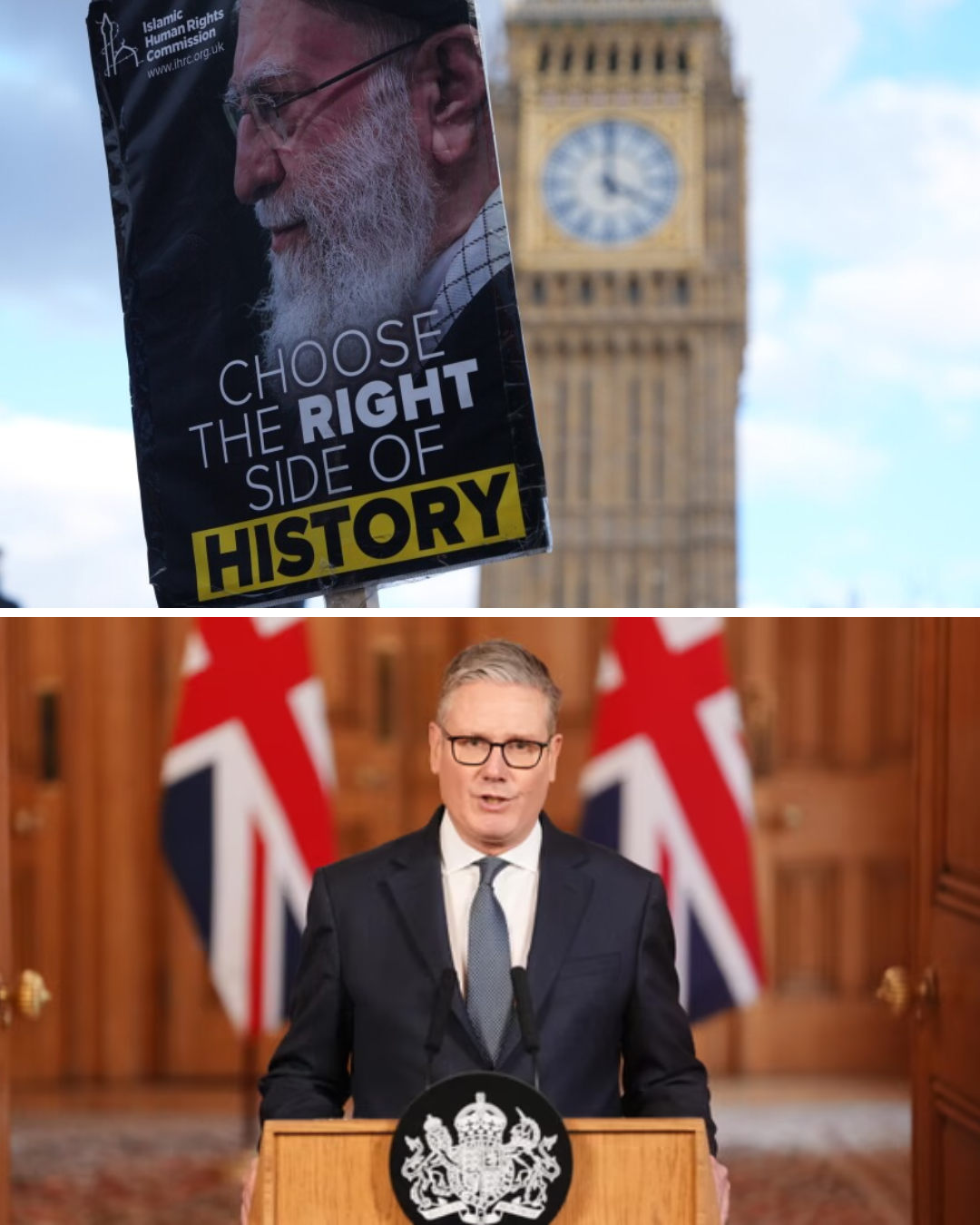
Then Iran kept firing. Its missiles and drones struck across the Gulf, endangering 200,000 British nationals living and working in UAE, Kuwait, Saudi Arabia, Bahrain, and Qatar. Iranian munitions fell near British consular facilities. Iranian targeting doctrine, which defines any base hosting Western military assets as a legitimate strike target, made no distinction between American and British interests. On Sunday evening, in a recorded message released on social media, Starmer made his announcement: the United States would be permitted to use British military bases for strikes against Iranian missile storage depots and launch sites.
“The United States has requested permission to use British bases for that specific and limited defensive purpose,” Starmer said. “We have taken the decision to accept this request to prevent Iran firing missiles across the region.” The message was precise in its language — “specific,” “limited,” “defensive” — and the deliberateness of that precision was itself revealing. Starmer was acutely aware that the decision would be controversial, and he had pre-emptively deployed the vocabulary of constraint to manage the political consequences.
The consequences arrived immediately. Emily Thornberry, chair of the Labour foreign affairs committee, publicly declared that the American military operation violated international law and demanded a parliamentary vote before British bases were used. The Liberal Democrats joined the call. Within hours, Starmer was facing a revolt from within his own political family — MPs who had supported him on health policy, economic reform, and a dozen other issues were drawing a sharp line at what they characterized as Britain being dragged into an illegal war.
The legal basis offered by the British government was collective self-defense: that allies in the region had requested assistance, and that Britain was entitled under international law to provide it. Critics argued that this construction was creative at best and dishonest at worst — that the original U.S.-Israeli strikes were themselves of contested legality, and that basing a right of collective self-defense on an operation whose legal basis was disputed was a circular argument that would not survive academic scrutiny.
The strategic logic, however, was harder to refute. British military bases — particularly the base at Diego Garcia in the Indian Ocean and RAF Akrotiri in Cyprus — possess unique capabilities for long-range precision strikes that can reach Iranian missile infrastructure that might otherwise be harder to target. If Iranian missiles are destroying energy infrastructure, threatening civilian aircraft, and endangering 200,000 British nationals, the argument for using British assets to eliminate the missile launchers has a visceral clarity that survives philosophical objection.
What Starmer has crossed, regardless of the tactical justification, is a threshold of British involvement that cannot easily be uncrossed. British bases hosting American strike operations are British participants in the conflict under any functional definition of the word. The legal fiction of “limited” and “defensive” does not survive contact with the reality that Iranian missiles could now legitimately target British military installations as reprisal.
The comparison to Tony Blair and Iraq 2003 is already being made in British newspapers and social media. Blair’s decision to join an American military campaign on the basis of contested intelligence and questionable legal foundations remains the defining political catastrophe of his premiership, one that destroyed his legacy and shaped British politics for a generation. Starmer has repeatedly positioned himself as Blair’s antithesis — competent, cautious, evidence-driven. The next several weeks will determine whether that self-image survives his first genuine war decision.
Britain has chosen a side. The price of that choice is still being calculated.