THE RADIOLOGICAL NIGHTMARE: The IAEA’s Warning That No One Wants to Hear
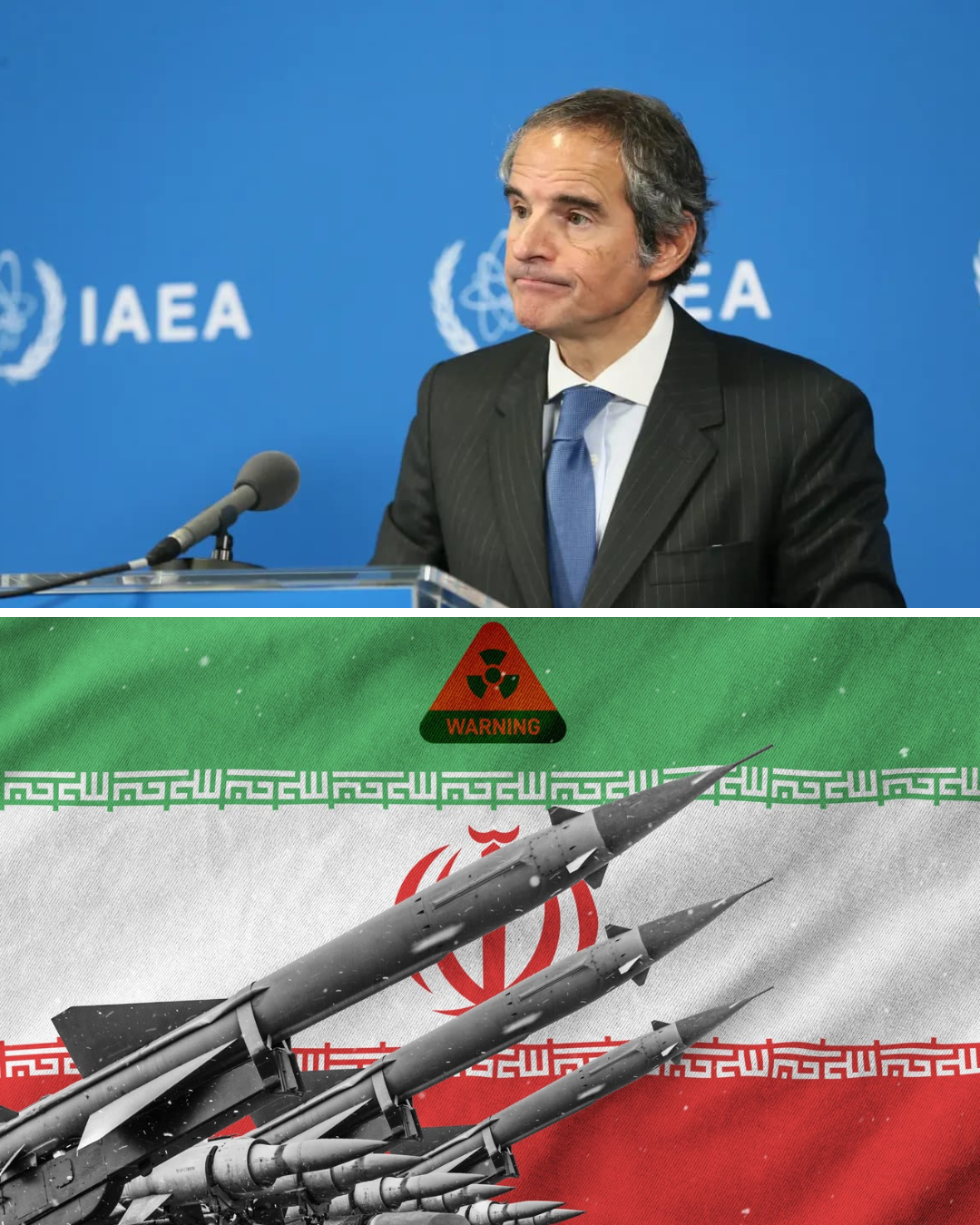
Rafael Grossi has spent his career in the carefully calibrated language of international diplomacy — measured statements, conditional warnings, calls for restraint couched in bureaucratic precision. On Monday, March 2, addressing the quarterly Board of Governors meeting of the International Atomic Energy Agency, he abandoned the comfortable hedging and said what he actually feared: cities in the Middle East might need to be evacuated.
“We cannot rule out a possible radiological release with serious consequences, including the necessity to evacuate areas as large or larger than major cities,” Grossi told the assembled delegates. The words landed with the weight of someone who has spent years preventing precisely this scenario, watching it unfold in real time and running out of diplomatic instruments to stop it.
The warning was not hypothetical. It was grounded in a specific and sobering inventory. The UAE operates four active nuclear power reactors at the Barakah Nuclear Energy Plant. Jordan and Syria maintain operational nuclear research reactors. Bahrain, Iraq, Kuwait, Oman, Qatar, and Saudi Arabia all operate nuclear applications across their energy and research infrastructure. Iran itself has nuclear facilities — including the Natanz enrichment plant, which Iran’s ambassador to the IAEA confirmed was struck during the opening days of Operation Epic Fury. These are not small installations. They are facilities that, if damaged in ways that breach containment, could release radioactive material across populations measured in millions.
The scenario Grossi is warning against is not a nuclear bomb. It is something in some ways harder to contain: a conventional military strike that damages a nuclear reactor’s cooling systems, spent fuel storage, or containment structures. The 2011 Fukushima disaster — caused not by a weapon but by an earthquake and tsunami — demonstrated the scale of evacuation, economic disruption, and long-term health consequences that a radiological release from a civil nuclear facility can produce.
Grossi noted that so far, no elevation of radiation levels above background has been detected in countries bordering Iran. This is the one piece of genuinely reassuring news in an otherwise alarming briefing. The nuclear sites that were struck — Natanz, Fordow, and Isfahan — appear to have been hit in ways designed to destroy enrichment infrastructure without triggering releases. The precision required to accomplish this is extraordinary, and the fact that it has apparently been achieved in the opening days of the campaign is not a reason for complacency; it is a reminder of how narrow the margin is.
The complicating factor is Iran’s retaliation. As the conflict escalates, Iranian missile targeting becomes less precise and Iranian strategic incentives shift. In the early stages of the war, Iran has primarily targeted American military bases and Gulf energy infrastructure. But the logic of escalation — particularly if Iran concludes that it is losing the military campaign decisively — could lead to targeting choices designed to impose maximum pain rather than maximum precision. A nuclear facility in the UAE, struck in a moment of strategic desperation, would be a different kind of catastrophe entirely.
Grossi urged all parties to avoid military action near nuclear facilities. The words have the quality of a prayer offered in the face of a storm: sincere, urgent, and profoundly unlikely to be heard above the sound of the missiles.
The nightmare scenario — the one that keeps nonproliferation specialists awake at night — is not Iran using a nuclear weapon. It is a conventional war creating an unintentional nuclear disaster that no one planned for and no one knows how to stop. In Grossi’s carefully chosen language, that scenario is no longer impossible. It is, in his words, something that “cannot be ruled out.”
In the vocabulary of the IAEA, those four words are the closest thing to a scream that the institution allows itself.