555 OR 32,000? THE NUMBER THAT CHANGES EVERYTHING — WAR’S FIRST BATTLEFIELD IS THE DATA
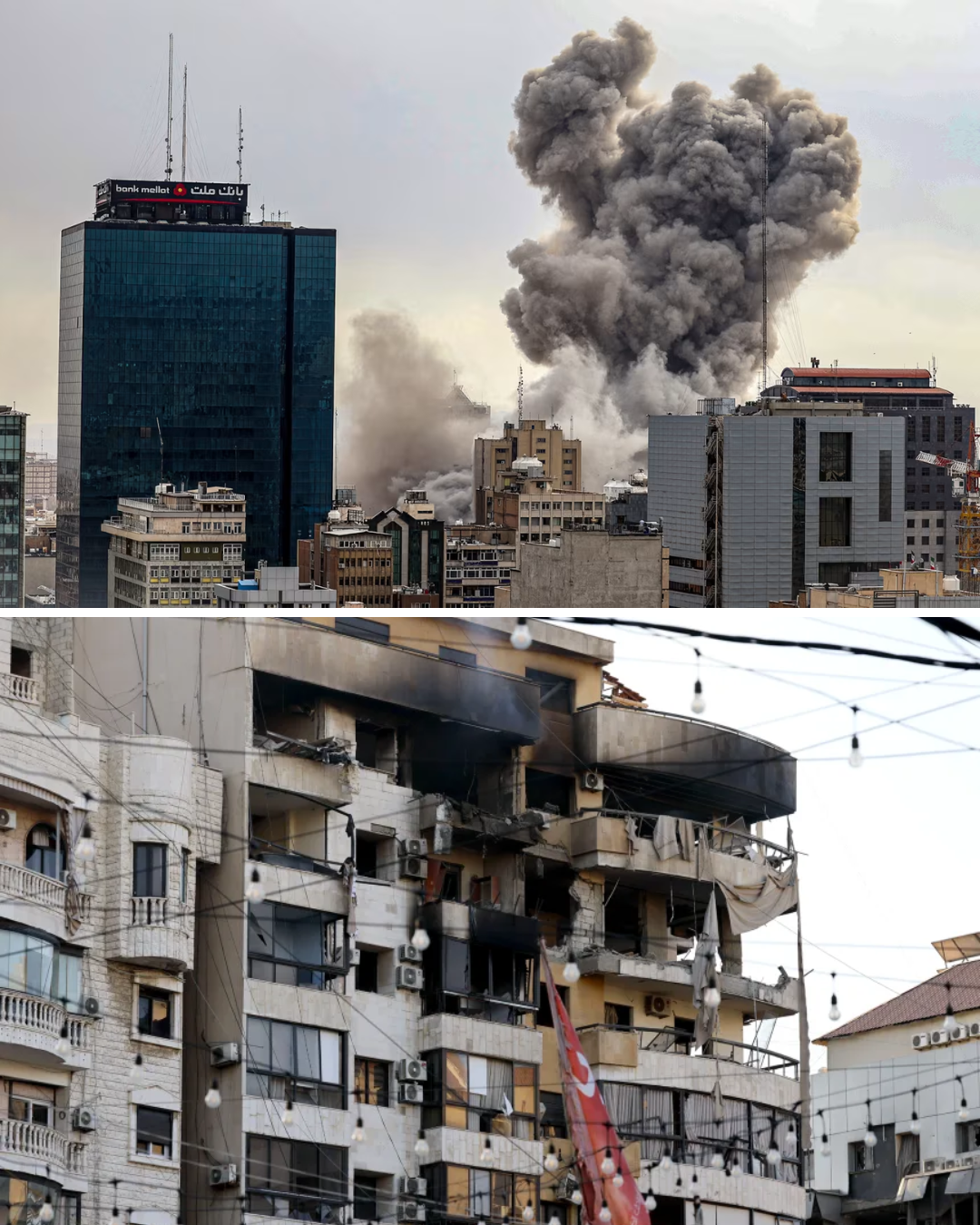
Every modern war is fought on two fronts simultaneously: the military front, where explosives and personnel determine physical outcomes; and the information front, where numbers, narratives, and images determine political outcomes. In the Iran-U.S. conflict, the information war is already producing a casualty toll discrepancy so large that it deserves its own investigation.
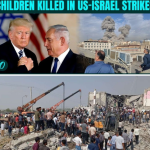
The Iranian Red Crescent Society reported at least 555 people killed in Iran since the commencement of joint U.S.-Israeli airstrikes, across 131 cities. The Iranian government’s own official count placed the figure at 3,117 dead. The U.S.-based Human Rights Activists News Agency estimated 7,000 killed. And in the far corner of this data landscape, one figure circulating in certain media contexts put the number at 32,000 dead — a figure that, if accurate, would make the opening three days of this conflict one of the deadliest military campaigns in the history of the Middle East.
The range between 555 and 32,000 is not a rounding error or a statistical margin of uncertainty. It is a 57-fold difference. It represents the difference between a targeted military campaign with significant but contained civilian impact, and a catastrophic mass-casualty event that would place this operation alongside the firebombing of Dresden or the early phases of the Syrian civil war. The number matters — legally, politically, morally — and someone, somewhere, is lying about it.
The mechanisms of casualty inflation and deflation in wartime are well-documented and serve predictable interests. Iran has strong incentives to maximize the reported death toll: higher numbers increase international pressure on the United States and Israel, generate sympathy in the Global South, and build the domestic rallying narrative that transforms military defeat into moral outrage. The U.S. and Israel have equally strong incentives to minimize civilian casualties, to maintain the precision-strike narrative that distinguishes their operation from indiscriminate bombardment.
The Red Crescent figure of 555, while the most institutionally credible, comes with its own limitations. The Red Crescent is operating under active warfare conditions across 131 cities simultaneously. Its ability to conduct systematic body counts in areas where communications are degraded, access is restricted, and hospitals are overwhelmed is necessarily limited. The organization is reporting what it can confirm, not what has occurred. The true figure may be significantly higher.
The figure of 165 children killed in an elementary school strike is cited by CNN’s compilation of sources, compared to 108 cited by Iranian judiciary officials and 148 by Al Jazeera. Three reputable organizations reporting from three different source streams cannot agree on a number within a single incident. If the casualty data for one event spans a range of 40 human lives, what does that suggest about the aggregate figures?
The information environment is further complicated by the near-total destruction of Iran’s communications infrastructure in targeted zones. Strikes on military installations inevitably damage adjacent civilian communications, reducing the signal-to-noise ratio of any information emerging from affected areas. Iran’s government has incentives to control the narrative from inside the country; outside observers have limited independent access.
What the casualty number dispute reveals is not just the fog of this particular war but the structural vulnerability of public accountability in modern aerial campaigns. When bombs fall and the world cannot agree within a factor of 57 on how many people have died, the foundation of any future legal accountability — any war crimes investigation, any reparations process, any historical record — is built on sand.
555 dead and 32,000 dead are different wars. The world currently cannot tell which one is being fought.