THREE JETS IN THE DESERT: What the Crash-Landings in Kuwait Reveal About America’s Air War
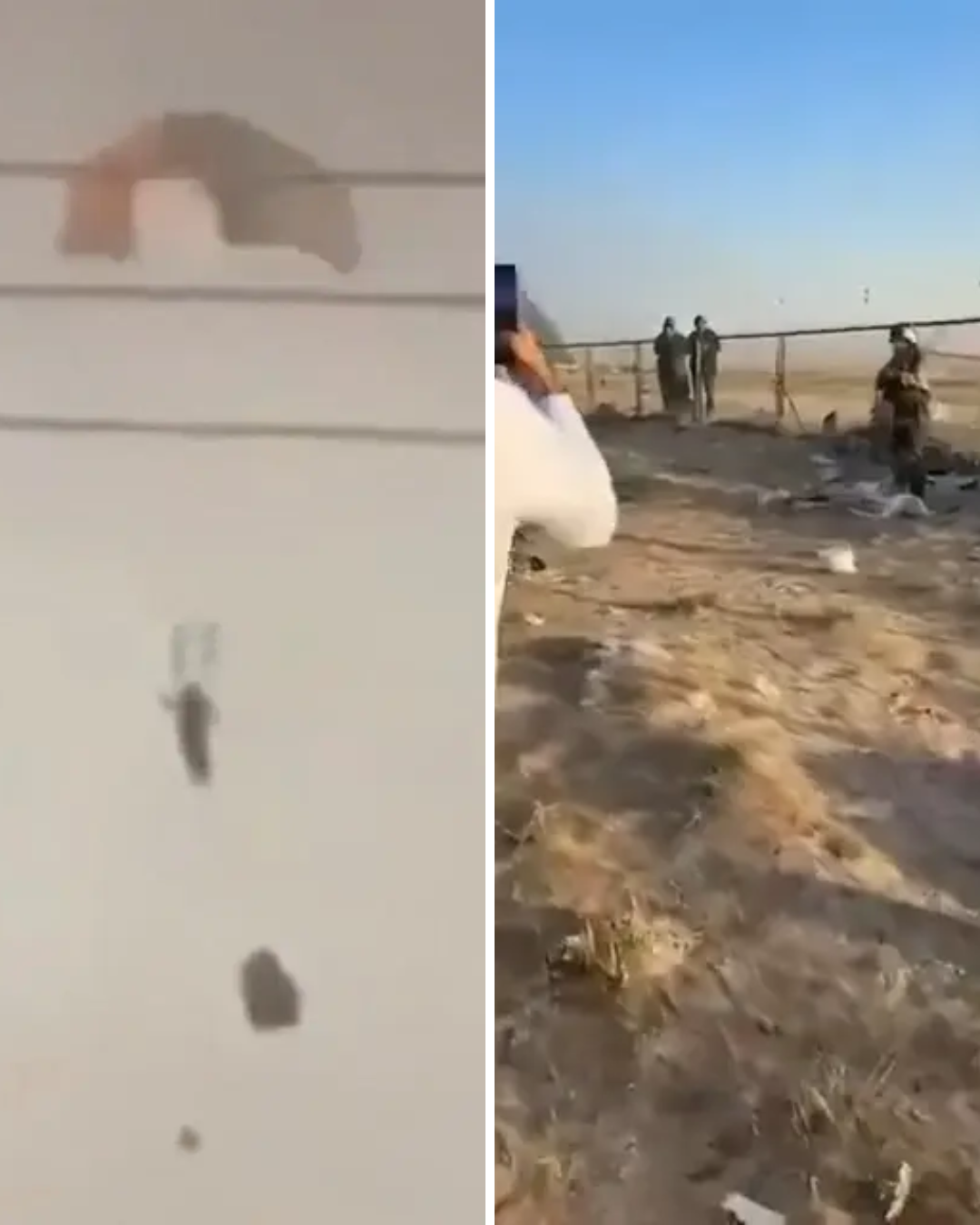
They crash-landed in Kuwait. Three U.S. fighter jets, their pilots bailing out or executing emergency procedures, going down in the Kuwaiti desert rather than returning to their bases. Kuwait’s defense ministry confirmed “several U.S. military aircraft” had crashed, added that the specific reasons remained under investigation, and noted that the incidents “coincided with a surge of Iranian fire directed at the region.” The Pentagon confirmed that the crews had survived and bailed out safely. The aircraft did not.
The loss of three fighter jets in a single operational period is not, in the raw mathematics of military aviation, catastrophic for a force the size of the U.S. military. America’s naval and air forces in the region include hundreds of advanced combat aircraft — F-35s, F/A-18s, F-15Es, B-2 stealth bombers. Three losses do not threaten operational capacity. But the manner of those losses — crash-landings and bail-outs rather than combat kills — tells a story that the Pentagon has not yet fully explained, and the ambiguity around that story is itself significant.
The most benign interpretation is mechanical failure under combat stress. High-tempo air operations — multiple sorties per day, complex refueling sequences, navigation through dense air-defense environments — impose extraordinary demands on aircraft systems and pilots simultaneously. The stress of flying into one of the most heavily defended airspaces in the world, while monitoring threats from multiple Iranian anti-aircraft systems, creates conditions where human and mechanical error rates increase.
A more concerning interpretation involves Iranian electronic warfare. The Islamic Republic has invested heavily, particularly since 2020, in developing and deploying electronic warfare systems designed to jam, spoof, or disrupt the navigation and guidance systems of Western combat aircraft. Iran famously claimed in 2011 to have brought down a CIA RQ-170 Sentinel stealth drone by hacking its GPS navigation. Whether that claim was fully accurate remains disputed, but Iran’s electronic warfare programs have continued and matured since. If Iranian jamming or spoofing systems played a role in the three crash-landings, the implications for the entire air campaign are profound.
A third possibility involves the broader operational environment around Kuwait. Iran struck three separate U.S. installations in Kuwait on Saturday alone. The combination of ballistic missiles, cruise missiles, and drones operating simultaneously across Kuwaiti airspace would have created an extraordinarily complex threat environment for any aircraft operating in the vicinity. Navigation systems, threat warning systems, and pilot attention were all under simultaneous assault. The crashes may reflect the systemic complexity of operating inside a saturated threat environment rather than any specific Iranian action.
Kuwait’s defense ministry pledged to pursue inquiries. The U.S. military has not, as of Monday, provided a public accounting of what happened to those three aircraft. That silence will not last — the details will emerge in Congressional briefings, in aviation accident reports, in the eventual journalism of reconstruction — but the silence in the immediate term is itself a tell. If the explanation were simple mechanical failure, there would be no reason to withhold it. The more complex the causal story, the greater the institutional pressure toward delay.
For the pilots — confirmed safe, presumably recovering from the shock of an emergency bail-out or a controlled crash in a hostile environment — the immediate crisis has passed. But their aircraft are on the desert floor of Kuwait. And somewhere in the Iranian military’s command structure, assuming it still has one capable of processing tactical intelligence, officers are noting that three American jets did not make it home.
Three jets lost. The reason still unknown. In the information environment of this war, unknown means contested. And contested means consequential.