“WE WILL NOT NEGOTIATE”: When a Nation Chooses Total War Over Survival
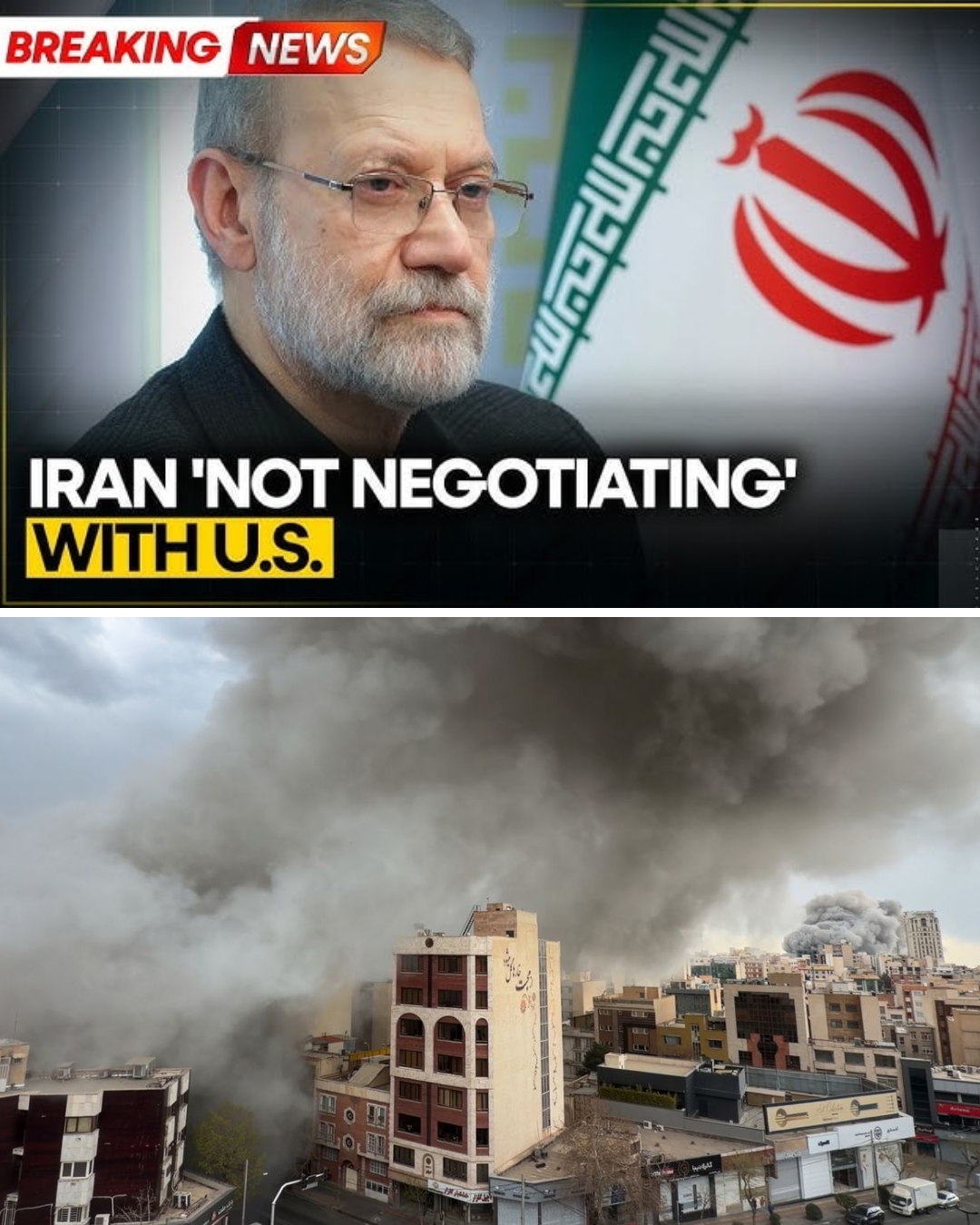
On the same day that Iranian missiles were striking six American military installations across the Gulf, Iran’s top security official delivered a message to Washington that removed any remaining ambiguity about Tehran’s short-term intentions: the Islamic Republic would not negotiate with the United States. The statement was not the defiant bluster of a government under pressure — it was a calculated strategic communication designed to close off diplomatic off-ramps and signal total commitment to the military path.
Understanding why Iran made this choice — and whether it was the choice of a coherent strategic leadership or the reflexive declaration of a decapitated command structure in crisis — is essential to understanding where this war goes next.
The context of the refusal is critical. Nuclear talks between the United States and Iran had been ongoing as recently as February 26, in Geneva, where a round of negotiations ended without a deal but with what Reuters described as “potential signs of progress.” Two days later, Operation Epic Fury began. Tehran’s security chief now says the channel is closed. The question is whether this is a permanent door-closing or a temporary posture adopted because negotiating while under military attack is politically impossible inside Iran.
The analogy that keeps occurring to regional analysts is North Korea. When Kim Jong-un faces military pressure, he does not negotiate; he escalates, tests a missile, fires artillery, and waits until the pressure cycle passes. Then negotiations resume. The difference is that Kim has nuclear weapons and Iran does not — a difference that is, as this entire conflict demonstrates, absolutely decisive in determining whether a state can safely adopt the escalation-and-wait strategy.
The “will not negotiate” declaration also serves a domestic purpose in Iran. The regime has just lost its Supreme Leader. Forty top military commanders are dead. The IRGC’s command structure has been decapitated. The legitimacy of the Islamic Republic — always dependent, in part, on its claim to be a sovereign state capable of defending its people — has taken a catastrophic blow. In that context, refusing American overtures is not strategic; it is existential. A government that accepts negotiations while its capital is being bombed is a government that has surrendered its narrative of resistance, and in Iran’s political culture, losing the narrative of resistance is losing the right to govern.
The military reality, however, is that Iran cannot sustain a prolonged conventional war against the combined military power of the United States and Israel. Its air force is limited. Its air defenses, however sophisticated in places, cannot prevent continued strikes. Its naval assets are being systematically destroyed — the U.S. military confirmed it had sunk nine Iranian naval vessels. Its economy, already shattered by sanctions, cannot absorb an extended war economy without cascading social collapse.
What Iran can do is impose costs. Closing the Strait of Hormuz imposes costs. Striking Gulf energy infrastructure imposes costs. Attacking U.S. military bases imposes costs. Launching Hezbollah against Israel imposes costs. None of these actions win the war for Iran. All of them raise the price of the war for the United States and its partners to levels that might eventually exceed the political will to continue.
“We will not negotiate” is not a military strategy. It is a pain-infliction strategy. The question it asks of Washington, and of the American public, is: how much are you willing to spend to win?