A simple farm project became an Ice Age breakthrough.
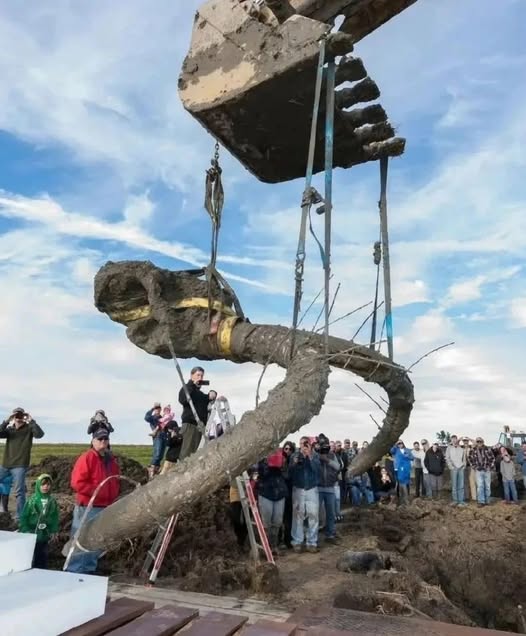
A simple farm project became an Ice Age breakthrough.
In October 2015, a farmer near Chelsea struck something massive eight feet below his wheat field. What seemed like buried wood turned out to be the bone of a prehistoric giant.
Specialists from the University of Michigan Museum of Paleontology quickly arrived. With harvest season approaching, they had just one day to excavate — and by nightfall, they confirmed it: a mammoth.
About 20% of the skeleton was recovered, including the skull and tusks.  Professor Daniel Fisher identified it as a Jeffersonian mammoth, an adult male that roamed the region more than 11,000 years ago.
Professor Daniel Fisher identified it as a Jeffersonian mammoth, an adult male that roamed the region more than 11,000 years ago.Even more compelling, markings near the bones suggested possible human involvement — evidence that early hunters may have butchered and preserved the meat.
From quiet farmland to scientific landmark, the find opened a rare window into Michigan’s Ice Age world.