2006 O’Hare Airport Sighting Remains One of the Most Discussed Unexplained Aviation Incidents
Chicago, Illinois — Nearly two decades after reports of a mysterious aerial object over O’Hare International Airport, the 2006 incident continues to draw attention from aviation observers and researchers interested in unidentified aerial phenomena.
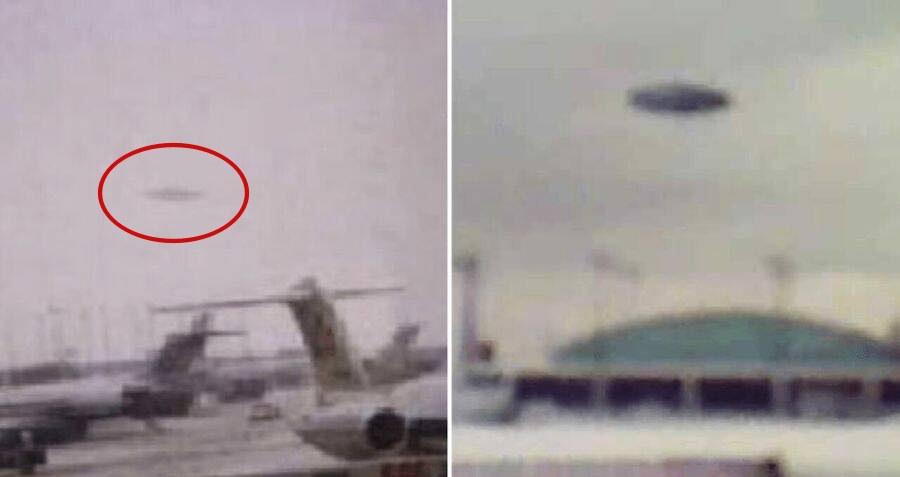
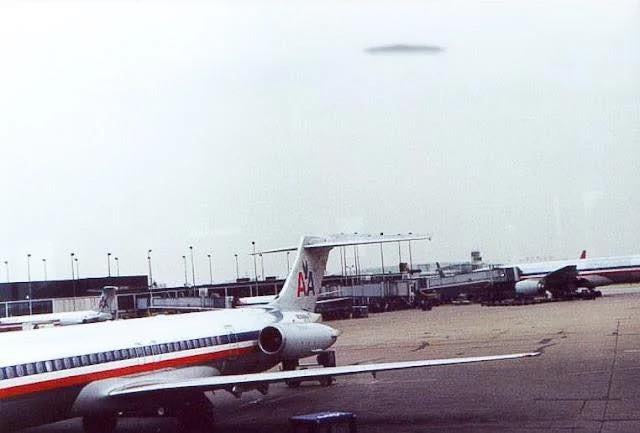
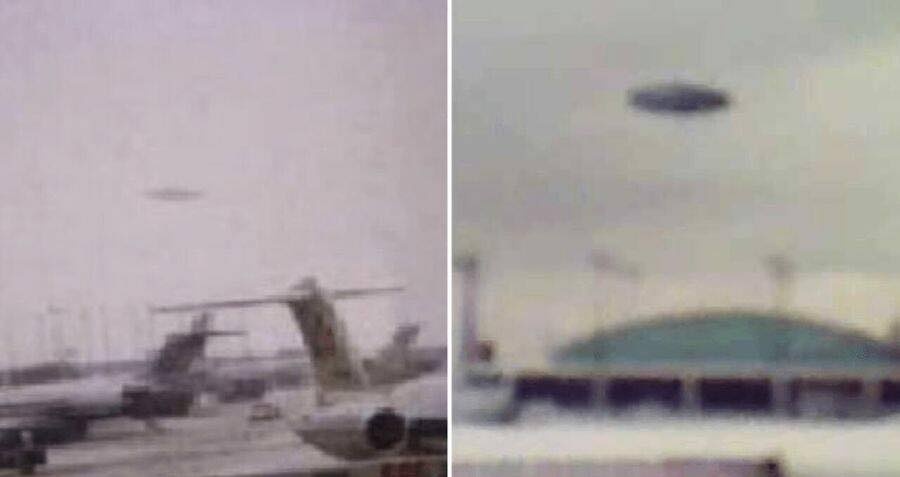
On November 7, 2006, several employees of United Airlines, including pilots, mechanics, and supervisory staff, reported seeing a dark, disc-shaped object hovering above Gate C17 at O’Hare International Airport.
According to witness accounts provided at the time, the object appeared metallic and saucer-like, maintaining a stationary position for several minutes despite windy conditions. Those who observed it stated that it hovered silently before accelerating vertically at high speed. Several witnesses claimed the object left behind a perfectly circular opening in the cloud layer, which reportedly closed shortly afterward.
One airline employee, who spoke to local media following the event, described the sighting as “unlike anything I’ve seen in decades of working around aircraft.” The employee emphasized the object’s stillness, noting that it did not appear to drift with the wind.
Air traffic control systems reportedly did not detect any unusual object on radar during the time of the sighting. The Federal Aviation Administration (FAA) initially stated it had no knowledge of the event. In later comments, the agency suggested that observers may have witnessed a rare atmospheric occurrence known as a “hole-punch cloud,” a phenomenon in which circular gaps form in cloud layers due to specific temperature and moisture conditions.
Meteorologists explain that hole-punch clouds can appear dramatic and are capable of forming circular openings in otherwise uniform cloud cover. However, some of the airport employees maintained that they observed a solid object prior to the cloud formation, distinguishing their experience from a purely weather-related event.
Aviation analyst Mark Reynolds commented in a later review of the case, “What makes the O’Hare incident notable is the professional background of many of the witnesses. These are individuals trained to observe aircraft, weather conditions, and airspace activity. That doesn’t mean the event was extraordinary in origin, but it does mean their observations deserve careful consideration.”
No formal public investigative report detailing findings or conclusions was released following the incident. As a result, the event has remained a subject of ongoing discussion in aviation and research communities.
The 2006 O’Hare sighting is frequently referenced as one of the more widely reported civilian UAP cases due to the number of witnesses involved and the location within controlled airspace at one of the busiest airports in the United States. At the time, United Airlines declined to issue an extensive public statement beyond acknowledging that employees had reported seeing something unusual.
Experts note that unexplained sightings do not automatically indicate advanced technology or non-conventional craft. In many cases, atmospheric optics, perspective, equipment limitations, or misinterpretations of known phenomena can account for unusual observations. However, the absence of conclusive data in this case has allowed the event to remain open to interpretation.
Nearly twenty years later, the O’Hare incident stands as an example of how brief, unexplained events in highly regulated environments can continue to generate debate long after they occur. Without definitive physical evidence or comprehensive investigative findings, the sighting remains officially unresolved.