58,000 PILGRIMS TRAPPED IN MECCA: The Ramadan Nightmare Nobody Is Talking About — Missiles Falling While Muslims Fast and Pray
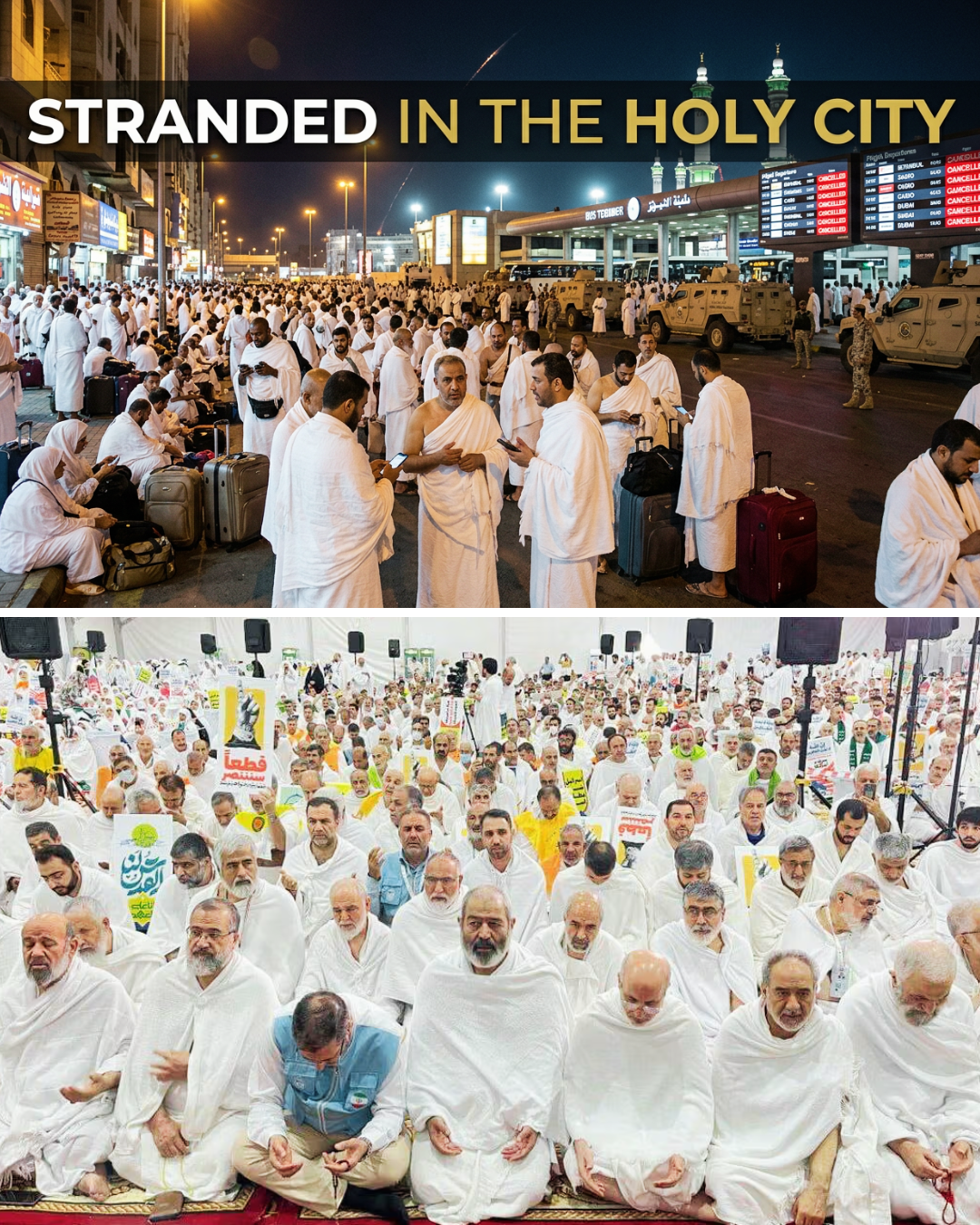
They came for the holiest month of the year. They may not be able to leave.
More than 58,000 Indonesian citizens are stranded in Saudi Arabia, where they had traveled to visit Islam’s holiest sites in Mecca and Medina during Ramadan. Their flights home have been cancelled. The airspace across most of the Middle East is closed. And Iranian missiles are falling on Saudi cities.
“It has become an urgent humanitarian and logistical issue,” said Ichsan Marsha, spokesperson for Indonesia’s Ministry of Hajj and Umrah. The ministry is coordinating with Saudi authorities, airlines, and Indonesian travel operators to find alternative routes or rescheduled flights. But with the region’s aviation infrastructure in near-total shutdown, solutions are scarce.
The Indonesians are not alone. Tens of thousands of pilgrims from Malaysia, Pakistan, Bangladesh, Turkey, and dozens of other Muslim-majority nations had traveled to Saudi Arabia for Umrah — the lesser pilgrimage that millions undertake during Ramadan each year. They arrived expecting spiritual renewal. They found themselves in a war zone.
The timing of the US-Israeli strikes could not have been more provocative for the Muslim world. Operation Epic Fury was launched on Saturday, February 28 — during the Muslim holy fasting month of Ramadan and at the start of the Iranian workweek. For 1.9 billion Muslims worldwide, Ramadan is the most sacred period of the year, a time of prayer, fasting, charity, and peace. To launch a major military operation during Ramadan against a Muslim-majority nation has historical resonance that goes far beyond the current conflict.
In the Gulf states where millions of Muslims were observing their fasts, the war created a surreal collision between devotion and destruction. CNN reported that parents in Dubai and Abu Dhabi told their frightened children that the sounds of missile interceptions and explosions overhead were “Ramadan fireworks” or the traditional cannons fired at iftar time to mark the breaking of the fast. The deception is heartbreaking in its tenderness and devastating in its implications — that the sounds of war have become so commonplace that they must be dressed up as celebration.
In Qatar, where Ramadan gatherings are a cornerstone of social and religious life, all public Ramadan events have been suspended indefinitely. The Qatar Civil Aviation Authority shut down all air navigation. Qatar Airways grounded every flight. Schools moved to remote learning. The normally festive atmosphere of Ramadan nights — the communal iftars, the tarawih prayers, the charity bazaars — has been replaced by missile interception alerts and shelter-in-place orders.
Saudi Arabia, the custodian of Islam’s two holiest cities, finds itself in an impossible position. Iranian attacks have targeted both Riyadh and the Eastern Province. Drones struck the US Embassy in the Saudi capital. And yet Mecca and Medina — where the 58,000 Indonesians and tens of thousands of other pilgrims are concentrated — remain, so far, untouched. The implicit understanding that Iran would not strike the holy cities has held. But with the conflict escalating daily, no guarantee of restraint can be taken for granted.
For the stranded pilgrims, the practical challenges are enormous. Many traveled on group packages organized by religious tour operators with fixed itineraries and limited budgets. Extended hotel stays, additional meals, and rebooking fees are expenses that most cannot absorb. Some pilgrims are elderly or have medical conditions that require medication they did not pack for an extended stay.
Indonesia’s government has begun exploring emergency options, including military and charter flights through Oman — one of the few regional countries whose airspace remains open. But logistics for moving 58,000 people are overwhelming even in peacetime.
The image of Muslim pilgrims stranded in the holy city during Ramadan while a Muslim country is bombed by Western powers carries enormous symbolic weight across the Islamic world. It feeds narratives of civilizational conflict. It deepens resentment. It erodes the carefully maintained fiction that the Gulf states are neutral sanctuaries insulated from geopolitical violence.
Ramadan is supposed to be a month of mercy. This year, for the pilgrims trapped between prayer and missiles, it has become a month of fear.