PARENTS TOLD THEIR KIDS THE MISSILES WERE ‘RAMADAN FIREWORKS’: The Heartbreaking Lie Dubai Families Are Using to Shield Their Children
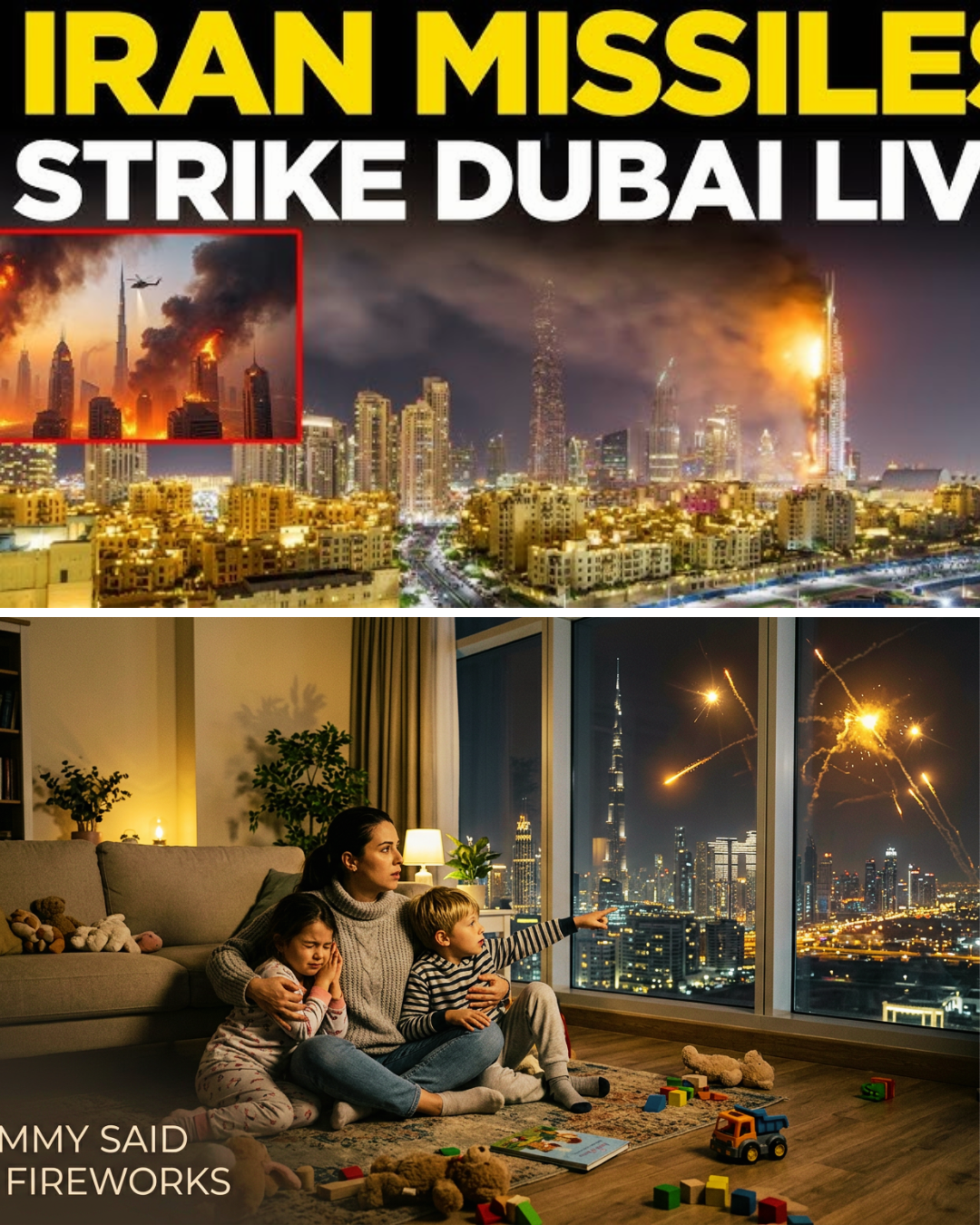
It is perhaps the most human detail to emerge from four days of war in the Middle East.
In Dubai and Abu Dhabi, as Iranian missiles streaked across the sky and air defense systems fired interceptors that filled the night with thunderous explosions, parents looked at their terrified children and told them a gentle lie: those sounds are Ramadan fireworks. Those flashes are Ramadan cannons — the traditional artillery fired in Muslim countries to signal the end of the daily fast at iftar time.
CNN reported the detail almost in passing, but its resonance has been enormous. In a single sentence, it captured the impossible position of millions of parents across the Gulf: caught between the duty to protect their children from psychological trauma and the physical reality of a war raging above their homes.
The lie works — partially — because of cultural context. In the Gulf states, Ramadan is traditionally accompanied by ceremonial cannon fire at sunset. Children grow up hearing these booms as joyful signals that the fast is over and the evening meal can begin. The sounds of celebration and the sounds of war are, to a young ear, disturbingly similar.
But children are not stupid. They see their parents’ faces. They feel the trembling of the buildings. They notice the basement sleeping arrangements, the packed emergency bags, the whispered phone calls. How many nights can a parent sustain the fiction before a child’s questions become too specific to deflect? “Why are the fireworks happening at 3 AM?” “Why is mommy crying?” “Why aren’t we going to school?”
Child psychologists warn that the approach of disguising war as celebration carries risks alongside its benefits. In the short term, it reduces acute fear responses and can prevent the worst immediate psychological damage. But if the deception is maintained too long, it can create confusion when the child eventually learns the truth — potentially undermining trust in parents at a critical developmental stage.
The UAE has closed all schools and universities and moved to remote learning for at least three days. Schools in Qatar are closed. Schools in Lebanon are serving as emergency shelters. In Bahrain, schools are shut. The children of the Gulf — whether Emirati nationals, expatriate kids, or the children of migrant workers — have been pulled out of their normal lives and placed into an undefined state of suspension where nothing is explained but everything is felt.
For expatriate families in Dubai, the calculation is particularly agonizing. Many moved to the city specifically for its reputation as one of the safest places on Earth. Low crime, excellent schools, sunny weather, and a cosmopolitan lifestyle that promised the best of both East and West. They accepted the trade-offs — the heat, the cultural adjustments, the distance from home — because Dubai was safe.
Kate Ferdinand, wife of former England footballer Rio Ferdinand, described her family spending a “very scary night” in the basement of their Dubai home. Formula One heiress Petra Ecclestone called it “one of the most scary, worst nights of my life.” British singer Jamelia told her Instagram followers that she and her daughters were safe but acknowledged “how this looks from the outside.”
These are wealthy, visible families with resources and platforms. The millions of less visible families — the Indian accountant, the Filipino nurse, the Pakistani engineer, the Egyptian teacher — are experiencing the same terror without the Instagram followers to amplify their stories.
For children across the Gulf, the war is being experienced not as geopolitics but as disrupted routines: no school, strange sleeping arrangements, parents who are scared but pretending not to be, and mysterious booms in the night that sound like celebration but feel like danger.
The Ramadan fireworks lie will eventually end. The war will eventually end. But the psychological impact on a generation of Gulf children — raised in the promised safety of the world’s most protected cities and then exposed to the sounds of missiles — may last far longer than any ceasefire.
Some day, those children will learn what the sounds really were. And they will remember that their parents loved them enough to lie.