IRAN CLAIMS 650 AMERICAN SOLDIERS ARE DEAD: The Propaganda War Inside the Real War — And Why Nobody Knows the True Numbers
Six. Or 650.
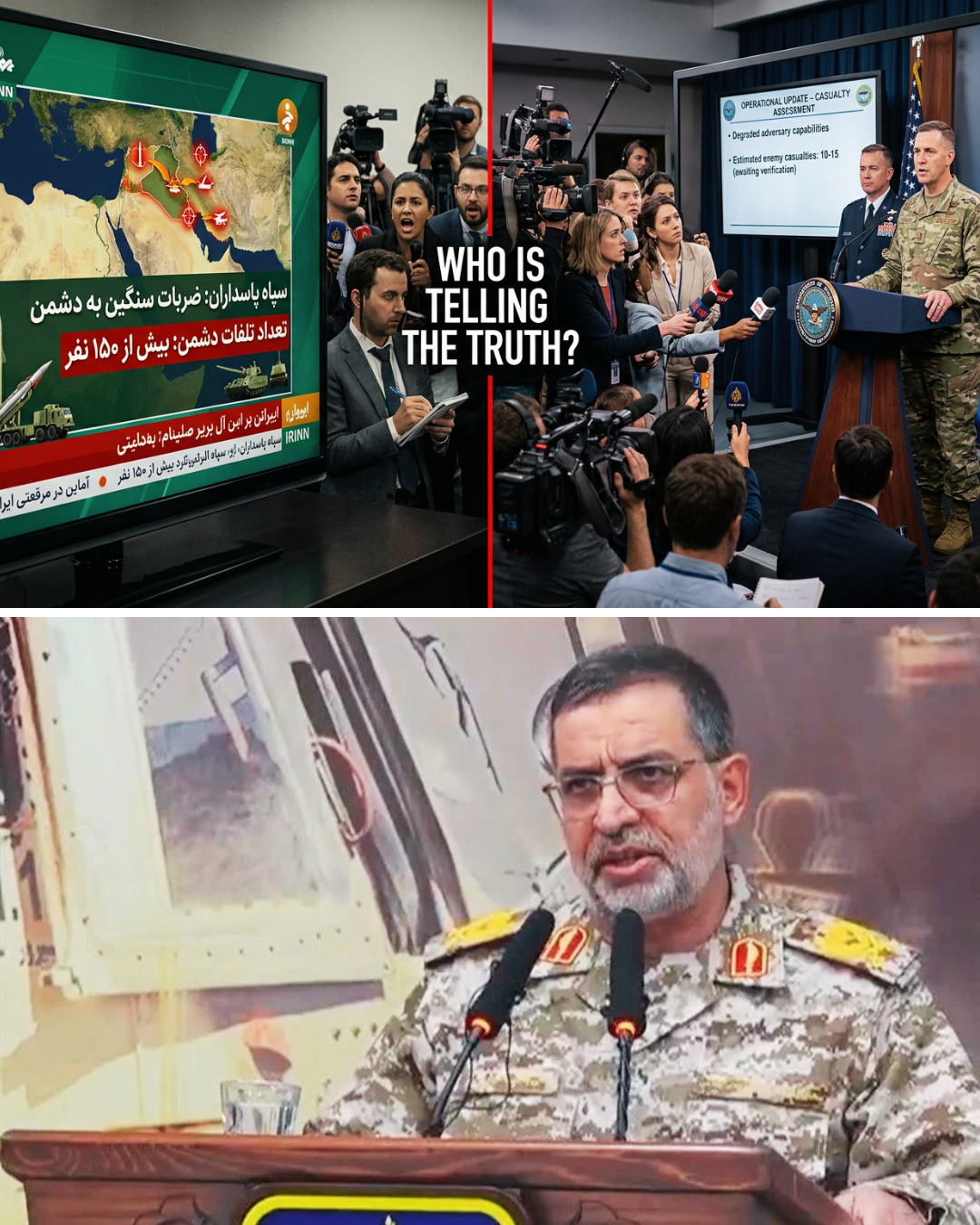
Those are the two numbers being presented to the world. The United States says six American service members have been killed since the start of Operation Epic Fury. Iran’s military claims it has killed 650 American soldiers.
The gap between these figures is not a rounding error. It is a chasm that reveals the information war being fought alongside the military one — and it raises uncomfortable questions about what anyone can actually believe in the fog of this conflict.
The US number comes from Central Command (CENTCOM), which has confirmed six service members killed, all in Iran’s retaliatory attacks on Kuwait. CENTCOM identified the deaths incrementally — first three, then four, then six — with each update adding grim specificity about where and how the soldiers died. General Dan Caine, chairman of the Joint Chiefs of Staff, said Monday: “We expect to take additional losses, and as always, we will work to minimize losses.”
Iran’s number comes from an Iranian general quoted by WANA, a Tehran-based news agency, claiming that “650 American soldiers have been killed so far.” No evidence has been provided. No names, locations, or specifics accompany the claim. Iranian state media has presented the figure without qualification, treating it as established fact.
The truth almost certainly lies closer to the American figure. The US military has a strong institutional incentive to be relatively accurate about its own casualties — Congressional oversight, media scrutiny, and the families of the fallen all serve as checks on the Pentagon’s numbers. That said, the US figure of six also carries caveats. It covers only confirmed deaths, and the fog of an active multi-front conflict means some casualties may not yet have been identified or reported.
Iran’s 650 figure, by contrast, appears to be a product of the propaganda machine that every warring nation operates. In every conflict since the invention of mass media, combatants have inflated enemy casualties and minimized their own. Iran’s interest in claiming massive American losses is clear: it projects strength to a domestic audience that is mourning its Supreme Leader and enduring devastating bombardment, and it creates doubt among American audiences about the true cost of the war.
But Iran’s information environment is uniquely compromised right now. With internet connectivity at just 1 to 4 percent, and with the state broadcaster’s satellite signals disrupted after strikes on IRIB transmitters, the regime’s ability to disseminate propaganda domestically has been severely degraded. The 650 figure may be aimed primarily at international audiences and Iranian diaspora communities who still have access to Iranian media through satellite and social media.
The information war extends beyond casualty figures. Both sides are manipulating the narrative in real time. The US has emphasized “precision strikes” and the killing of Khamenei as a surgical achievement. Iran has emphasized civilian casualties, the school strike in Minab, and damage to cultural sites like Golestan Palace. Israel has claimed “aerial superiority over Tehran” — a dramatic assertion that projects dominance. Iran’s IRGC has claimed all Israeli and US military targets in the Middle East “have been struck by the powerful blows of Iranian missiles” — an equally dramatic counterclaim.
For journalists, analysts, and ordinary citizens trying to understand what is actually happening, the challenge is enormous. Satellite imagery provides some ground truth, but it takes time to process and can only show physical damage, not human casualties. Social media is flooded with unverified footage from all sides. Deepfakes and AI-generated content add additional layers of unreliability.
The Pentagon acknowledged that Iran was not planning to strike US forces unless Israel attacked Iran first — a detail that was revealed not by Iranian propaganda but by Pentagon briefers speaking to Congressional staff. This kind of inadvertent truth-telling tends to emerge in the gaps between official narratives, and it suggests that the full story of this conflict is far more complicated than either side’s press releases admit.
Six or 650. The real number matters — to families, to history, to accountability. But in the first week of a war where both sides control information as tightly as they control airspace, the truth is the first casualty. As it always is.