AUSTRALIA’S SECRET BASE NEAR DUBAI GOT HIT: Iranian Drones Attacked Al Minhad — And Canberra Says It Wasn’t Even Involved in the War
Australia was not part of the plan. Australia did not participate in the strikes. Australia’s government has been very clear that it had no role in planning or executing Operation Epic Fury.
Iran’s drones hit the Australian base anyway.
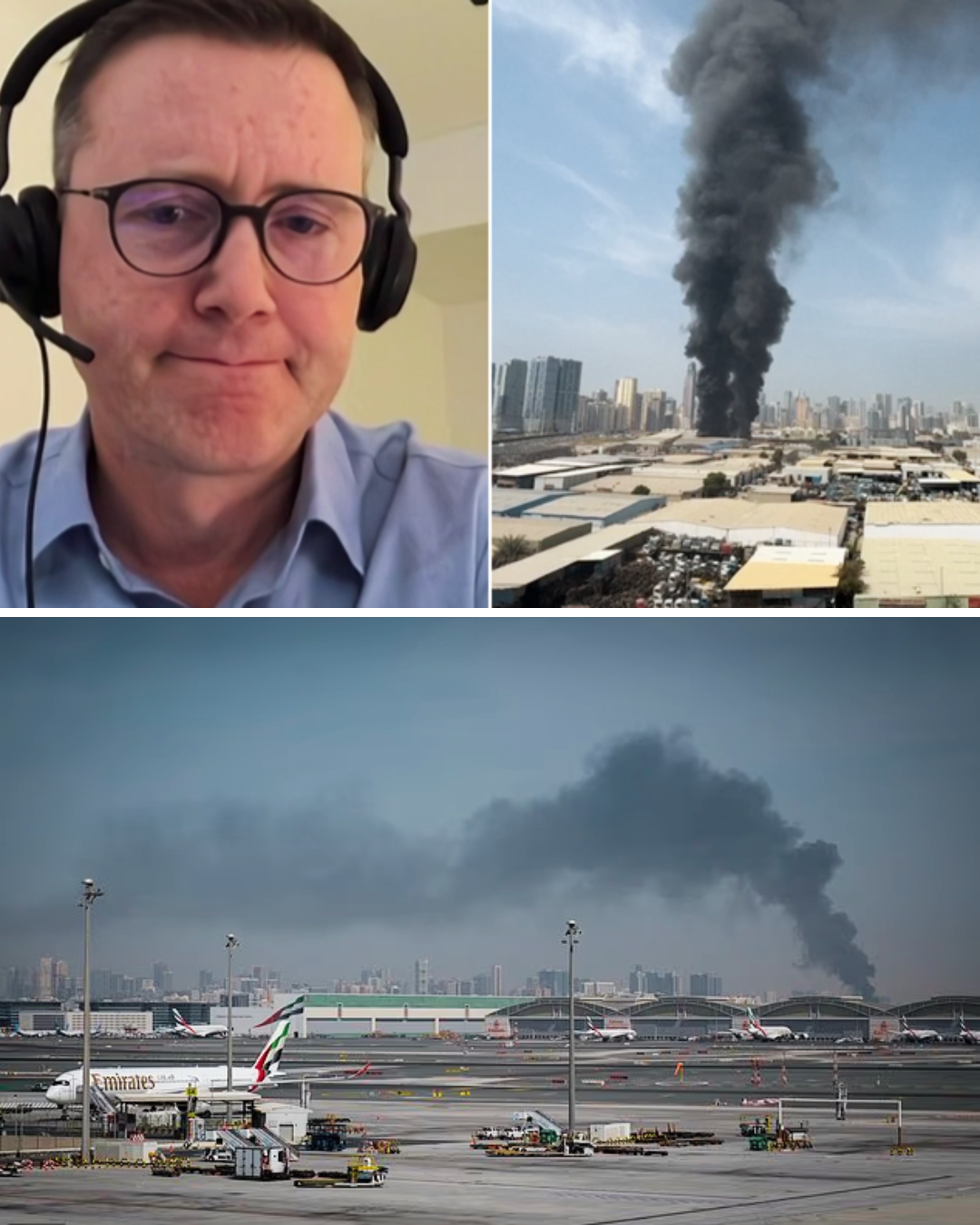
On Tuesday, Australia’s Defense Minister Richard Marles confirmed that Iranian drones attacked Al Minhad Air Base, a facility near Dubai that Australia has long used as a staging hub for military operations in the Middle East. No personnel were injured, and all defense staff were accounted for and safe. But the strike crossed a threshold that Canberra had desperately tried to avoid: direct Iranian military action against an Australian facility.
Al Minhad Air Base sits approximately 30 minutes by car from central Dubai. It has served as a key logistics and staging point for Australian military operations since the early 2000s, supporting deployments in Afghanistan, Iraq, and the broader Middle East region. The Australian Defence Force maintains a rotating presence there, using the base for transit, maintenance, and coordination with coalition partners.
The base was one of numerous sites in the UAE hit by Iranian drone strikes or debris from intercepted munitions. The UAE Defense Ministry confirmed that the country’s air defenses have intercepted 165 ballistic missiles, two cruise missiles, and 541 Iranian drones since the conflict began. Thirty-five drones made impact. Al Minhad was among the targets.
For Australia, the political implications are immediate and serious. The Albanese government supports the US-Israeli action to kill Iran’s Supreme Leader, as Defense Minister Marles affirmed. But “support” is a deliberately vague word. Canberra approved of the strategic objective but was not involved in the operation itself — a distinction that Iran appears to neither recognize nor respect.
Iran’s targeting calculus is blunt: any base that hosts US or allied military assets is fair game, regardless of whether the host country participated in the strikes. This means that Australia, despite its non-involvement, has been treated as a combatant simply because its military uses facilities in a country that also hosts American forces.
The same logic applies across the region. The UK’s RAF Akrotiri base in Cyprus was hit by a Shaheed drone. Kuwait, which did not participate in the strikes, has seen its airport bombed, its civilians killed, and its air defenses accidentally shoot down three US jets. Jordan has intercepted 49 drones and missiles. Bahrain’s residential buildings have been struck. Qatar’s Al Udeid base — the largest US military facility in the Middle East — was hit by two ballistic missiles.
For Canberra, the Al Minhad strike creates a dilemma. Does Australia now need to enhance the defenses of its Middle Eastern facilities? Does it withdraw personnel to avoid further risk? Or does it accept the strike as an unavoidable consequence of maintaining a military presence in a volatile region?
The Australian public has shown limited appetite for Middle Eastern military adventures. The country’s involvement in Iraq and Afghanistan generated significant domestic opposition. A direct Iranian attack on an Australian base — even one that caused no casualties — could reignite the debate about whether Australia’s military presence in the Gulf serves the national interest.
For Iran, the strike on Al Minhad was almost certainly not specifically targeting Australia. The drones were aimed at military infrastructure in the UAE broadly, and Al Minhad was one target among many. But the lack of specific intent does not reduce the strategic significance. Iran has demonstrated that it will attack any military facility in the region, regardless of the host country’s involvement or non-involvement in the conflict.
The list of countries now directly affected by Iranian strikes includes the UAE, Bahrain, Kuwait, Qatar, Saudi Arabia, Jordan, Iraq, Israel, Oman, Lebanon, and Cyprus. With the Australian base added, the war’s geographic footprint now stretches from the Mediterranean to the Indian Ocean approaches, touching four continents worth of alliance networks.
Australia’s defense minister said all personnel are safe. For now, that is true. But the question that Canberra must now answer is whether “safe” and “in the blast radius of an active war” can coexist for much longer.