THE POPE CALLED IT AN ‘IRREPARABLE ABYSS’: The Most Powerful Religious Leader in the World Just Said What Politicians Won’t — This War Has No Exit
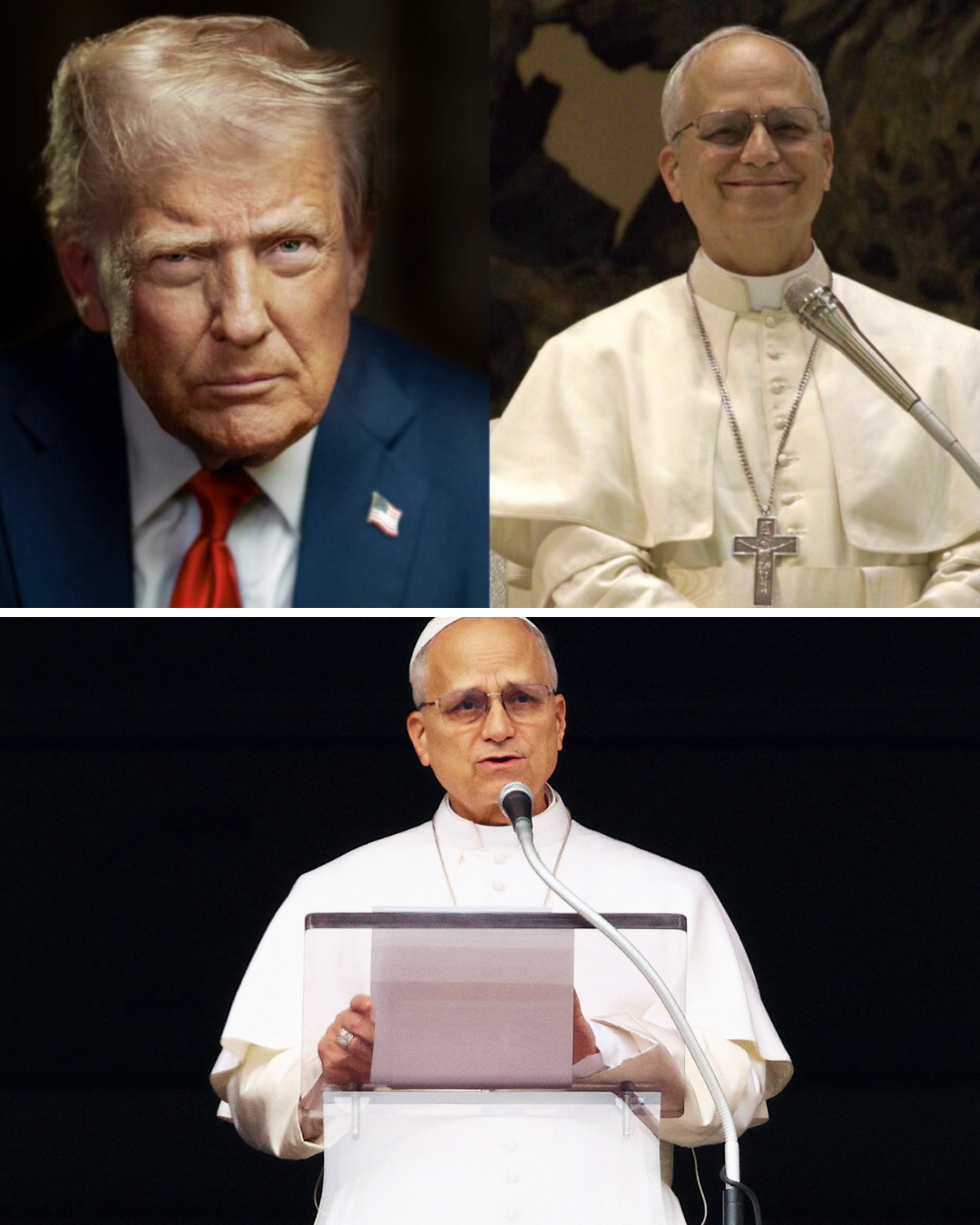
In the cacophony of military briefings, diplomatic statements, and political posturing that has accompanied the Iran conflict, one voice cut through the noise with a clarity that politicians on all sides seem unable — or unwilling — to achieve.
Pope Leo XIV, addressing the faithful from the Vatican on Sunday, expressed “deep concern” about the escalating war and issued a warning so stark that it read more like prophecy than politics: the world must end “the spiral of violence before it becomes an irreparable abyss.”
An irreparable abyss. Not a “challenging situation.” Not a “complex geopolitical event.” An abyss — a void from which there is no return.
The Pope’s language matters because of his unique position in global discourse. As the spiritual leader of 1.4 billion Catholics and arguably the most prominent moral voice on the world stage, his words carry weight that transcends the narrow lanes of national interest. When the Pope says a situation is approaching the irreparable, he is speaking not as a political analyst making predictions but as a pastor issuing a warning about the soul of civilization itself.
The context of his warning makes it even more pointed. The war began during Ramadan, the holiest month in Islam. Iran is a majority Shia Muslim nation. The strikes are being conducted by the United States, a majority Christian nation, and Israel, the Jewish state. The religious dimensions of this conflict — largely unspoken in official communications — are impossible to ignore and deeply dangerous.
Pope Leo XIV’s intervention comes at a moment when secular diplomatic channels appear to be failing. The United Nations Security Council is paralyzed by vetoes. China and Russia have condemned the strikes but taken no concrete action. European leaders have offered tepid support while privately expressing alarm. Arab states that signed the joint statement condemning Iran’s retaliation are simultaneously absorbing Iranian missiles on their own soil.
The Pope’s warning of an “irreparable abyss” implicitly challenges the framing offered by all parties to the conflict. Israeli Prime Minister Benjamin Netanyahu said the war would “usher in an era of peace that we haven’t even dreamed of.” US officials project the operation will take four to five weeks. Iran says it “will not negotiate.” Each statement assumes that the current trajectory leads somewhere manageable. The Pope is saying it doesn’t.
The Vatican has historically played a role in de-escalation during moments of extreme crisis. During the Cuban Missile Crisis in 1962, Pope John XXIII issued a public appeal for peace that some historians credit with creating space for the diplomatic off-ramp that prevented nuclear war. During the Iraq War buildup in 2003, Pope John Paul II was one of the most prominent voices opposing the invasion — a position vindicated by the catastrophic aftermath.
Whether Pope Leo XIV’s words will have any practical impact on the current conflict is doubtful. The military operations are being driven by strategic calculations, not moral appeals. But the papal statement performs a different function: it establishes a moral marker. It says, on the record, that the highest religious authority in the Western world looked at this war and called it a path toward an irreparable abyss. If the worst comes to pass, the warning was given.
The word “irreparable” deserves particular attention. It means beyond repair. It means that the damage caused by this conflict may create conditions — humanitarian, environmental, economic, civilizational — that cannot be undone. It is the language of permanent consequence, not temporary setback.
With 787 dead in Iran, 52 dead in Lebanon, 11 dead in Israel, six American soldiers killed, civilians dead across the Gulf, a UNESCO World Heritage Site damaged, the Strait of Hormuz closed, oil markets in turmoil, and millions displaced or stranded — the Pope’s warning already feels less like prediction and more like description.
The abyss is not approaching. Parts of the Middle East are already in it. The question is whether the rest of the world will follow them in.