11 IRANIAN WARSHIPS SUNK: America Just Wiped Out Half of Iran’s Navy in 72 Hours — And Tehran Never Saw It Coming
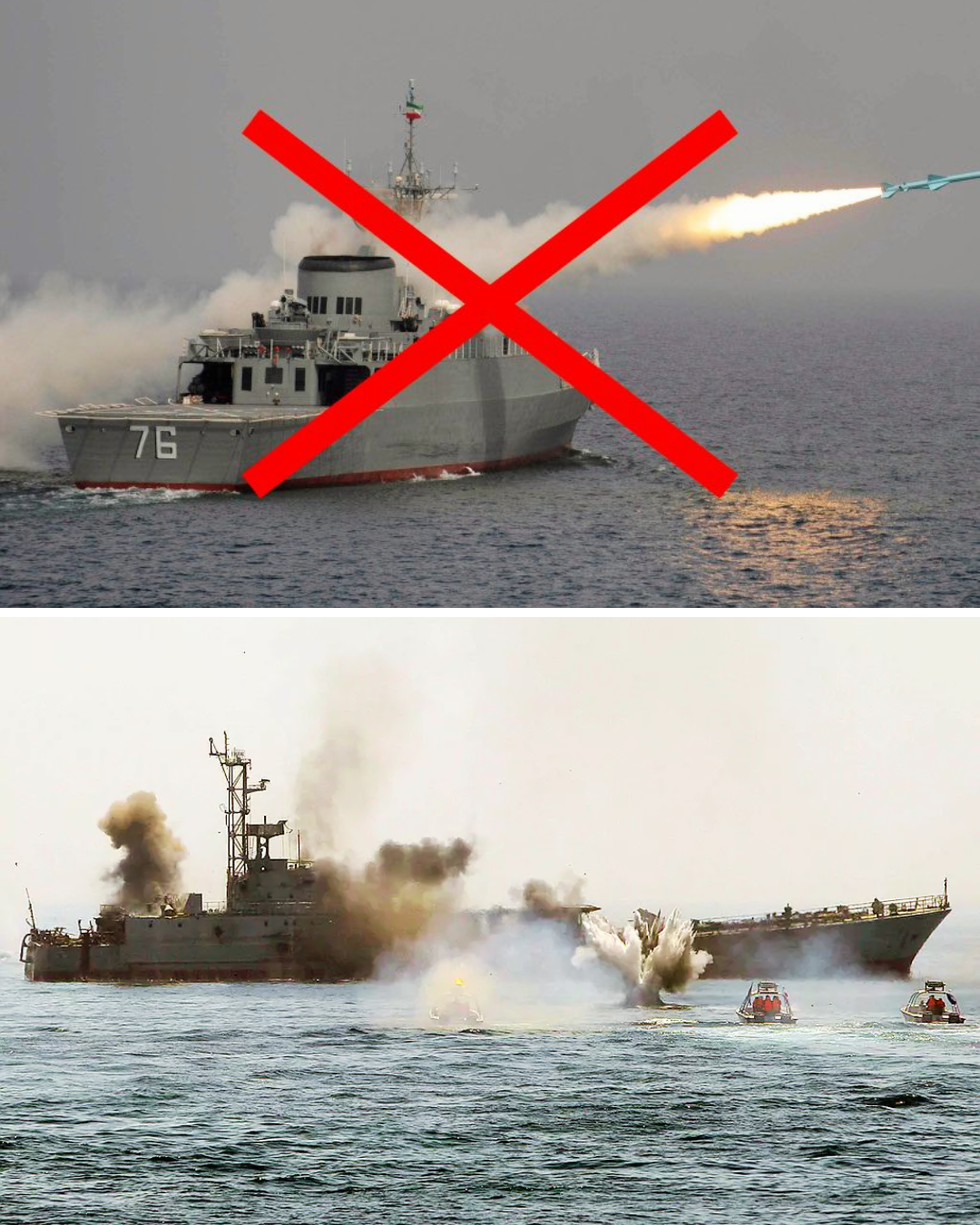
In three days, the United States sank more enemy warships than in any naval engagement since World War II.
US Central Command confirmed on Monday that American forces had struck and destroyed 11 Iranian naval ships since the start of Operation Epic Fury. Separately, officials said the US had “largely destroyed” Iran’s naval headquarters. The Iranian Navy’s surface fleet, which had been one of Tehran’s primary tools for projecting power in the Persian Gulf, has been effectively halved in 72 hours.
The scope of the naval destruction is historically extraordinary. The US Navy has not sunk this many enemy vessels in a single conflict since the battles of the Pacific in the 1940s. Even during the 1988 Operation Praying Mantis — the largest American naval engagement since WWII, also conducted against Iran — only two Iranian ships were sunk.
The 11 ships destroyed include frigates, corvettes, and fast-attack craft that formed the backbone of Iran’s conventional naval capability. These are the vessels that Iran used to patrol the Strait of Hormuz, escort commercial shipping, and project a visible military presence throughout the Persian Gulf. Their destruction leaves Iran’s navy with a fraction of its former surface capability.
But — and this is the critical qualification — Iran’s most dangerous maritime assets were never its conventional warships. The IRGC Navy, a separate force from the regular Iranian Navy, operates hundreds of small fast-attack boats, missile-armed speedboats, and explosive-laden unmanned vessels. These asymmetric assets are far harder to track and destroy than frigates on the open sea, and they have already proven their lethality in this conflict.
The IRGC has attacked at least four commercial vessels in Gulf waters since Saturday. A tanker was struck and set on fire in the Strait of Hormuz. Another tanker was sinking after attempting unauthorized passage. A US-flagged tanker was hit by drone or missile fire. The attacks demonstrate that even with 11 warships on the ocean floor, Iran retains the ability to threaten commercial shipping through asymmetric warfare.
The strategic calculus of the naval campaign reveals the Pentagon’s priorities. By destroying Iran’s surface fleet, the US has eliminated Tehran’s ability to conduct conventional naval operations — deploying ships in formation, blockading ports, or engaging in ship-to-ship combat. But the Strait of Hormuz closure was never enforced by frigates. It was enforced by the IRGC’s speedboats, drones, and mines — assets that are small, dispersible, and extremely difficult to neutralize completely.
For Iran, the loss of 11 warships is a devastating blow to national pride. Naval power has been central to Iran’s self-image as the dominant power in the Persian Gulf. The annual naval parades, the exercises in the Strait of Hormuz, the confrontations with US vessels — all of these were conducted by the ships that are now sitting on the ocean floor. The psychological impact on Iran’s military establishment cannot be overstated.
The human cost of the naval engagements remains unclear. Iranian authorities have not released casualty figures specific to the naval losses. Each frigate typically carries a crew of 100 to 150 sailors. If all 11 ships were destroyed while crewed, the naval casualties alone could number over a thousand. However, it is possible that some ships were hit in port or that crews were evacuated before the strikes.
The naval campaign also demonstrates the overwhelming technological superiority of the US military in conventional warfare. American submarines, carrier-based aircraft, and cruise missiles can locate and destroy surface ships with precision that Iran simply cannot match. The 11 ships were likely destroyed in a matter of hours, not days.
But the lesson of this conflict — and of every asymmetric war since Vietnam — is that destroying an enemy’s conventional forces does not eliminate the threat. Iran’s ability to close the Strait of Hormuz, attack commercial shipping, and inflict economic damage depends not on its frigates but on its speedboats, drones, mines, and missiles. Those assets remain largely intact.
Eleven ships sunk. The largest naval destruction since the Pacific War. And yet the Strait of Hormuz remains closed, tankers are burning, and the global oil supply is under siege. The US destroyed Iran’s navy. Iran doesn’t need its navy to win this part of the war.