ISRAEL HACKED EVERY TRAFFIC CAMERA IN TEHRAN: The Terrifying AI Spy Operation That Watched Khamenei’s Guards for YEARS Before Killing Him
They were watching. For years, they were watching.
A bombshell report by the Financial Times has revealed the astonishing scale of the Israeli intelligence operation that led to the assassination of Iran’s Supreme Leader Ali Khamenei — and it reads less like a military operation than a science fiction thriller.
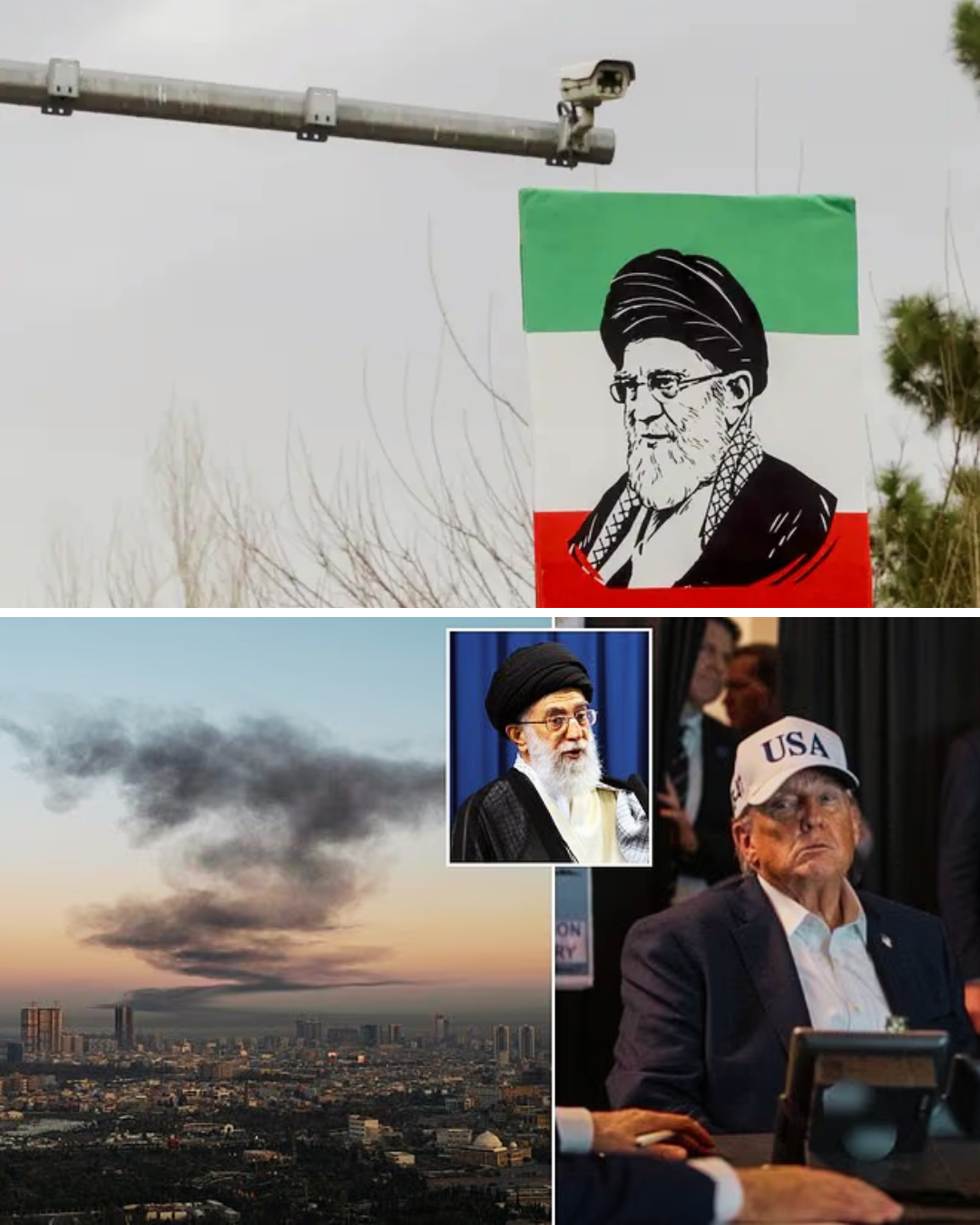
According to the report, citing multiple current and former Israeli intelligence officials, Israel had hacked into nearly all of Tehran’s traffic cameras years before the strike. The footage from those cameras was encrypted and transmitted in real time to servers in Tel Aviv and southern Israel. Every car, every bodyguard, every official vehicle that passed through the Iranian capital was being recorded and analyzed by Israeli intelligence.
One camera angle proved especially valuable. Positioned near Pasteur Street — the location of Khamenei’s guarded compound — it allowed analysts to observe where his bodyguards parked their personal vehicles. That single detail opened up an entire pattern of life: when guards arrived for duty, which shifts they worked, what routes they took from home, and critically, which senior officials they were assigned to protect on any given day.
Israeli intelligence fed this data into complex algorithms that built detailed dossiers on each member of Khamenei’s security team. Addresses, duty hours, commuting routes, social networks — everything was catalogued and cross-referenced. A mathematical technique known as social network analysis was used to sift through billions of data points, identifying decision-making centers and new targets within Iran’s power structure.
A serving Israeli intelligence official told the newspaper: “We knew Tehran like we know Jerusalem. And when you know a place as well as the street you grew up on, you notice every small thing that is out of place.”
The surveillance operation was just one of hundreds of intelligence streams flowing into Israel’s targeting system. Unit 8200, Israel’s elite signals intelligence unit, intercepted communications. The Mossad recruited human sources inside Iran’s security establishment. Military intelligence analyzed the combined data using AI-powered tools that one source described as “an assembly line with a single product: targets.”
When the moment came, the intelligence was devastating in its precision. US and Israeli agencies confirmed through hacked cameras and penetrated mobile networks that Khamenei and senior officials were present at the Pasteur Street compound on Saturday morning. The CIA contributed an additional piece of the puzzle: a human source embedded within Iran’s leadership circle who confirmed the meeting was proceeding as planned.
But the operation went further. Israel also disrupted approximately 12 cellular antennas near Pasteur Street, causing phones in the area to return busy signals. When Khamenei’s security detail attempted to receive warnings about the incoming strike, their calls simply would not connect. The men whose routines had been watched for years through hacked cameras were now cut off from the communications that might have saved their leader’s life.
Israeli aircraft, reportedly airborne for hours, fired as many as 30 Sparrow precision missiles at the compound. The strike was deliberately executed in daylight — a tactical decision that exploited the assumption that major military operations typically happen under cover of darkness. The Iranians were caught in their normal Saturday morning routine, exactly where the cameras and algorithms said they would be.
The implications of this revelation extend far beyond the Khamenei assassination. If Israel could hack every traffic camera in Tehran — the capital of a nation with one of the most sophisticated cyber programs in the world — the question arises: what other surveillance systems around the globe have been similarly compromised? What other nations’ leaders are being watched through their own infrastructure?
The Iranian government has not commented on the report. But for a regime that invested heavily in surveillance technology to monitor its own citizens, the revelation that those same cameras were turned against its supreme leader by a foreign intelligence service is an irony of almost cosmic proportions.
Iran watched its people. Israel watched Iran watching its people. And on a Saturday morning in February, the watchers became the target.