Putin Steps into Middle East “Cauldron” as Russia Seeks to Cool Escalating Iran-U.S. Conflict
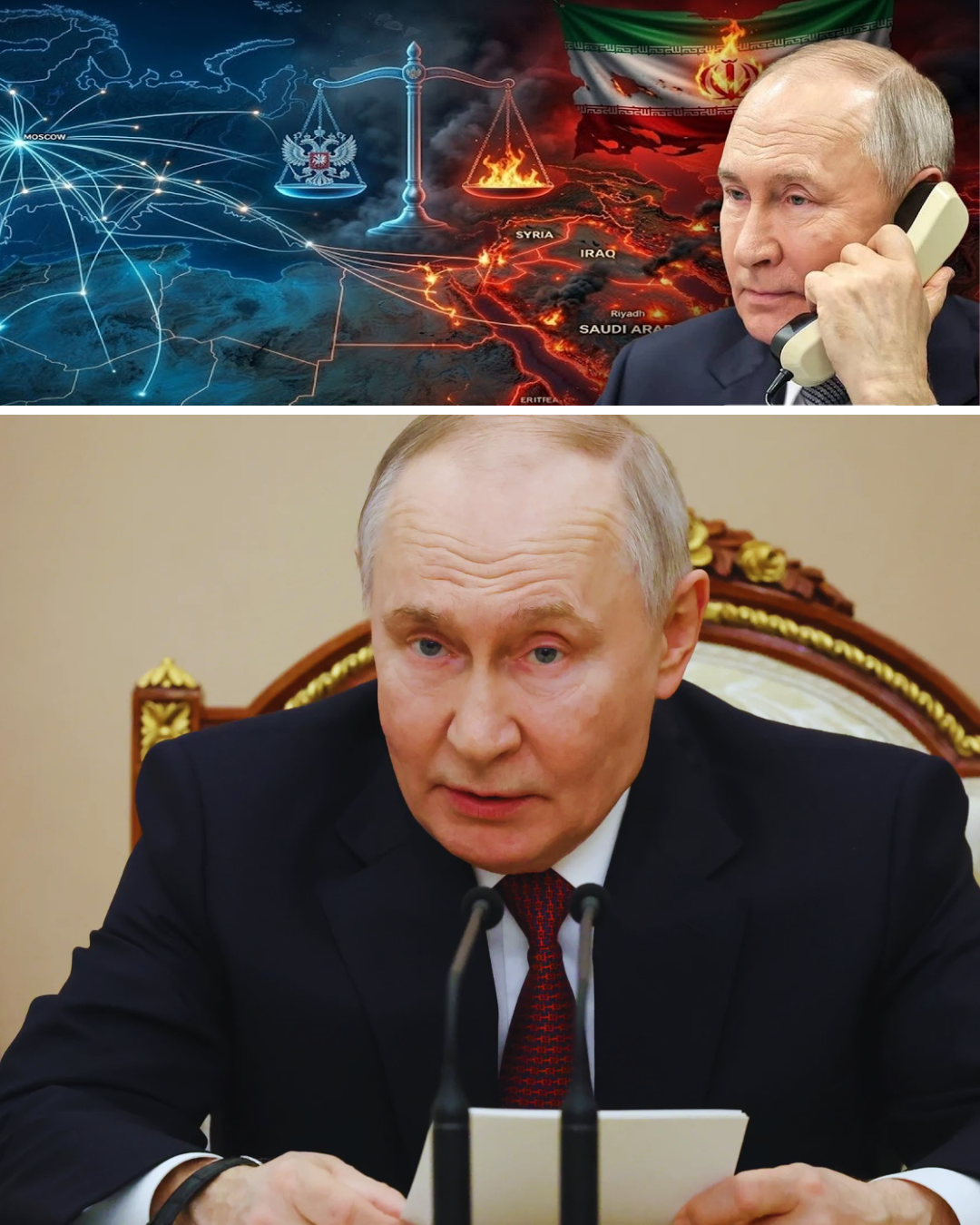
MOSCOW — As the Middle East teeters on the brink of an all-out regional war following U.S. and Israeli military strikes against Iran, Russian President Vladimir Putin has launched a high-stakes diplomatic offensive. Positioning Moscow as a crucial mediator, Putin has engaged in a series of urgent discussions with Gulf leaders to prevent what the Kremlin warns could be a “catastrophic” expansion of the conflict.
A Diplomatic Surge from the Kremlin
According to official statements from the Kremlin on March 2, President Putin held a pivotal telephone conversation with Saudi Crown Prince Mohammed bin Salman Al Saud. The two leaders discussed the “extremely dangerous” situation unfolding after the U.S. and Israel initiated military operations against Iran on February 28. Putin emphasized the absolute necessity of a political and diplomatic resolution, while the Saudi Crown Prince acknowledged Russia’s unique position to stabilize the region, citing Moscow’s long-standing ties with both Tehran and the Gulf monarchies.
This outreach was not limited to Riyadh. On the same day, Putin held separate talks with UAE President Mohammed bin Zayed Al Nahyan, King Hamad bin Isa Al Khalifa of Bahrain, and Qatar’s Emir Tamim bin Hamad Al Thani. Throughout these calls, the Russian leader criticized the disruption of the Iranian nuclear program negotiations caused by the strikes and reaffirmed Russia’s readiness to use “every possible measure” to restore regional stability.
The Regional Fallout: Strikes and Retaliation
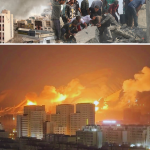
The urgency of Moscow’s diplomacy is underscored by the chaos on the ground. Following the launch of the U.S. operation—dubbed “Epic Fury” by Washington—and Israel’s “Roar of the Lion,” Iran has launched a massive retaliatory campaign.
The consequences have been immediate and far-reaching:
-
Energy Infrastructure: In Saudi Arabia, suspected Iranian drones struck a Saudi Aramco refinery in Ras Tanura, sparking a major fire and forcing a temporary shutdown.
-
Civilian Disruption: Iran’s retaliation targeted bases housing U.S. forces across the UAE and Bahrain, but impacts were felt in civilian areas. Intercepted missiles lit up the skies over Dubai, with debris reportedly causing fires near the luxury Fairmont resort on Palm Jumeirah and the Jebel Ali port.
-
Aviation and Education: Airports across the Gulf faced cancellations as flights scrambled to exit regional airspace. In the UAE, the government ordered schools and universities to shift to remote learning for three days starting March 2.
The “Sino-Russian” Front
Moscow is not acting alone. Following a call between Foreign Minister Sergey Lavrov and his Chinese counterpart Wang Yi, the two nations issued a joint condemnation of the “large-scale attacks” on Iranian territory. They characterized the military actions as a violation of international law and the UN Charter.
In an emergency UN Security Council meeting, Russian Permanent Representative Vassily Nebenzia warned that the conflict risks escalating far beyond the borders of the Middle East. Moscow and Beijing have pledged to coordinate through the UN, the Shanghai Cooperation Organization (SCO), and the IAEA to push for an immediate ceasefire.
A Leader Lost, A Nation in Mourning
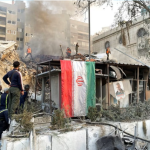
Inside Iran, the situation has reached a fever pitch. Iranian state media confirmed that Supreme Leader Ali Khamenei was killed during the initial U.S.-Israeli strikes. This news sparked massive demonstrations in Tehran, Isfahan, and Qom, with thousands of mourners demanding immediate military vengeance. The Iranian government has declared 40 days of national mourning, while the Islamic Revolutionary Guard Corps (IRGC) has vowed to continue operations against “the aggressors.”
The Road Ahead
As the U.S. Central Command (CENTCOM) releases footage of Tomahawk missiles and carrier-based jets striking Iranian targets, President Donald Trump has stated the campaign will continue as long as necessary. However, with Russia’s intensive “firefighting” diplomacy, the international community is watching closely to see if Moscow can leverage its influence to prevent the “Epic Fury” from consuming the entire global security landscape.