Friendly Fire Crisis: Kuwait Admits to Downing U.S. F-15E Jets as Regional Conflict Spirals
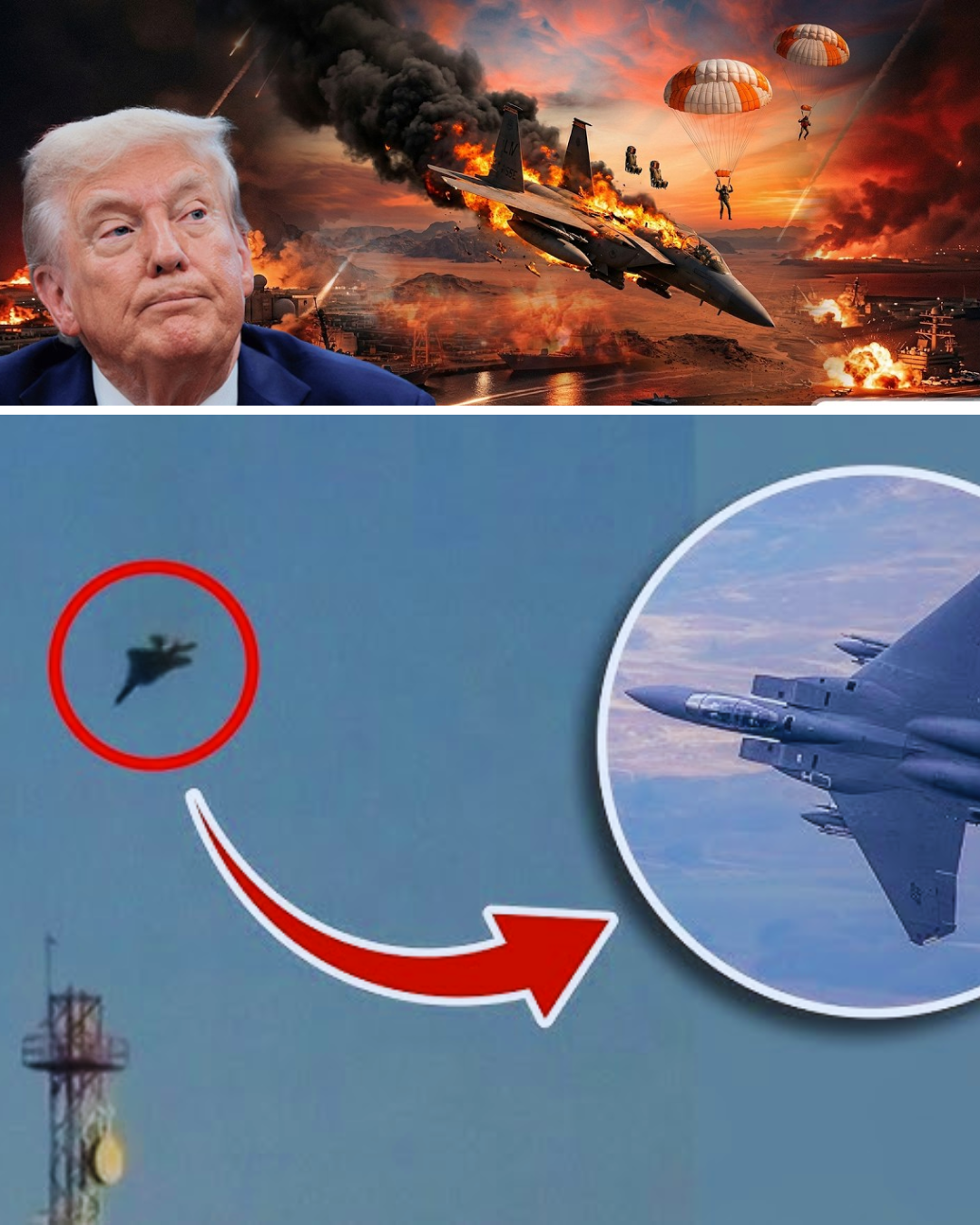
KUWAIT CITY / WASHINGTON D.C. — The military landscape in the Middle East has been hit by a significant internal crisis after the Kuwaiti Defense Forces admitted to accidentally downing three American F-15E Strike Eagle fighter jets. The “friendly fire” incident occurred amidst a chaotic regional environment as U.S. and Israeli forces ramp up their “Operation Epic Fury” against Iranian strategic assets.
The Incident in Kuwaiti Airspace
U.S. Central Command (CENTCOM) confirmed on March 2 that three of its multi-role F-15E Strike Eagles were lost over Kuwait. In a rare and sobering admission, the Kuwaiti military confirmed that its own air defense systems had misidentified the American aircraft as hostile during an intense exchange involving Iranian missile and drone barrages.
While the loss of the advanced aircraft represents a significant tactical blow, CENTCOM reported that all six crew members successfully ejected and were recovered in stable condition. “We are grateful to the Kuwaiti Defense Forces for their transparency and ongoing support in this complex operational environment,” a U.S. military spokesperson stated. Investigations are currently underway to determine the technical failures that led to the misidentification.
“I Knocked Him Out First”: Trump on Khamenei
The incident comes at a time of extreme tension following the confirmed death of Iran’s Supreme Leader, Ayatollah Ali Khamenei. In a provocative phone call with ABC News, President Donald Trump claimed personal credit for the “decapitation” of the Iranian leadership. “They tried twice to assassinate me, but I knocked him out before he could knock me out,” Trump asserted, referring to the late Supreme Leader.
According to White House statements, the initial waves of “Operation Epic Fury” on February 28 successfully eliminated 48 high-ranking Iranian officials. Israeli intelligence added that the two-day campaign has effectively “wiped out” the majority of Iran’s top-tier leadership, including Khamenei’s inner circle and several regional proxy leaders.
Domestic Dissent and the War Powers Resolution
As the conflict enters its second week, President Trump faces mounting pressure from within the United States. A bipartisan group of lawmakers, led by Democrats Adam Schiff and Ro Khanna alongside Republican Thomas Massie, has called for an urgent vote on a War Powers Resolution. The resolution seeks to limit the President’s authority to order further military actions without formal congressional approval.
Senator Adam Schiff argued that despite Tehran’s rhetoric, Iran does not pose an “imminent threat” to the U.S. mainland that justifies a full-scale campaign for regime change. “We have unleashed elements in the Middle East that we cannot control,” Schiff warned, criticizing the administration for bypassing Congress. House Speaker Mike Johnson, however, suggested that a vote on the resolution could be held as early as Thursday, though many expect the President to exercise his veto power should it pass.
Iran Vows “Unprecedented Punishment”
Inside Iran, the atmosphere is one of mourning and fierce defiance. The government has declared 40 days of national mourning, and thousands have taken to the streets of Tehran, Mashhad, and Qom to demand military vengeance. The Islamic Revolutionary Guard Corps (IRGC) has vowed “unprecedented punishment” for the U.S. and Israel, launching what they describe as the most significant military counter-offensive in the nation’s history.
Under “Operation True Promise IV,” Tehran has already launched over 1,300 missiles and drones at U.S. and Israeli bases across eight countries. Satellite imagery has revealed extensive damage to the U.S. 5th Fleet headquarters in Bahrain, and regional hubs like Dubai and Doha remain on high alert as the “Rain of Fire” continues.
A Decisive Path Forward
President Trump remains resolute, stating that the military campaign will continue “without interruption” until all of Washington’s objectives—including the total dismantling of Iran’s nuclear and ballistic missile industry—are achieved. As the U.S. prepares for a “massive surge” in operations over the next 24 hours, the international community remains divided, watching a conflict that threatens to permanently alter the global order.