Middle East in Turmoil: Iranian UAVs Attack British Base, London and Paris Deploy Heavy Warships
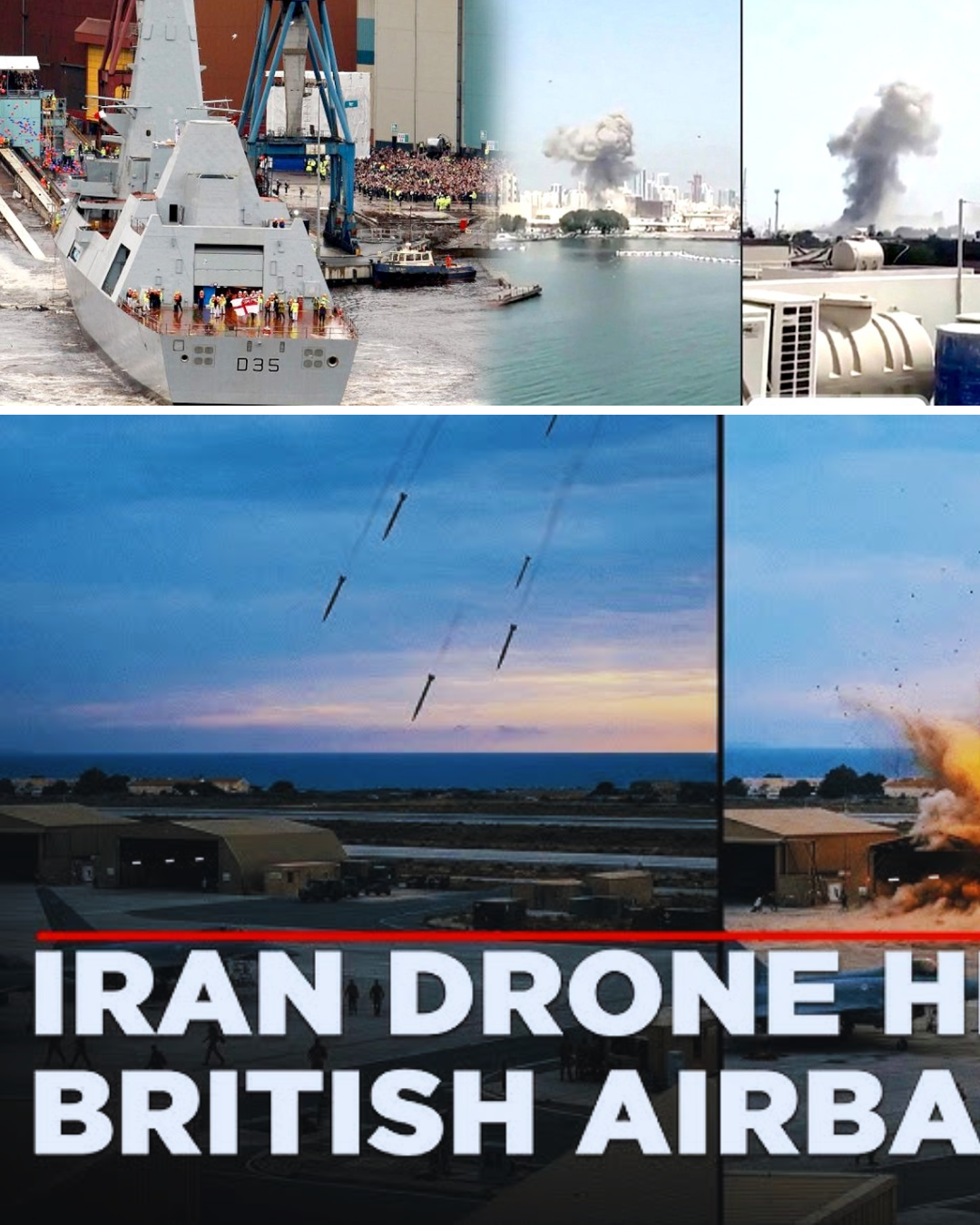
In a highly serious escalation in the Mediterranean, European powers have officially intervened militarily after attacks on sovereign targets. While Britain deployed its most advanced destroyer to protect Cyprus, France immediately deployed a nuclear-powered aircraft carrier to the region to establish a security “shield” against retaliation from Iran.
Attack on Sovereignty and London’s Response
Tensions escalated to a new level when the British Ministry of Defence confirmed that one of its air bases on Cyprus had been targeted by unmanned aerial vehicles (UAVs) from Iran. Although damage was reported to be limited, this was a direct attack on the sovereign territory of a NATO member.
In response, London deployed the air defense destroyer HMS Dragon – one of the Royal Navy’s most modern combat platforms – to the Eastern Mediterranean. Equipped with the Sea Viper missile system, capable of simultaneously guiding 16 targets and firing eight missiles in just 10 seconds, HMS Dragon was expected to neutralize any aerial threats to British forces stationed there. Prime Minister Keir Starmer affirmed: “The UK is fully committed to the security of Cyprus and will always act in the interests of the United Kingdom and its allies.”
France displays nuclear power
At the same time, French President Emmanuel Macron ordered the deployment of the nuclear aircraft carrier Charles de Gaulle and its fleet task force from the Baltic Sea to the Mediterranean. This move came shortly after Macron convened an emergency meeting of the National Security and Defence Council.
Paris has also deployed additional Rafale fighter jets and early warning aircraft to bases in the UAE to protect French military personnel from potential attacks. President Macron emphasized that Iran’s indiscriminate retaliations have sparked an unprecedented regional escalation, and France will maintain this military presence “as long as necessary” to protect its citizens and strategic partners.
The US-German Alliance and the Message from the White House
In Washington, President Donald Trump and German Chancellor Friedrich Merz held a joint press conference to reaffirm their unified position. Trump once again rejected claims that Israel “dragged” the US into the conflict, asserting that this was a necessary preemptive action to prevent an attack from Iran.
Trump also drew attention with his remarks about the leadership vacuum in Tehran following the death of Supreme Leader Ali Khamenei. The US President believes that most potential candidates to replace Khamenei have been eliminated, and the worst-case scenario is that a less capable person will take power. Meanwhile, German Chancellor Merz expressed full support for the goal of removing the current regime in Tehran to bring the Middle East back to “peace and freedom.”
The global logistics and economic nightmare
The conflict is not just limited to military actions but is strangling economic lifelines. Iran’s closure of the Strait of Hormuz – through which 20% of the world’s oil and tens of percent of the global fertilizer market pass – is pushing the world into a new supply crisis.
Nearly 100 Dutch ships are stranded in the Gulf, while major airlines are continuously canceling flights due to the closure of airspace by Qatar, Bahrain, and the UAE. Economists warn that if this situation persists, global inflation will skyrocket, particularly in the energy and agricultural sectors, putting immense pressure on economies that are recovering.
Conclusion
The world is holding its breath watching every development in the Middle East. With the direct involvement of a French aircraft carrier and a British destroyer, the region is turning into a giant military “cauldron.” The biggest question now is whether diplomatic efforts still have a chance, or whether the region will slide into a major war on a scale unprecedented in modern history.