Carving Eternity: Artists at Work in the Tomb of Rekhmire
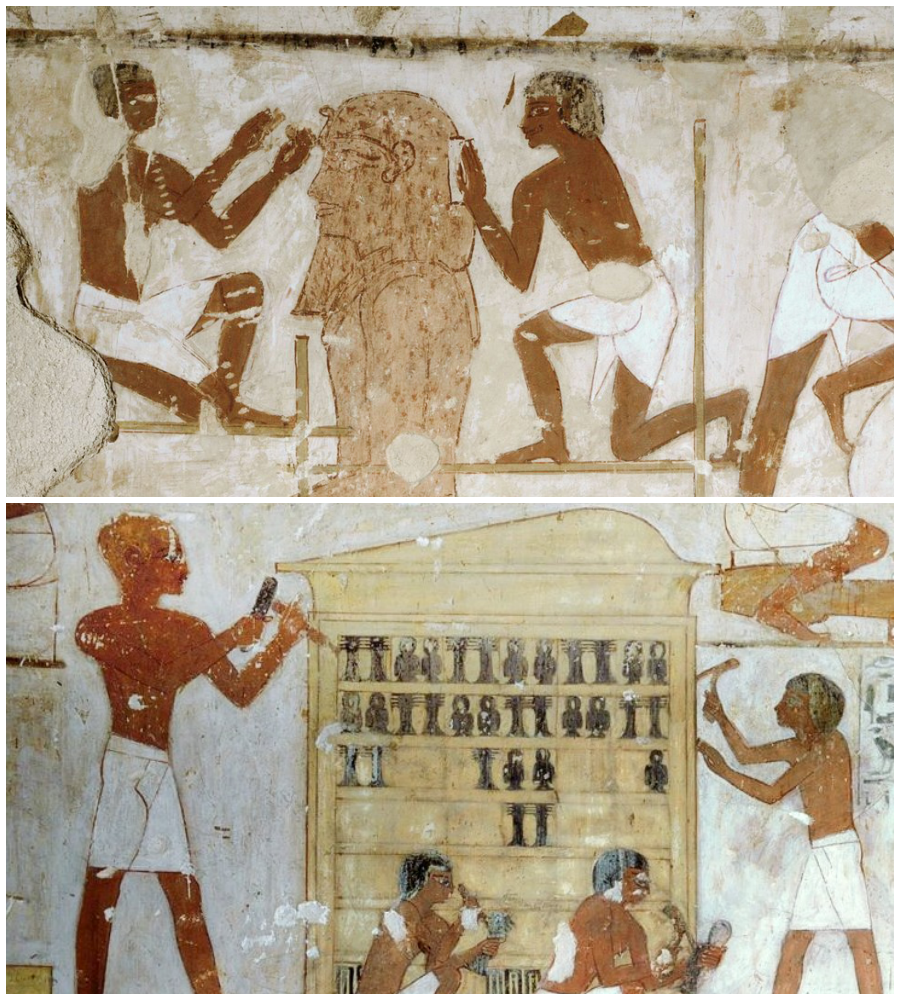
New Kingdom, 18th Dynasty, c. 1450 B.C.
From the Tomb of Rekhmire (TT100), Thebes
On the painted walls of the tomb of Rekhmire, a remarkable scene unfolds — not of gods or battles, but of craftsmanship in action.
High upon wooden scaffolding, sculptors lean into their work, chisels poised against stone as they carve a colossal statue of a king. The image, preserved in the tomb at Thebes, captures a rare and intimate glimpse into the making of royal monumentality during the 18th Dynasty. This was the age of empire, when rulers commissioned towering statues to proclaim divine authority and eternal power.
Yet here, the focus shifts from finished grandeur to human effort.
The artists are shown mid-process — measuring proportions, refining details, smoothing surfaces. Assistants mix plaster, transport materials, and steady the scaffolds. The future colossus, though intended to embody timeless kingship, depends entirely on the coordinated labor of skilled hands.
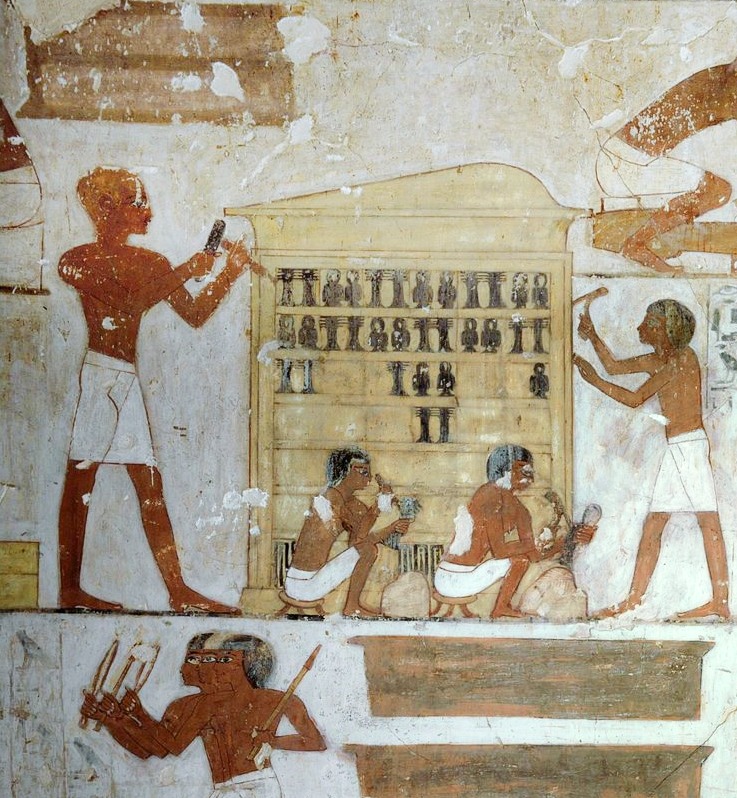
Scenes like this reveal a vital truth about ancient Egypt: its monuments were not created by abstraction, but by organized workshops of highly trained artisans. The depiction in Rekhmire’s tomb honors not only royal authority, but also the administrative order that made such projects possible. As vizier, Rekhmire oversaw many aspects of state labor and production; including such imagery in his tomb celebrated his role in maintaining maat — cosmic balance and societal harmony.
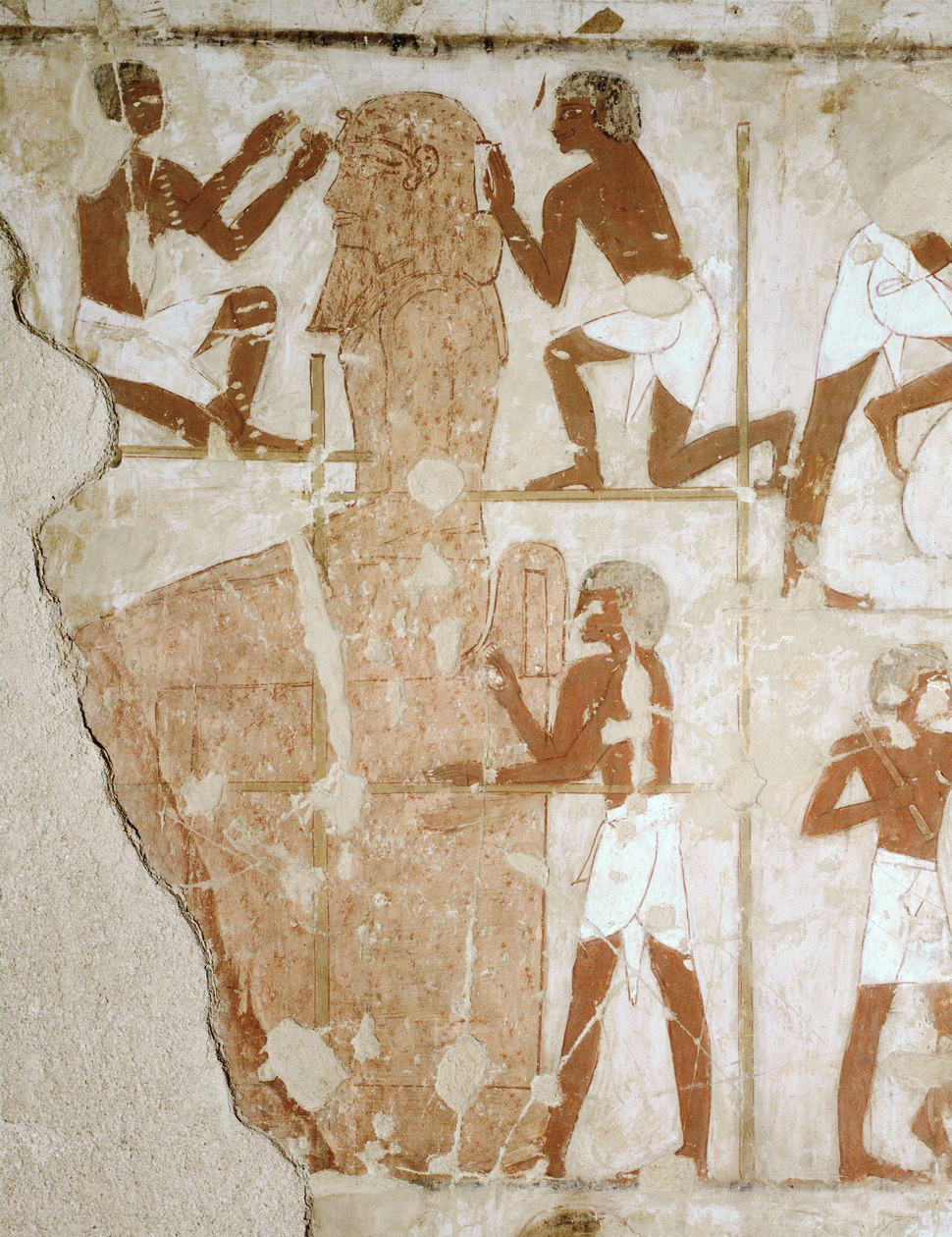
The contrast is striking. A king destined to appear immovable and divine is, in this moment, simply a block of stone shaped by chisels. Eternity begins with dust.
Through this painted vignette, we glimpse the quiet reality behind Egypt’s colossal statues: not just power, but process; not just majesty, but mastery. And in the shadows of scaffolding, the builders of immortality stand revealed.